Imkerliche Praxis
Orientation in the Beginning When Much is Still Unclear
About Apiary Methods, Learning Curves, and Avoidable Mistakes
Beginners today have an enormous variety of information sources: video platforms, social networks, blogs, forums, books, and club events. This is fundamentally positive – knowledge has never been so accessible as it is today.
At the same time, this creates a new challenge. Without sufficient practical experience, many recommendations are hard to assess. Different management styles, timing for interventions, hive systems, nectar flows, and climatic conditions are often mixed. Quickly, the impression arises that one can select the appropriate elements and assemble a personal method.
In practice, however, it is evident that most methods work as closed complete concepts. When individual components are combined without considering the connections, avoidable mistakes often occur: wrong timing, inappropriate interventions, too much or too little space, unclear objectives – and in the worst case, unnecessary colony losses.
Recommendation for the First Few Years
Especially in the first two to three years, it is wise to adhere as consistently as possible to a proven beekeeping method or clear structured concept – ideally the one supported locally by a club or experienced mentoring.
Informed decisions can first be made with one’s own practical experience. As routine increases, an understanding of when an intervention is beneficial, why it works, and what prerequisites it needs, develops.
Observation and Documentation
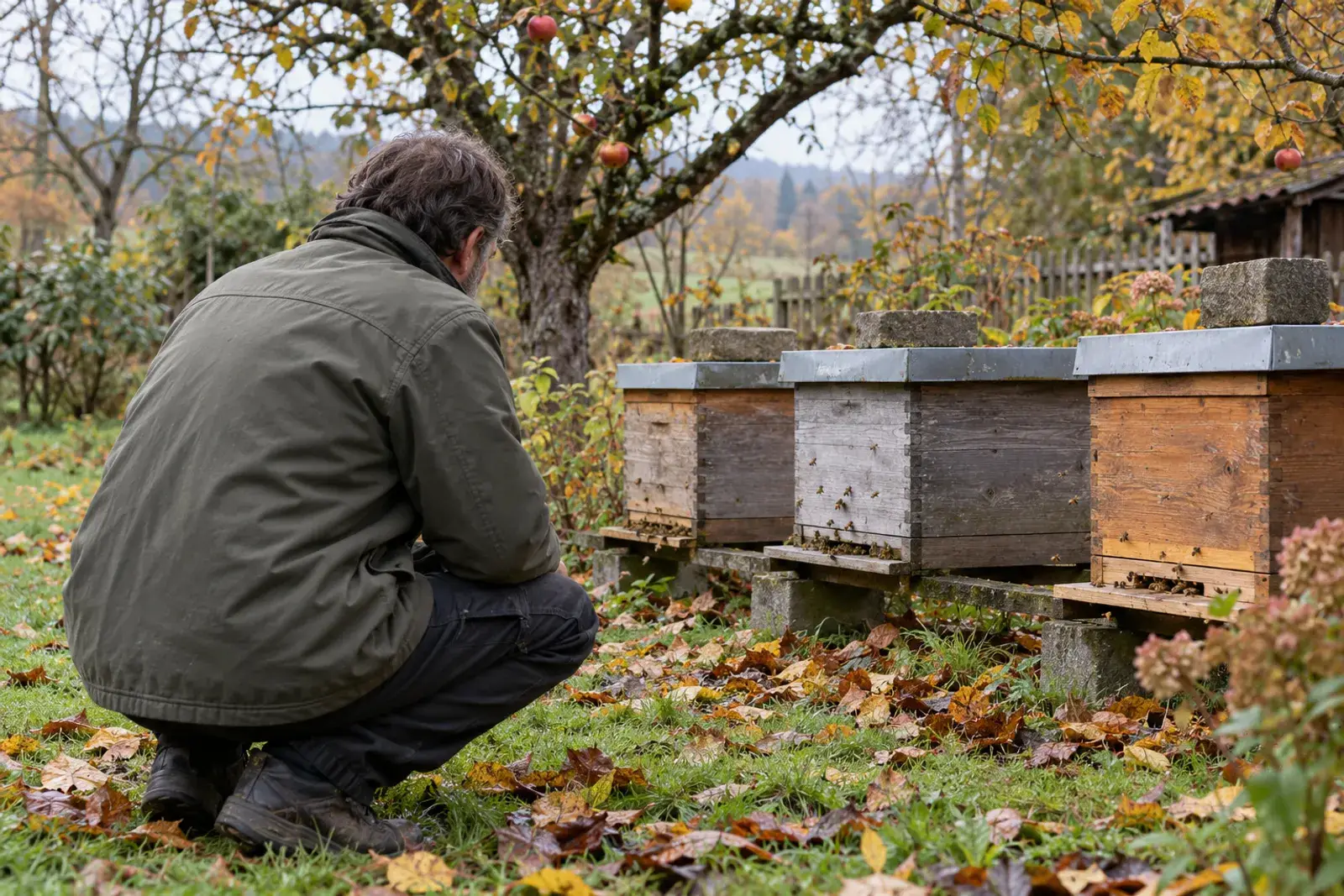
Regular observation enhances understanding of colony development, nectar flow, and seasonal dynamics. Simple documentation – of inspections, weather, interventions, and yields – helps to make connections visible over several years.
Thus, reliable experience is gained, forming the basis for future adaptations.
Correctly Classifying Information Sources
Not every recommendation is transferable to every region. Climate, nectar availability, and operation size differ significantly at times. Regional experience, knowledge within clubs, and local exchange are often more valuable than general online tips.
Gradual Development
New methods should be tested purposefully and controlled – preferably individually and across several seasons. This allows realistic assessment of impacts and avoidance of false conclusions.
- introduce only one change at a time
- document and compare results
- openly analyze successes and failures
- evaluate decisions over the long term
Conclusion
A clear basic concept, patience, and continuous observation form the foundation for sustainable beekeeping success. Those who take time for thorough learning reduce risks and establish long-term stable, healthy colonies.