Feeding Supply
Warning: Feed Shortage Imminent
Especially for Splits and Mating Nucs
With the end of the honey flow, many bee colonies can quietly slip into feed shortages.
From the outside, the colonies often still look strong. However, large brood areas within continue to be maintained. Thousands of larvae need to be fed daily, consuming enormous amounts of food.
Since hardly any nectar is being collected simultaneously, supplies can dwindle significantly in just a few days. Even if you are feeding splits and mating nucs from the start, extra caution and attention are now required.
From our perspective at Bee Pilot, regular checks of food supplies should now be the top priority.
How to Recognize Feed Shortage?
An impending feed shortage isn’t always immediately obvious but can be recognized with careful observation:
- Adequate food arches above the brood are missing. Ideally, there should always be clearly visible food arches.
- Bees appear more restless, roaming over the combs searchingly.
- Brood areas shrink, even though the queen should still be actively laying eggs.
- With prolonged feed shortage, brood care is lessened or completely halted.
- Open brood can partially be reabsorbed by the bees to save energy.
- In advanced stages, there are hardly any fresh eggs or young larvae.
- Bees relocate available supplies and appear generally stressed.
The absence of food arches is a very reliable warning signal. Immediate action should be taken as soon as they noticeably diminish.
Colonies Particularly at Risk
- Splits
- Mating nucs
- Young colonies
- Swarmed colonies
- Small former production colonies
These units have limited stores and insufficient forager bees to compensate for the lack of a nectar flow. Therefore, feed shortage can develop particularly quickly here.
Better to Check Once Too Often
Don’t wait until the bees are already starving. Regularly check food supplies now and intervene in time.
Early feeding prevents developmental setbacks and protects colonies from unnecessary stress.
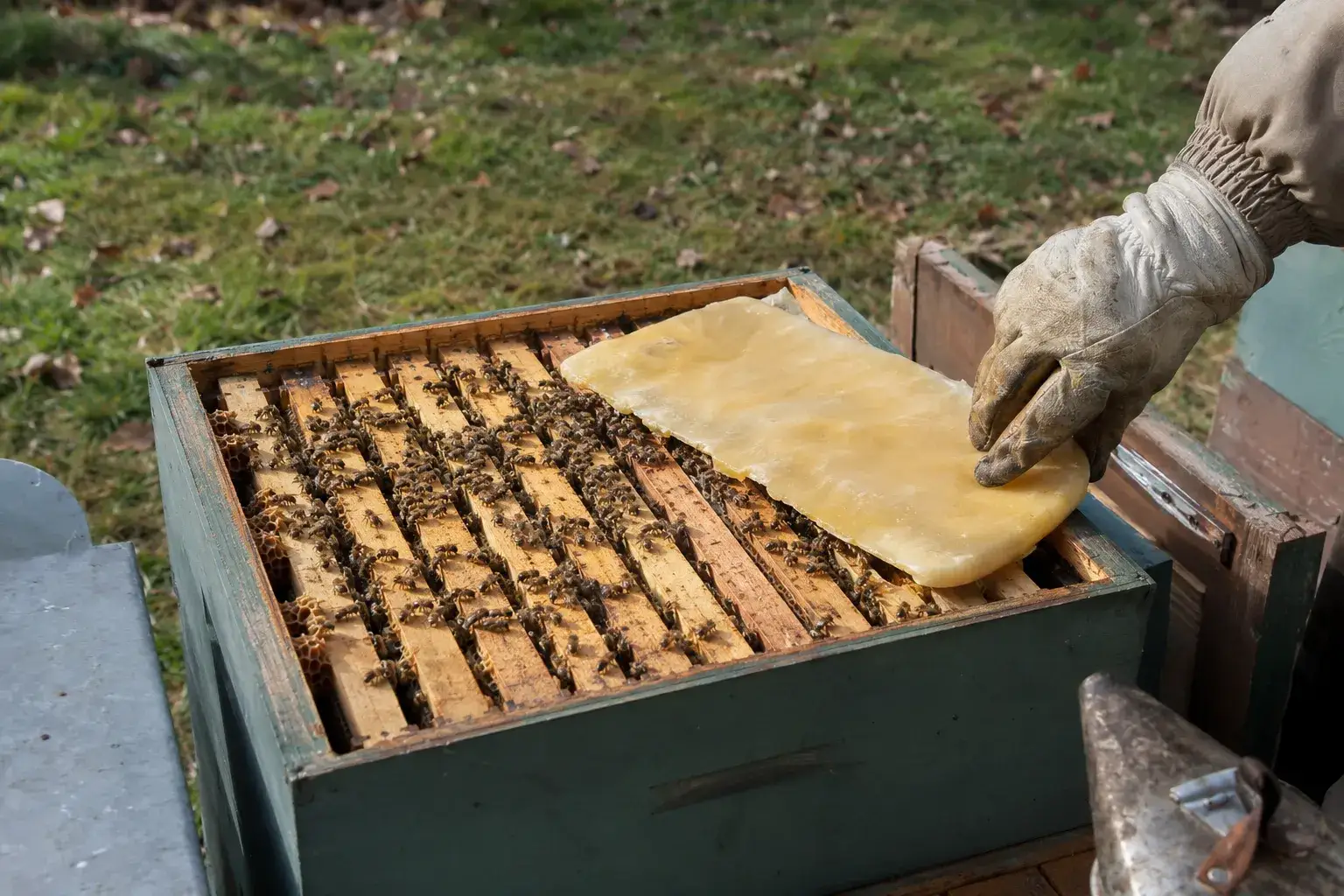
Mating nucs and small splits are especially sensitive right now. We prefer to use feed dough or capped food combs from our healthy stock, as this reduces the risk of robbing.
Feed syrup can also be used but should be administered cleanly and with care.
Sugar water, particularly with small units with few bees, increases the risk of robbing and should therefore be used sparingly or with caution.
Robbing is a Great Danger Now
During nectar dearth, every open feed source becomes immediately interesting. Just a few spilled drops can trigger robbing.
Particularly insidious is the so-called silent robbing. A colony is unobtrusively and over a longer period robbed without it being immediately noticed.
Food can disappear surprisingly fast, even in previously fed colonies. In the worst case, a colony can be lost despite seemingly adequate feeding.
Also Consider Protein Supply
In regions with a prolonged pollen deficit, a high-quality protein feed dough can also be useful.
The bees emerging now will later rear the winter bees. Good energy and protein supply contribute to these nurse bees performing their tasks optimally.
Conclusion
After the honey flow ends, the food situation can deteriorate significantly within a few days. Especially small colonies, splits, and mating nucs now require regular checks.
Our advice from Bee Pilot: In the coming weeks, it’s better to check once too often than once too little. Right now, sufficient food supply often determines whether splits and young colonies develop well or run into problems.
Document observations directly at the bee yard