Autumn inspection
15 typical observations, what they mean and the right course of action for autumn
By October, the main work on our colonies should be largely done. The winter stores are in, rearing of the winter bees is well advanced, and as temperatures drop the colonies increasingly scale back their flight and brood activity.
The rule now: Disturb as little as possible, but stay attentive.
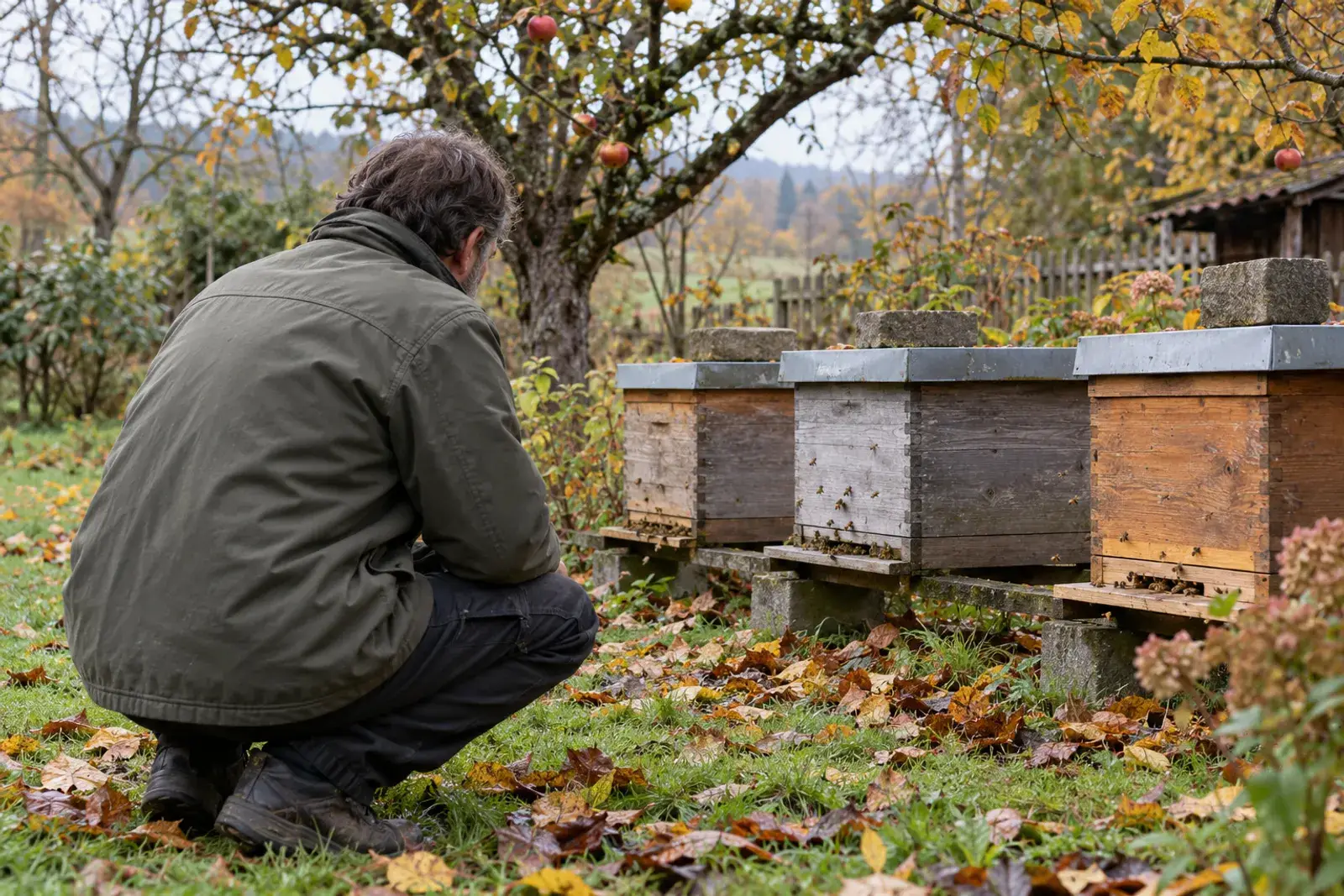
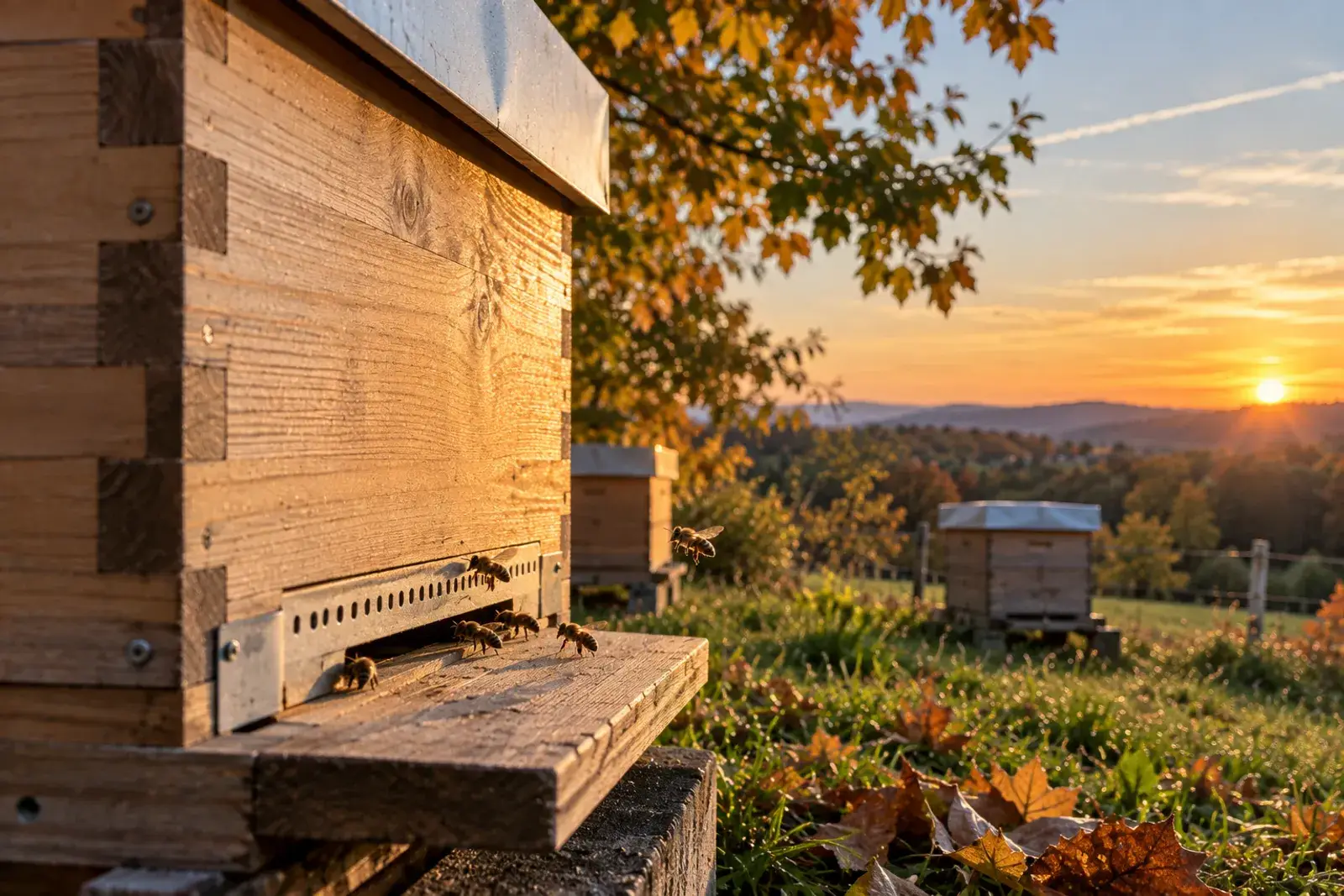
A simple yet revealing method is watching the hive entrance. Often just three to five minutes in front of a hive is enough to gather valuable information.
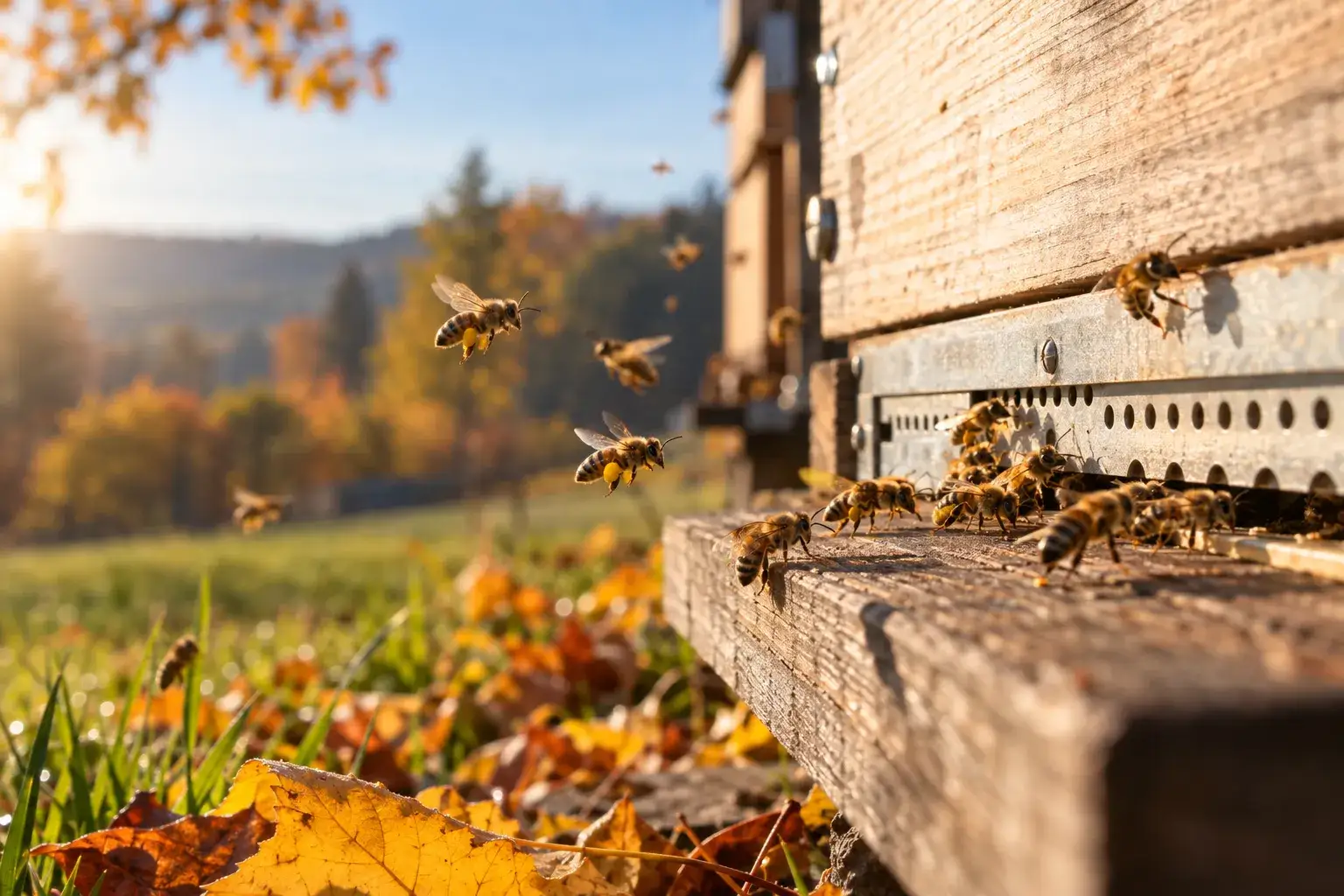
How are the returning foragers behaving? Is pollen still coming in? Are there noticeable bee losses? Is flight activity normal, or are strange bees trying to force their way into the hive?
Comparing with neighboring colonies is particularly revealing. If nine colonies are flying under similar conditions and one stays conspicuously quiet, it is at least worth taking a closer look.
What can’t an entrance check tell you?
Valuable as these observations are, they have their limits. Busy flight activity proves neither that a colony is healthy nor that its winter stores are sufficient.
An entrance check alone cannot reliably tell you, for example:
- Whether there are enough winter stores.
- How high the actual varroa infestation is.
- Whether the queen is present and still laying eggs.
- How many healthy winter bees are in the colony.
- Whether, and how much, brood is still present.
An entrance check is therefore no substitute for a timely autumn inspection. Rather, it is a gentle complement that helps you spot changes, put anything unusual into context and avoid unnecessary interventions.
The hive entrance traffic light for October
🟢 Green: normal · 🟠 Orange: caution · 🔴 Red: action required
| Traffic light | Observation | Possible conclusion | Recommended action |
|---|---|---|---|
| 🟢 Green | 1. Calm, steady flight activity | Normal behavior in suitable autumn weather. | No action needed. |
| 🟢 Green | 2. Regular pollen foraging | The colony is still collecting pollen; brood may be present. | Note it as a positive sign. No need to open the hive. |
| 🟢 Green | 3. Hardly any flight at low temperatures | Normal seasonal decline in flight activity. | Leave the colony alone. |
| 🟢 Green | 4. Many bees circling in front of the hive, facing the entrance | Probably orientation flights by young bees. | No intervention needed. |
| 🟢 Green | 5. Individual dead bees being carried out | Normal hygienic behavior and natural bee loss. | No action needed. |
| 🟠 Orange | 6. One colony flying noticeably less than its neighbors | Possibly a weaker colony or health problems. | Observe again in comparable weather. |
| 🟠 Orange | 7. Bees conspicuously searching cracks and hive edges | Possible onset of robbing. | Reduce the entrance, check for gaps. |
| 🟠 Orange | 8. Individual crawling or flightless bees | Old age, injury or possible disease. | Watch how often it occurs and for other symptoms. |
| 🟠 Orange | 9. Unusually many wax crumbs in front of the hive | Possibly torn-open store cells, perhaps robbing. | Watch for frantic flight traffic and fighting. |
| 🟠 Orange | 10. Noticeable moisture at the entrance | Condensation, rain or poor drainage. | Check the hive from the outside. |
| 🔴 Red | 11. Fierce fighting between bees at the entrance | Strong suspicion of acute robbing. | Reduce the entrance immediately and remove food sources. |
| 🔴 Red | 12. Frantic flying around the hive, bees entering through cracks and lots of wax crumbs | Probably advanced robbing. | Take countermeasures without delay. |
| 🔴 Red | 13. Repeatedly large numbers of crawling, trembling or crippled bees | Suspected serious health problems, possibly a viral load. | Urgently review the varroa situation and treatment history. |
| 🔴 Red | 14. Suddenly an exceptional number of dead bees in front of the hive | Possible causes include poisoning, disease, heavy robbing or other damage. | Document the situation and have the cause professionally investigated promptly. |
| 🟠 Orange | 15. A colony shows no activity at all, even on several suitable flying days | Possible causes include a weak colony, health problems or colony loss. | Check comparison conditions; if there is good reason for suspicion, inspect specifically. |
The 15 observations explained in more detail
The hive entrance traffic light gives you quick orientation. To interpret the observations correctly, however, it is worth taking a closer look at the bees’ behavior. In October especially, temperature, the angle of the sun, available forage and colony strength can strongly influence what you see at the entrance.
Normal behavior – Green
1. Calm, steady flight activity
Calm, purposeful flight traffic on mild October days is a good sign to begin with. The bees are making use of remaining forage or taking cleansing flights. Even neighboring colonies can differ in their flight activity. As long as nothing else stands out, no action is needed.
2. Regular pollen foraging
Ivy in particular can still be an important pollen source in October. Returning foragers with full pollen loads show that the colony is still collecting pollen.
This may indicate brood is present, but it is not proof. Pollen is also stored. Likewise, a lack of incoming pollen does not automatically mean a colony is queenless.
3. Hardly any flight at low temperatures
Falling temperatures reduce flight activity considerably. On cool or windy days, the bees often stay inside the hive entirely. This behavior is normal in October and no reason to open the colony.
4. Many bees circling in front of the hive
If bees circle in small arcs in front of the entrance on a mild afternoon, repeatedly turning to face the hive, these are often orientation flights.
Young bees in particular are memorizing the location of their home. Unlike robbing, there is normally no conspicuous fighting and no frantic searching of cracks.
5. Individual dead bees being carried out
Bees die every day in autumn too. In particular, the last of the shorter-lived summer bees are gradually disappearing from the colony.
Dead nestmates being carried out of the hive by other bees is part of normal hygienic behavior. A few dead bees in front of the entrance are therefore no cause for concern.
Things to watch – Orange
6. One colony flying noticeably less than its neighbors
A conspicuously quiet colony does not necessarily have a problem. Even small differences in sunlight, shelter from the wind or the direction the entrance faces affect activity.
If the observation repeats in comparable weather, consult the most recent inspection records. Recorded colony strength, food supply and any earlier issues are particularly relevant.
7. Bees searching cracks and hive edges
When robbing begins, strange bees often avoid entering directly through the guarded entrance. Instead, they search lids, corners and gaps for other ways in.
This behavior deserves attention. If necessary, reduce the entrance and check the hive for gaps.
8. Individual crawling or flightless bees
Not every bee crawling in front of a hive is sick. Old age, injury or exhaustion can also be the cause.
What matters is how often it happens. If such bees appear repeatedly or in larger numbers, take a closer look. Trembling or deformed wings in particular are accompanying signs to take seriously.
9. Unusually many wax crumbs in front of the hive
Small amounts of wax debris can result from the bees’ normal activities.
Larger amounts of light-colored wax crumbs, however, may indicate that store cells are being torn open. Combined with frantic flight traffic, searching bees or fighting, this strengthens the suspicion of robbing.
Wax crumbs alone, though, are not conclusive proof.
10. Noticeable moisture at the entrance
Some condensation or a wet landing board is not unusual in autumn.
It becomes a problem when water visibly gets into the hive, larger amounts collect, or the entrance stays blocked. In that case, check from the outside that the hive is watertight and drains properly.
Clear warning signs – Red
11. Fierce fighting between bees at the entrance
Repeated fighting at the entrance is a clear warning sign of possible robbing.
The guard bees are trying to keep strange bees out. Weaker colonies in particular can quickly be overwhelmed.
Reduce the entrance immediately to a size the colony can defend well. At the same time, remove any open food sources.
12. Frantic flying around the hive, bees entering through cracks and lots of wax crumbs
When these observations occur together, there is a strong suspicion of robbing that is already well advanced.
The robber bees are deliberately looking for ways in and can carry off substantial amounts of stores in a short time.
Act without delay: reduce the entrance, close off unwanted openings, remove food sources and avoid unnecessary interventions.
13. Repeatedly large numbers of crawling, trembling or crippled bees
Signs like these can point to serious health problems.
Crippled or shortened wings in particular can occur in connection with deformed wing virus (DWV), which is often promoted by varroa.
This is especially critical in October, as the health of the winter bee generation largely determines whether the colony survives the winter.
Review your previous varroa counts and treatments urgently. Visible symptoms alone do not allow a definitive diagnosis, however. Expert support may be needed.
Important: A problematic varroa infestation can be present even without visibly damaged bees.
14. Suddenly an exceptional number of dead bees in front of the hive
A sudden, massive die-off is not comparable to the natural loss of individual summer bees.
Possible causes include poisoning, disease or other acute damage. Conspicuous bee losses can also occur in connection with heavy robbing.
Document the situation as soon as possible. If you suspect poisoning or disease, it is advisable to contact a bee inspector or your local bee health service promptly. Don’t jump to conclusions about the cause.
A special case – Orange
15. A colony shows no activity at all, even on several suitable flying days
A silent entrance on a cold October day is perfectly normal. It is a different matter if there is no visible activity over several suitable flying days while neighboring colonies are flying regularly.
Besides a weak colony, health problems or a colony loss that has already occurred are possible explanations.
First consider the external conditions and the latest inspection results. If the suspicion remains, a targeted check that causes as little disturbance as possible makes sense.
It’s not the single observation that counts, but the trend
The greatest benefit of entrance checks comes from regular comparison. What looks unusual today may be completely normal for a particular colony. A sudden change compared with earlier observations, on the other hand, is often an important signal.
That’s why it is worth recording even short entrance checks. With bee-pilot.io, such observations can be assigned directly to the colony in question and compared with earlier inspections, varroa counts and other colony data.
Over time, this builds a clear picture of how each colony is developing.
Conclusion: in October, observe rather than open unnecessarily
Watching the hive entrance is one of the gentlest ways to keep an eye on our colonies in late autumn.
Often a few minutes are enough to tell normal behavior from possible warning signs. The key is not to over-interpret what you see and to intervene only when there is good reason.
Because right now, our bees need one thing above all: peace and quiet for the coming winter.
A good beekeeper knows not only when to act – but also when it’s better to simply leave the bees alone.
Try bee-pilot.io now