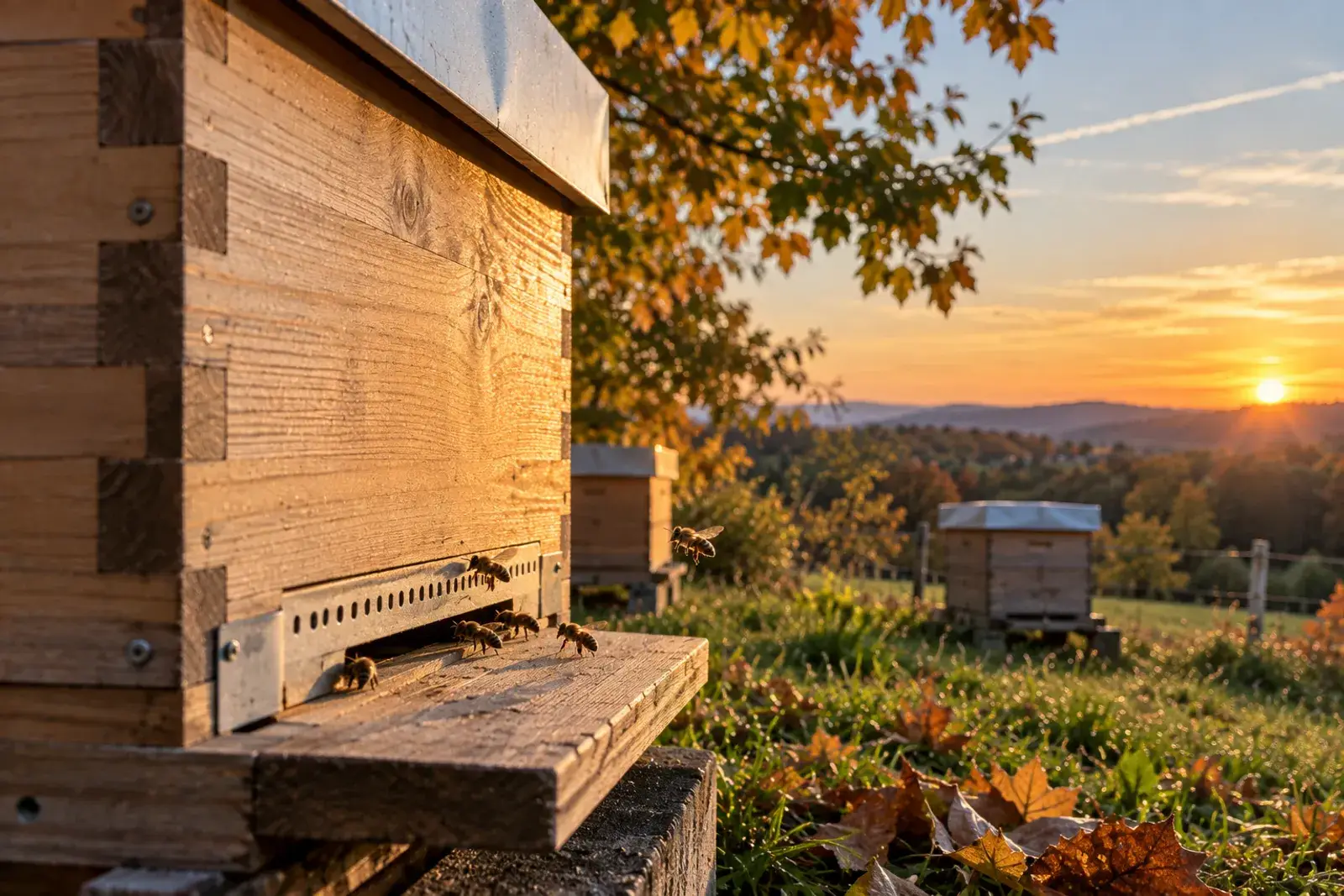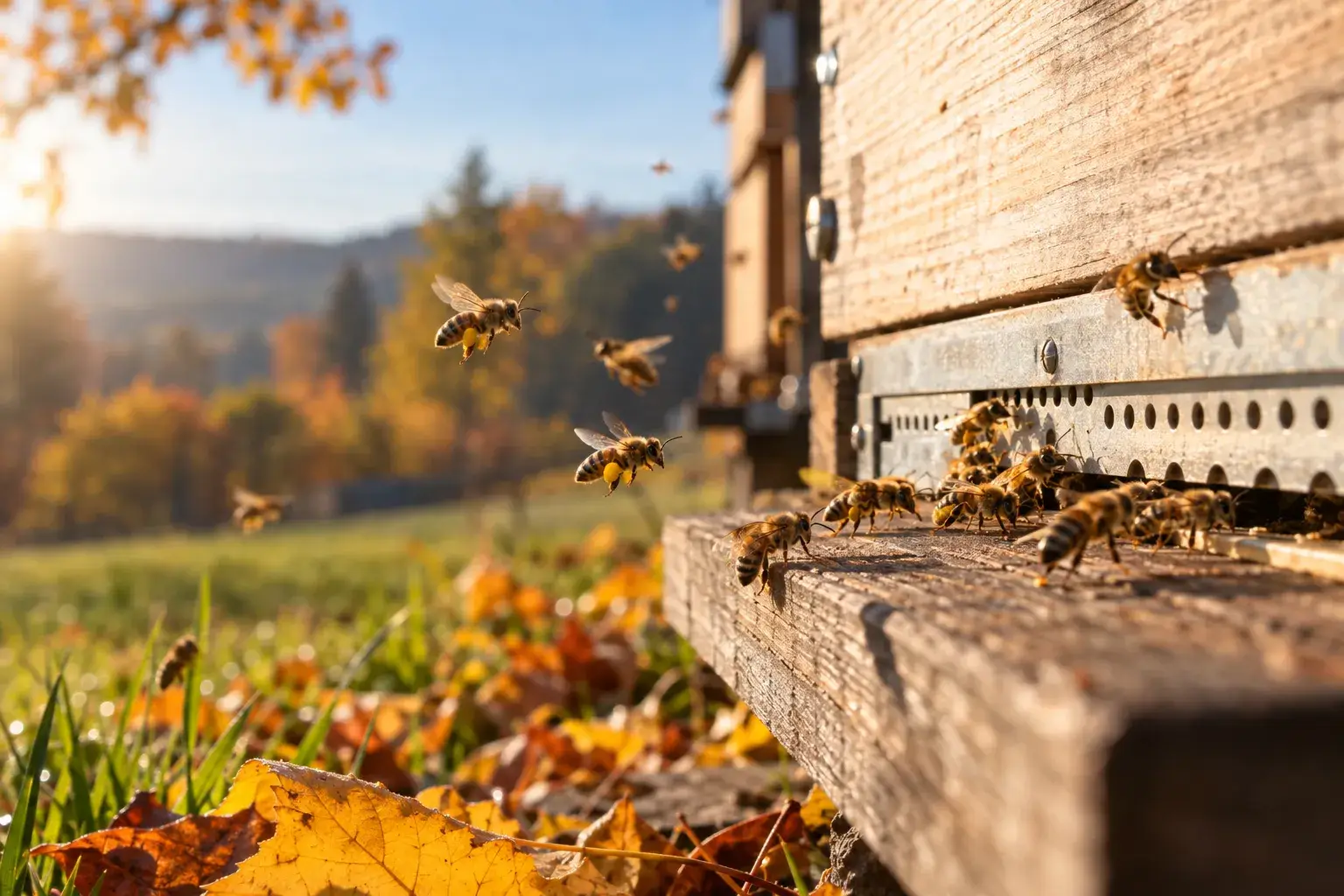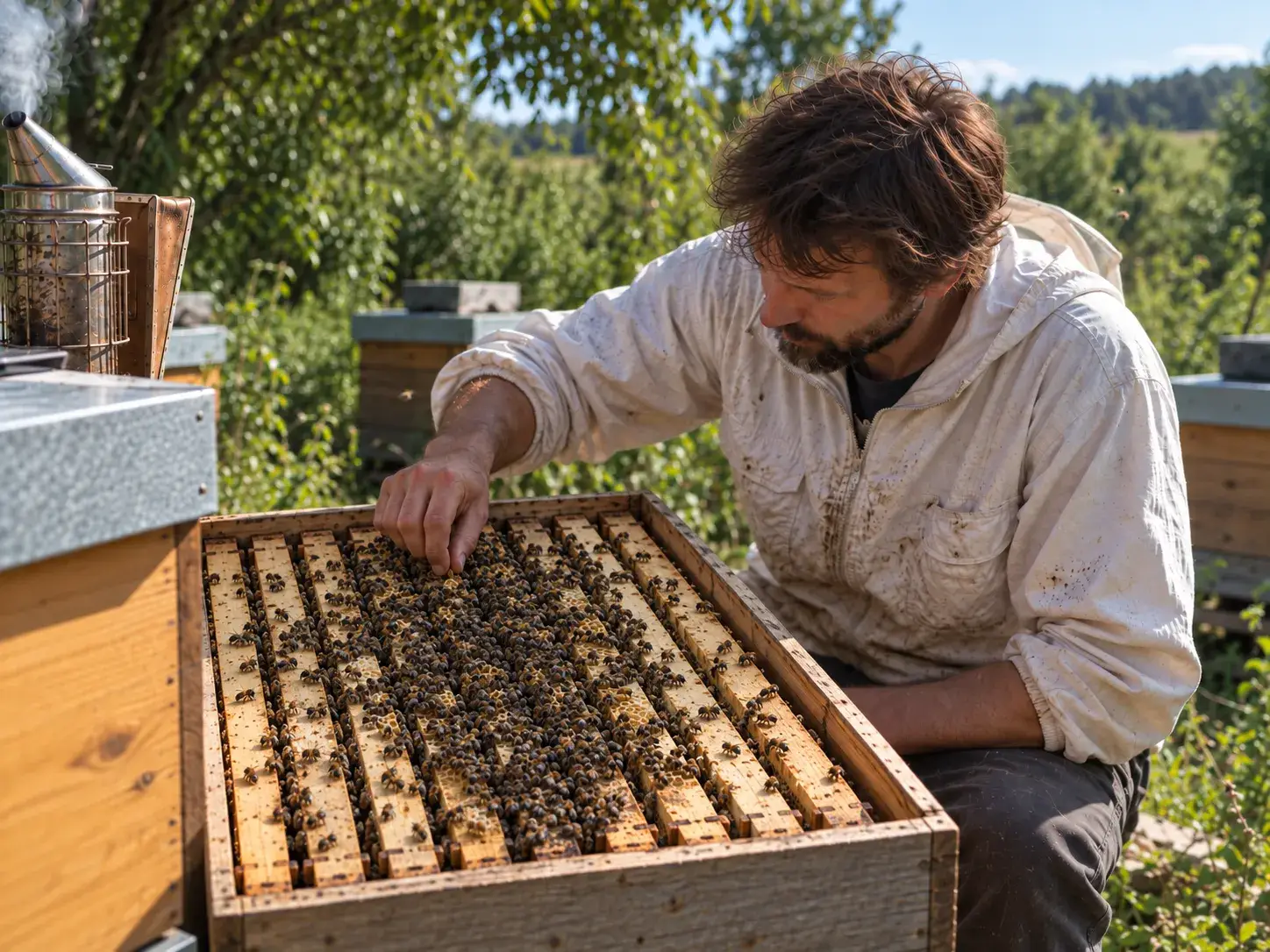
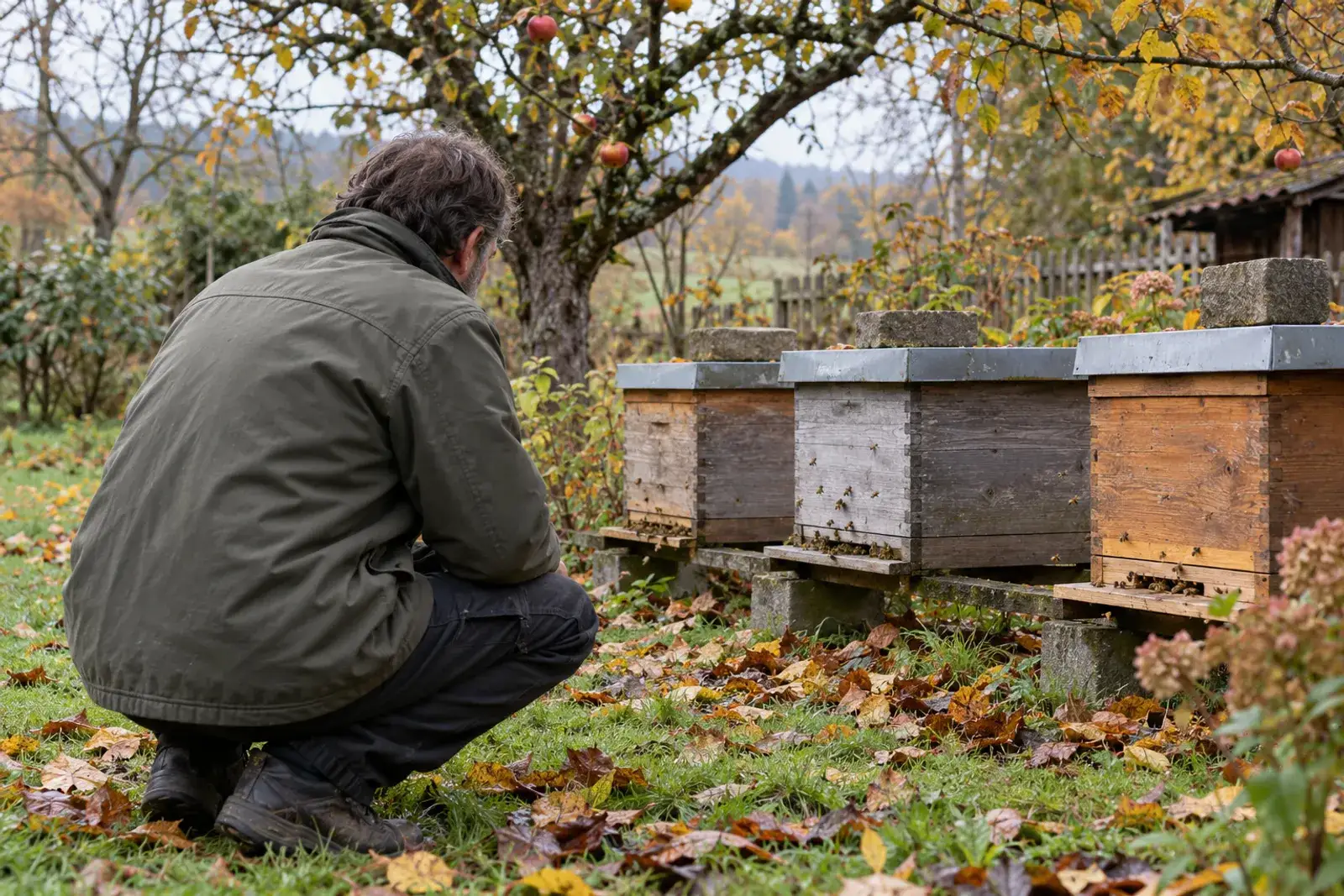
Bee hives and climate
Why the best hive helps the bees regulate their hive climate themselves
Extreme cold in winter, persistent heat in summer, long periods of rain and sharp swings in temperature: beekeeping has to adapt to changing climatic conditions. But are our hives sufficiently prepared for this?
Climate change does not only bring rising average temperatures. Extreme weather events may also become more frequent or more intense. For our colonies, this means additional challenges.
Bees are true masters at regulating the climate inside their hive. In winter they form a winter cluster and generate heat, in summer they cool the hive through ventilation and the evaporation of water. But all of this costs energy and resources.
Our goal should therefore be to give the bees a home in which they can maintain their own hive climate with as little energy as possible.
Good insulation does more than protect against cold
When we talk about insulating hives, many people think of winter first. But good thermal insulation can be just as beneficial in summer.
It slows down the exchange of heat with the surroundings. In winter this can reduce heat loss, while in summer the hive heats up less quickly under strong sunshine.
The point is not to cut the bees off from their environment completely. Rather, we should soften strong and rapid temperature swings inside the hive as much as possible.
Moisture: an often underestimated challenge
Besides temperature, moisture also plays an important role.
In winter, the bees’ metabolism produces water vapor. It must not condense uncontrolled on cold surfaces and drip onto the winter cluster.
At the same time, water from outside must be prevented from getting into the hive during long periods of rain.
What matters here is the right interplay of thermal insulation, moisture management, ventilation and structural weather protection. A good solution does not necessarily mean as much ventilation as possible. After all, that in turn can cause valuable heat to be lost.
Many good approaches, but still plenty of potential
There are already numerous interesting solutions: well insulated wooden hives, various insulation materials, insulated lids, adapted floors and designs that can deliberately drain away or buffer moisture.
Not every solution suits every location, every management style or every hive system.
That is why we should take a critical look at our own hives:
- How well do they protect against extreme heat and cold?
- Where is heat being lost unnecessarily?
- Can moisture escape in a controlled way without creating drafts?
- Do the hives stay reliably dry even during days of heavy rain?
- How can we improve existing systems with simple means?
The bee hive of the future
I am convinced that we will see many more interesting developments in the coming years. New materials, well thought out designs and better knowledge about the hive climate could help us optimize our hives even further.
Not every improvement has to be complicated or expensive. Sometimes even small changes can make a noticeable difference.
What matters is that we stay open to new ideas, share our experiences and question existing solutions.
The best bee hive is not necessarily the one we insulate the most, but the one that helps the bees maintain their natural hive climate with as little extra effort as possible.
Because one thing should be at the center of all our considerations: we do not need to dictate to the bees what climate they need. We should create the best possible conditions for them to regulate it themselves.
How do you see the future?
What experiences have you had with insulated hives? Which solutions have proven themselves for you in winter, in summer heat or during long periods of rain?
Perhaps sharing our experiences will already spark the next good ideas for the beekeeping of the future.
Try bee-pilot.io now