Logging inspections
Why memory alone isn’t enough to really know your colonies
We actually know our colonies pretty well.
We know which colony got going first in spring. We remember the swarm that, of course, dropped on exactly the day we had no time. And we definitely know which colony was our best last year.
Or do we?
Let’s run a little test.
Which queen was in colony 7 last year?
“The blue one … I think.”
When was she introduced?
“Sometime last year.”
How bad was the Varroa infestation in July?
“Not too bad.”
How much honey did the colony bring in?
“Quite a lot.”
And suddenly it becomes clear: we still know a surprising amount – but surprisingly little of it precisely.
Our memory loves stories
The huge swarm that settled in the apple tree sticks with us.
So does the queen we searched for half an hour, who in the end was calmly walking across the very first comb.
We don’t forget an unusually aggressive colony that quickly either.
But what about an ordinary inspection on a regular Tuesday in May?
Six brood combs. Queen seen. First queen cups. Colony strong. Honey super well accepted.
Four months later, hardly any of that is still in our head.
And after two years?
Good luck.
That’s not a shortcoming of the beekeeper. That’s just how memory works. Striking events stick, but lots of small pieces of information blur together.
“I know it” quickly turns into “I think so”
It gets particularly interesting when we judge colonies over a longer period.
“That’s a really good queen.”
Why, exactly?
Because her colony brought in a lot of honey this year?
Was she also gentle? What was her swarming tendency like? How well did the colony come through winter? How did the Varroa load develop? And how did all of that look the year before?
Suddenly a simple statement turns into a fairly complex question.
With ten, twenty, or fifty colonies, it becomes practically impossible to keep all these developments in your head.
And yet we base many decisions on exactly that foundation: our memory.
The interesting part often happens between inspections
A single inspection is a snapshot.
It gets exciting once many snapshots turn into a timeline.
A single Varroa count tells you something. Several measurements over weeks tell a story.
The same is true for colony strength, brood development, honey yield, food stores, swarming mood, or how a queen develops.
Only over time do you sometimes notice:
Something is changing here.
And exactly these kinds of changes are especially hard to spot from memory alone.
From writing things down to understanding them
The hive record card used to be, above all, one thing: the colony’s memory alongside the beehive itself.
And that job is just as important today.
Digital systems, however, can now take it a step further.
Once data is structured, it can be compared and linked together. Trends can become visible, anomalies can be spotted earlier, and past observations can turn into clues for the next decision.
That’s exactly the approach we’re pursuing with Bee-Pilot.
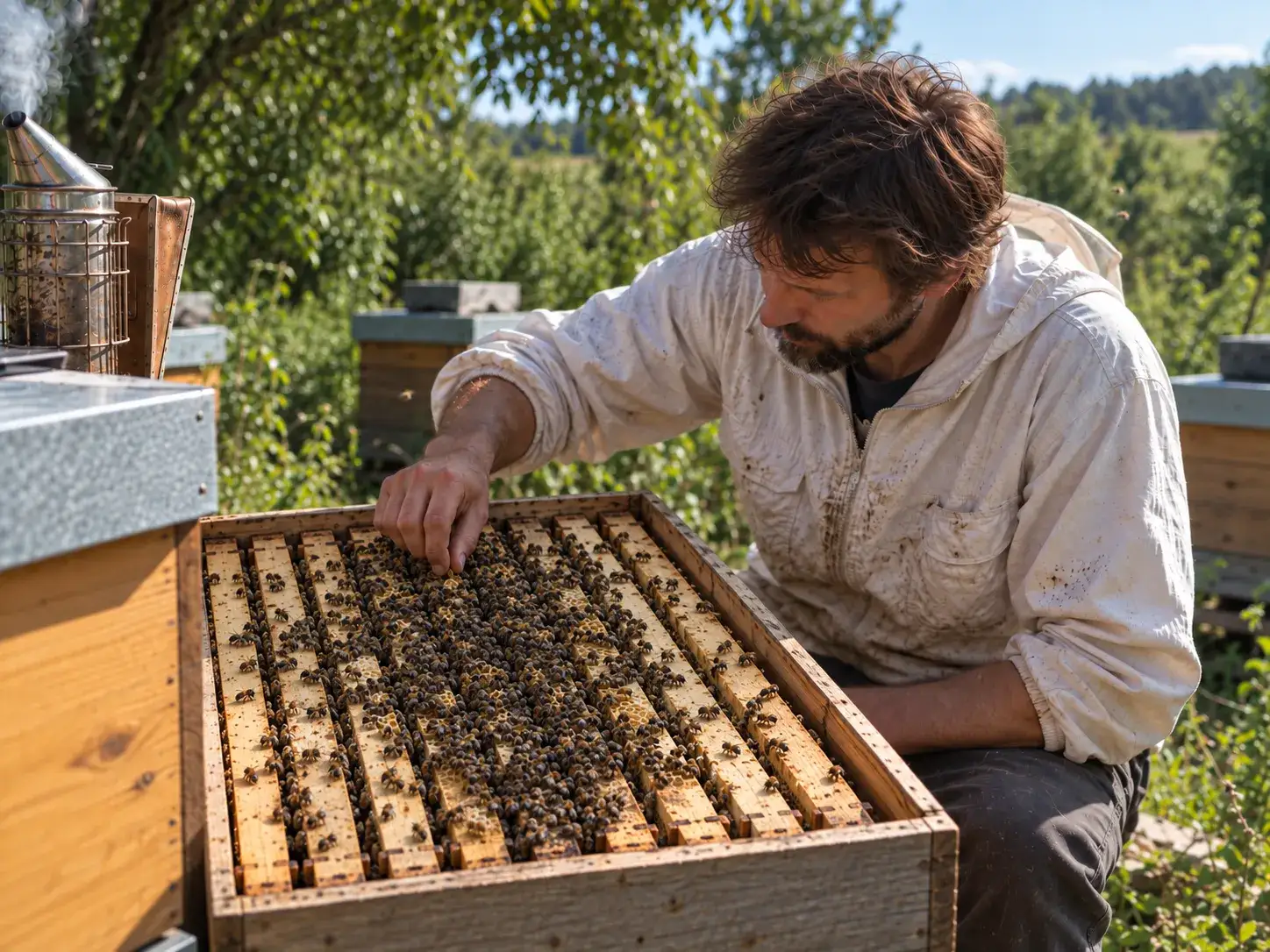
An inspection shouldn’t turn into a data-entry marathon. The information already comes up naturally while working the colony: queen, brood, colony strength, swarming mood, Varroa, treatment, feed, honey, or a brief observation.
Bee-Pilot brings this information together and looks at it not just individually, but in its timeline.
That way, a picture can gradually emerge from many small observations.
And then it gets really interesting
Because at some point it’s no longer just about the question:
“What did I note down back then?”
But, for example:
“How is this colony developing compared to the others?”
“Is there anything unusual I should be watching?”
“How is the food supply changing?”
“How is the Varroa load developing?”
“Which of my queens show the traits that matter to me over the long term?”
This is where Bee-Pilot can analyze data, make trends and developments visible, and derive clues, forecasts, and recommendations from them.
Not as a replacement for looking into the colony yourself.
But as additional information for the beekeeper before making a decision.
Because experience is more than memory
Maybe this is exactly where the real opportunity of digitalisation in beekeeping lies.
We no longer have to try to remember everything.
We can record our observations and later spot connections that easily get lost in everyday beekeeping.
The beekeeper brings their experience.
The colony delivers new information every single day.
And Bee-Pilot helps turn that information into more.
Because our memory is actually pretty good.
But over the course of a whole year, our bees tell us more than we could ever remember.
Try bee-pilot.io now