Beekeeping & Site Selection
Finding the Right Site for the Hives, There Are Significant Differences!
Core Message: A good site is an “invisible business factor” that stabilizes colony development and health, reduces stress, and saves work. Poor sites cost yield, time, and patience.
Choosing a location for bee colonies is one of the most crucial decisions in beekeeping, as it influences not only honey yield but also colony development, bee health, and the overall workload. A good site acts as an “invisible business factor”: It ensures that bees can fly early and regularly, that brood care remains stable, and that colonies need less energy to compensate for cold, wind, or overheating.
At the same time, the site determines whether there will be conflicts with neighbors, how accessible the apiary is, and what risks arise from pesticide use or health issues.
1) Microclimate: Why It Makes a Difference
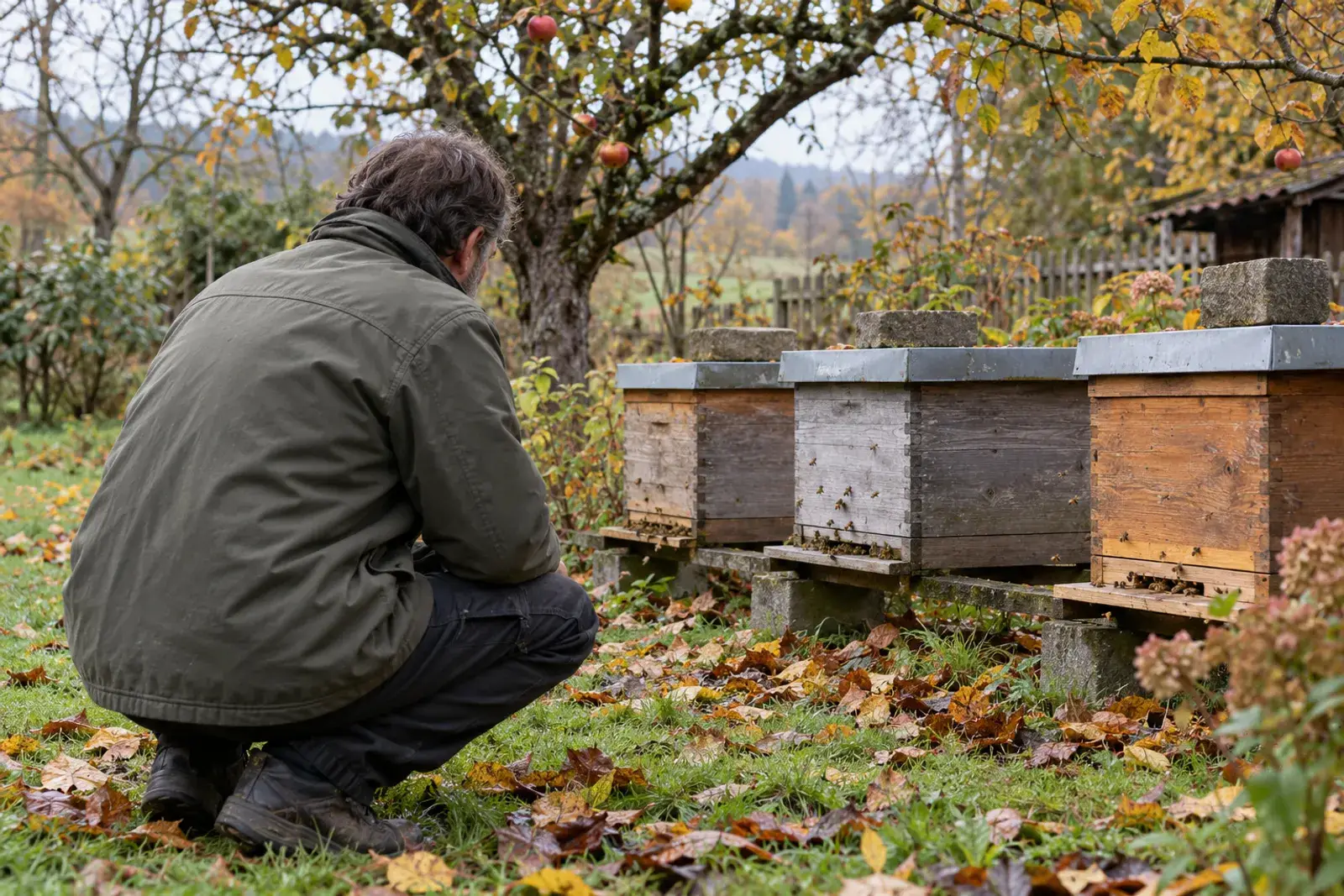
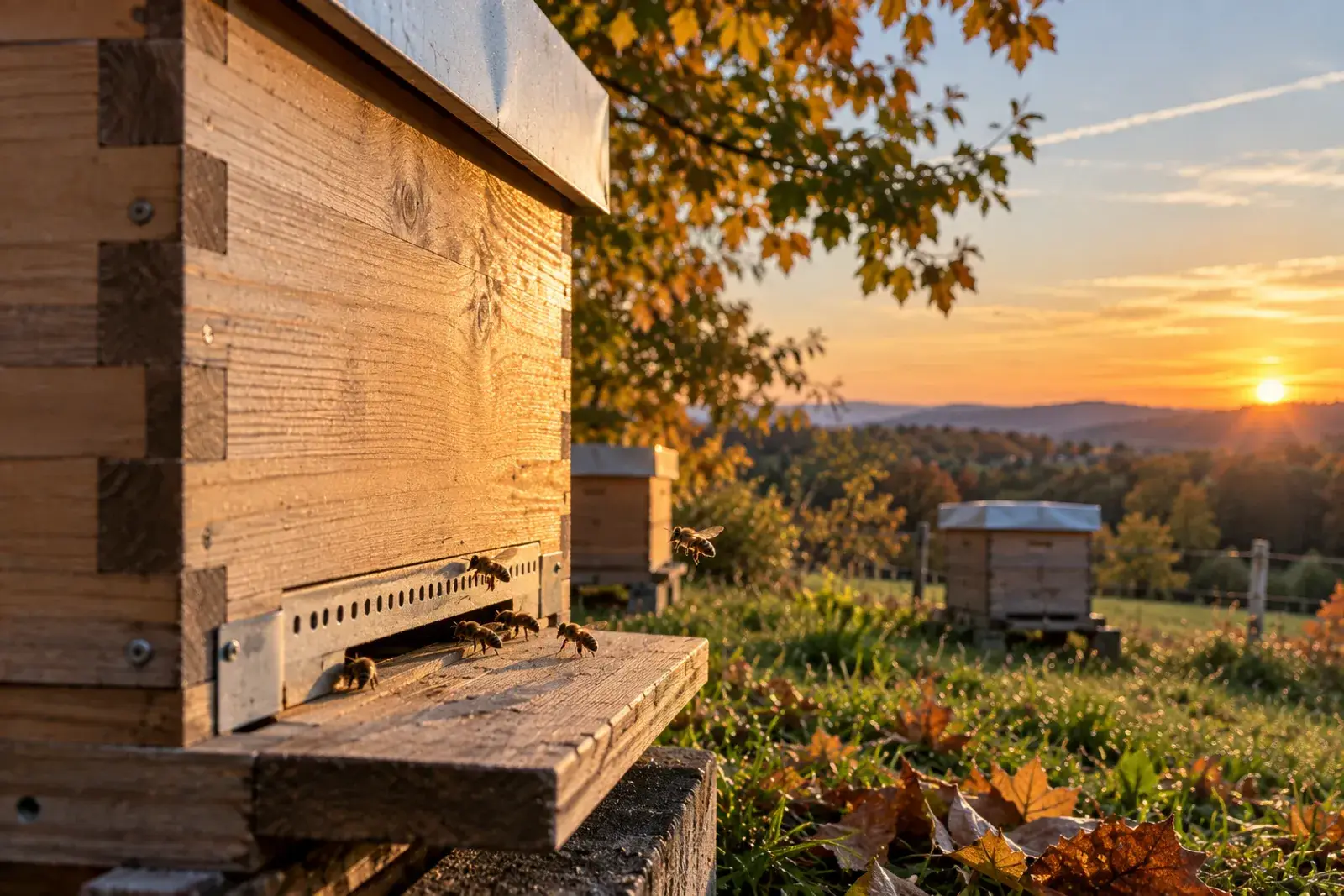
At the center of the assessment is the microclimate. Spots with morning sun are often advantageous because bees start the day earlier and can better utilize forage windows. Wind protection is equally important, as strong winds cool the hives, hinder flight operations, and increase the energy needs of the colonies.
In damp, cold locations, such as hollows or cold air depressions, colonies often develop more slowly, and problems such as persistent moisture or condensation occur more quickly. Conversely, intense heat, especially on very open and dark areas, can lead to heat stress. Then, bees need to ventilate more and fetch water, which ties up labor and can reduce performance.
The ideal location is thus neither permanently cool and moist nor excessively hot, but offers the most stable, balanced microclimate possible.
2) Forage: Not Just “One Main Forage”
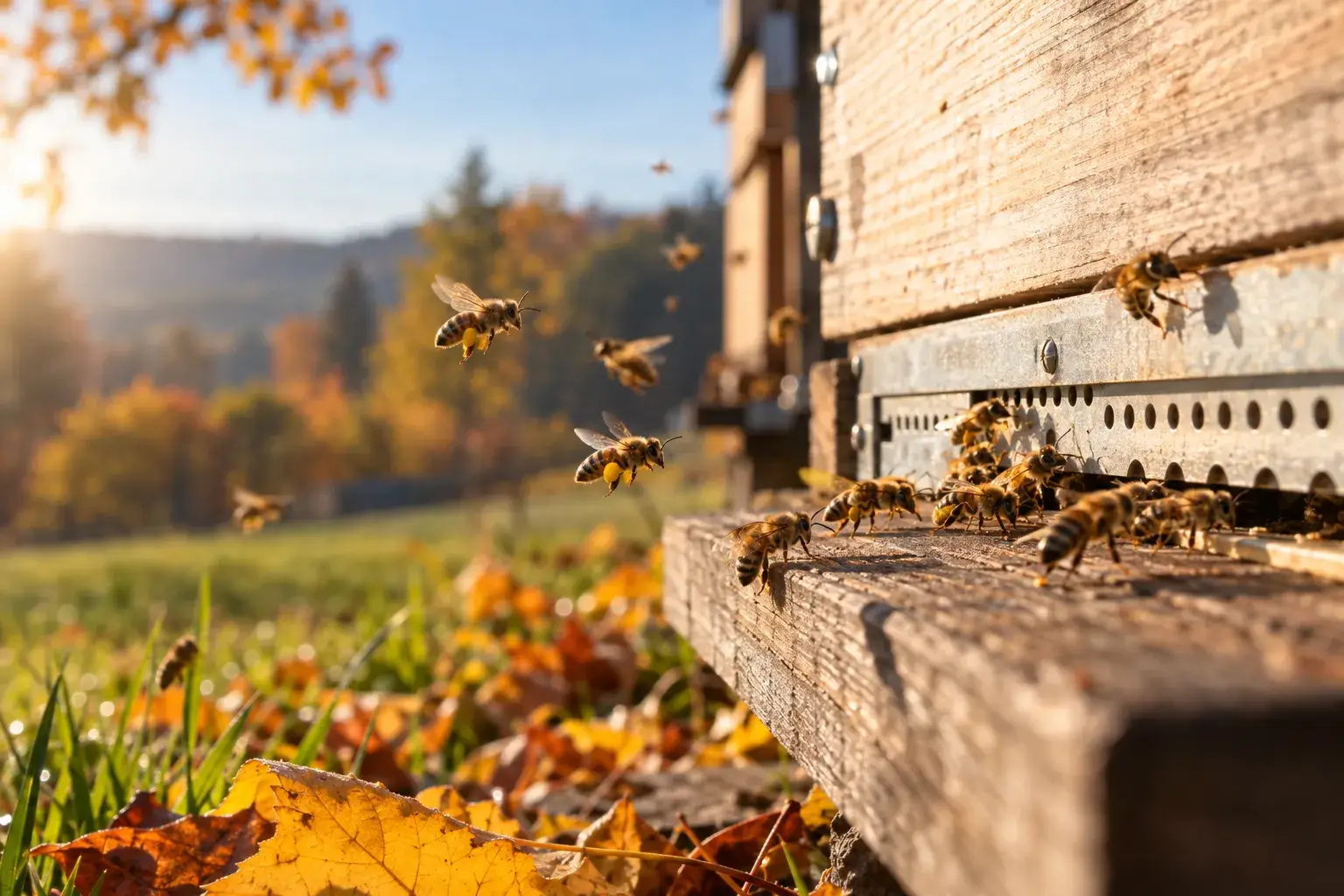
Besides the microclimate, the forage is crucial. When choosing a site, the focus is less on theoretical maximum flight distance, but more on whether there is a continuous supply of nectar and pollen in the vicinity.
A site may seem very attractive because it offers a strong main forage but can still be problematic if there is a long forage gap afterward. For a realistic evaluation, it is wise to mentally divide the year into sections: early forage, main forage, and late forage. The more evenly these phases are covered, the more stable the colonies develop, and the lower the risk that they will “get off track” during critical times.
3) Practicality & Conflict Avoidance in Everyday Life
A site can be biologically good but fail in daily life if access is difficult or if flight paths lead directly past paths, terraces, or neighboring areas. Often, smart placement helps: guiding flight paths upwards through hedges, fences, or natural barriers significantly reduces the risk of stings and complaints.
Security aspects also play a role—such as the risk of theft or vandalism—as well as whether the location remains accessible in all weather, for example for feeding, swarm control, or honey harvesting.
4) Rooftop Beekeeping: Good Opportunity, but Not Automatically “Good”
The site selection must be evaluated particularly carefully when it comes to rooftop beekeeping. Rooftop locations can offer advantages because flight operations usually start higher, causing fewer conflicts on the ground. In some urban locations, there is also a diverse forage mosaic from parks, gardens, and street trees.
However, it is crucial that rooftop beekeeping imposes additional requirements that barely play a role for ground locations. These include primarily work safety, wind load, heat development, and whether the roof surface carries the load durably without damage. On rooftops, the risk of falling is real and must be addressed through secure access and appropriate protective measures.
Roofs are often windier; this increases the risk that hives might tip over, shift, or that an insufficiently secured metal cover could be blown off and injure someone. On flat roofs, another factor is that dark roofs can heat up significantly, stressing the colonies’ thermal balance. Rooftop locations are therefore only a “good site” if security, stability, roof protection, and heat management are reliably resolved, and logistics (material up, honey down) remain practical in everyday life.
5) Formalities & Disease Management (Brief but Important)
Finally, every report should include a note on the formal and disease management aspect: Beekeeping in Germany is notifiable, and regardless of the location, clean documentation is sensible for being able to act quickly in case of problems or disease outbreaks.
Overall, it is clear: The best site decision consists not of one single criterion, but the interplay of microclimate, forage continuity, conflict minimization, safety, and long-term manageability.
Conclusion
A good site is more than just “where the hives are”: It controls flight activity, brood stability, stress levels, and ultimately the honey yield. Morning sun, wind protection, and a balanced microclimate are often the foundation. Additionally, a continuous forage throughout the year, not just a strong main forage with a subsequent gap, is important.
Core Message: The best site selection is always the sum of biology (microclimate + forage) and practice (conflict minimization + safety + accessibility). Particularly for rooftop locations, the technical and safety-related conditions determine whether the location will truly work in the long term.
More practical guides for beekeeping?