Phenology & Season Start
The First Snowdrops Bloom – Early Spring Begins
Why the Phenological Season Start is More Important than the Calendar Date – and What it Means for Beekeeping.
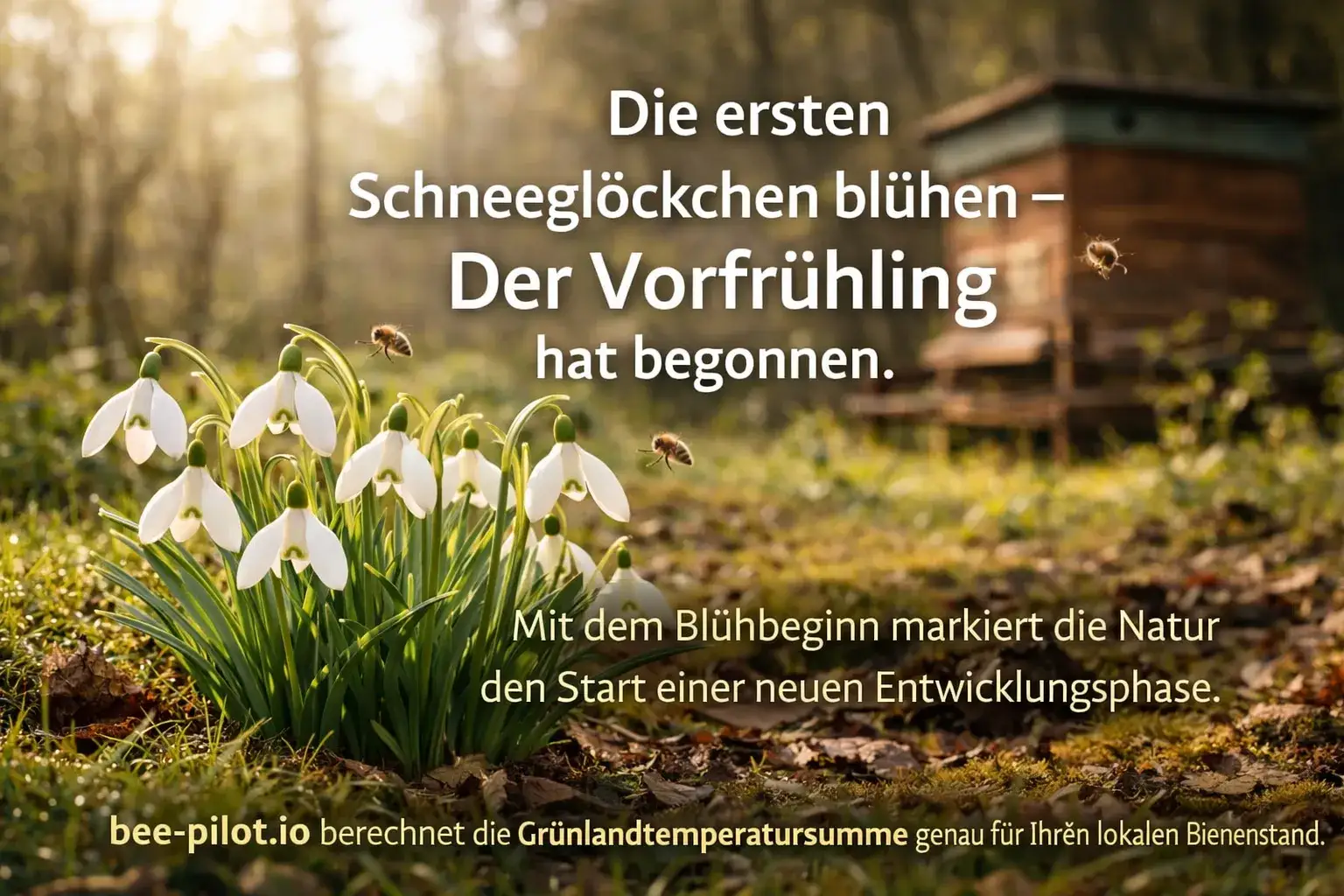
The first snowdrops have bloomed. This marks the phenological beginning of early spring – a clearly defined developmental phase in the year’s course, not determined by the calendar, but by actual natural development. Snowdrops are among the earliest flowering plants and react sensitively to rising temperatures.
What the Grassland Temperature Sum Shows
Snowdrops typically appear at a Grassland Temperature Sum (GTS) of about 35–70 °C. The GTS accumulates all positive daily average temperatures since January 1st, making the year’s heat input measurable. This allows an objective assessment of how far vegetation has advanced.
The current GTS value indicates that nature is now entering the next developmental phase. For beekeeping, this classification is crucial, as bees rely solely on actual environmental conditions – not the calendar.
What’s Happening in the Colonies Now
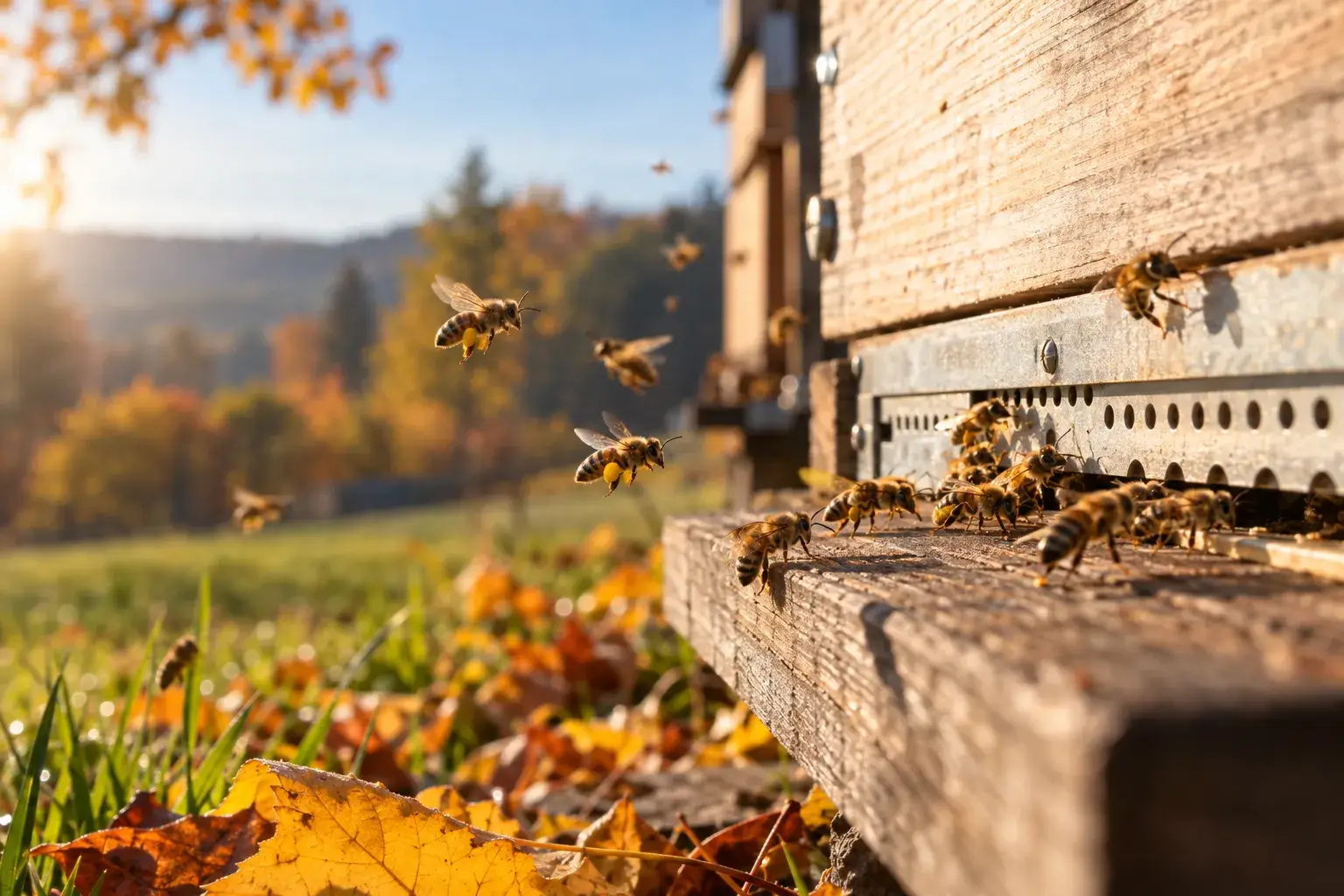
- First cleansing flights are taking place.
- Brood activity is increasing.
- Food consumption noticeably rises.
The further sequence – from hazel and alder through willow blossom to fruit bloom – determines all upcoming beekeeping decisions. The foundation is always the real developmental status of nature at each location.
Location-Specific Assessment with bee-pilot.io
Our solution bee-pilot.io calculates the Grassland Temperature Sum specifically for each beehive location and continuously displays the development. This allows for precise alignment between nature’s progress and beekeeping measures – an important foundation for informed decisions throughout the season.
Try bee-pilot.io now!