Early Forage
Correctly Assessing the Early Forage
How to Recognize the Starting Phase and Which Plants Play a Significant Role Now.
In early spring, bee colonies enter a particularly sensitive transition phase. After winter, brood development resumes, flight activity increases, and the first plants provide pollen or nectar.
From the outside, this often already seems like a clear start to the season. However, the early forage usually does not begin abruptly but in several stages. This start phase is interesting because it is not yet characterized by consistently stable supply.
Rather, early supplies, weather-related interruptions, and regionally very different plant offerings alternate. A closer look at how to recognize this phase and which plants play a role helps in classification.
The Start Phase of the Early Forage
The early forage doesn’t begin only when large areas bloom or significantly larger quantities are collected. It often starts earlier, namely when colonies transition from the pure winter phase to an initial active collection phase.
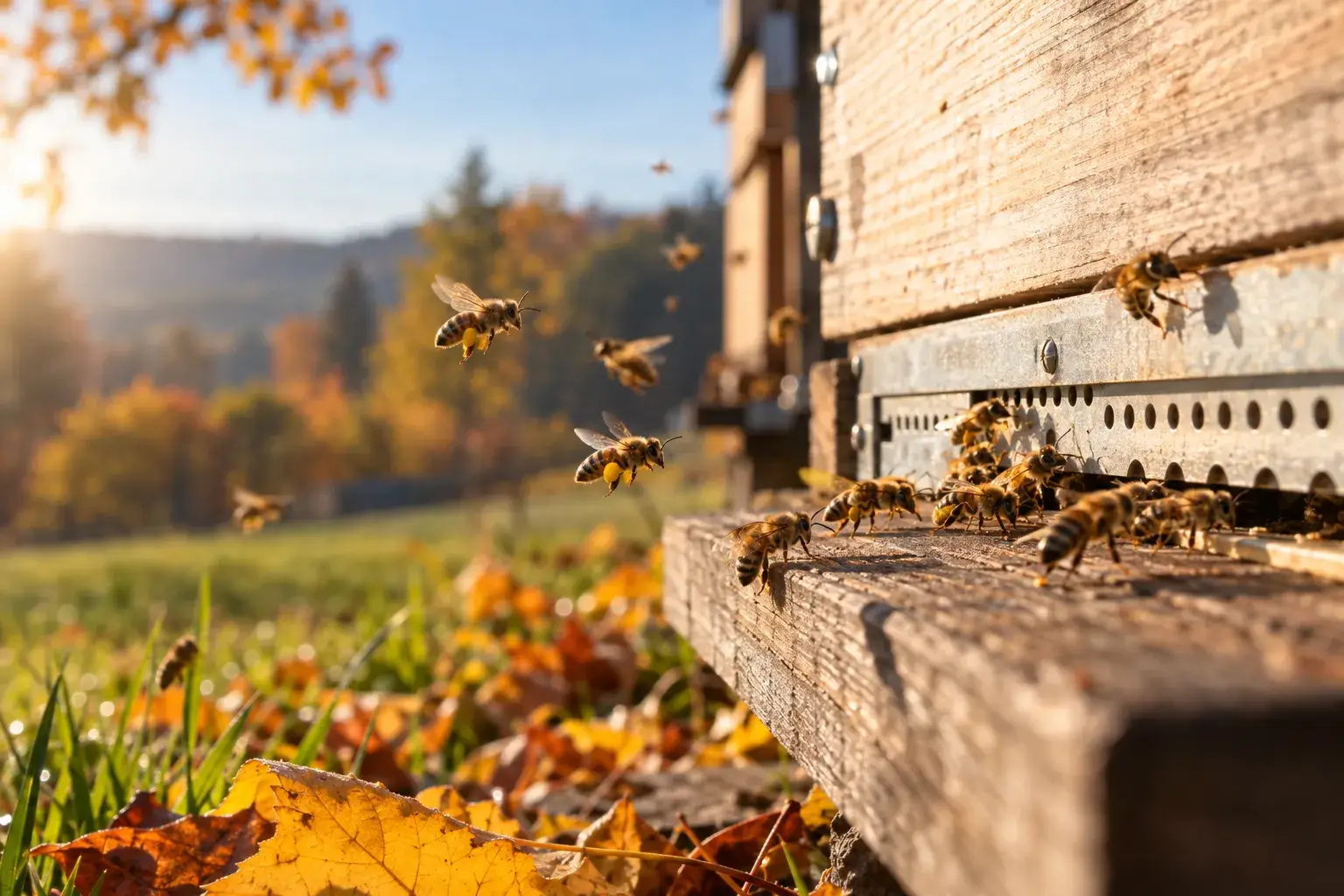
Typical for this start phase are increasing flight activity on mild days, first visible pollen collection, more intense cleansing flights, and an expanding brood nest. These signals show that the colony is entering the new season.
At the same time, it does not yet mean that a stable forage exists. In this early phase, collection is often only sporadic at first, heavily dependent on weather and a few early-blooming plants.
How to Recognize the Start Phase
The start phase is less recognizable by individual mass intakes than by a change in the overall picture. An important indication is when pollen collection becomes more regular over several suitable days in succession. This indicates that more than just isolated early bloomers are now available in the area.
The colors of pollen baskets often change as well. Depending on the region, initial light yellow, gray, or pale green tones may appear, later turning to brighter yellows and oranges. This is not an exact measure but can indicate that multiple plant species are being used simultaneously.
With better pollen supply, brood is often expanded as well. Therefore, the start phase is often recognized by a combination of increased flight activity, regular pollen intake, and growing internal dynamics. It is also typical that short mild weather windows are immediately utilized.
Hazel
In many areas, hazel is one of the first truly important pollen sources of the year. It blooms very early and can give a significant impulse for brood development.
It is characterized by its early pollen supplier effect. As a nectar source, it hardly plays a role. When hazel blooms well and the weather permits collection flights, this is one of the first clear signs in many regions that the start phase of early forage has begun.
Alder
Alder plays a similar role as hazel. It also primarily provides pollen, contributing to early protein supply. Regionally, it can be very significant, while in other areas, it is much less prominent.
Here too, the contribution is mainly to the start of brood, not yet to a broader energetic supply.
Willow
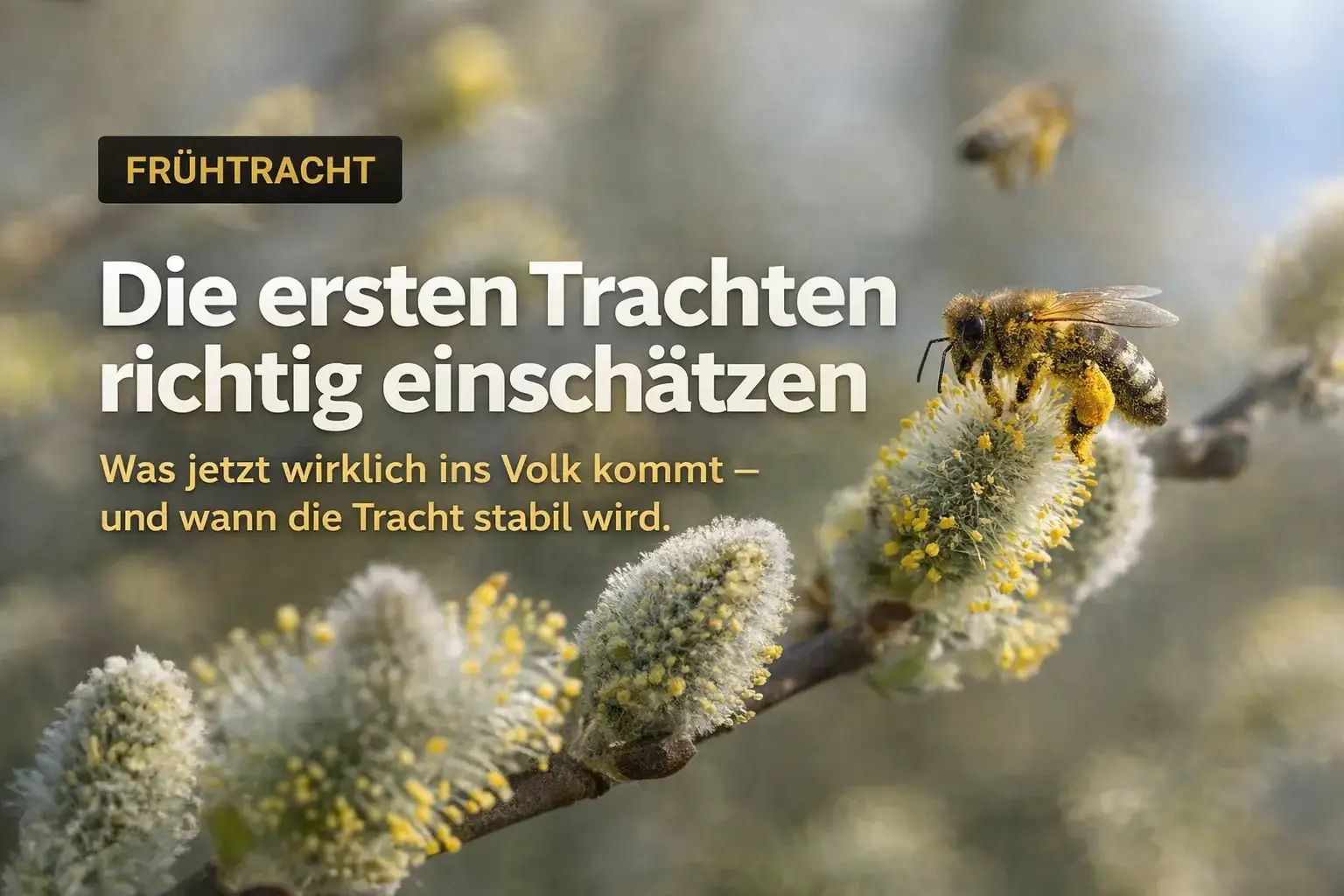
With willow, the first truly strong and broadly effective early forage phase begins in many areas. The goat willow, in particular, is of great importance to bees in spring.
Its special role lies in the fact that it provides a lot of pollen and also offers nectar. Thus, it often marks the transition from an initially unstable start phase to a better-supporting early forage.
If the weather is favorable for several days, willow often significantly changes the supply situation in the colony.
Early Bloomers in Residential Areas and Gardens
Plants such as crocus, snowdrops, winter aconite, snowflakes, hellebore, or coltsfoot also play a role in the start phase. They are particularly relevant where there are many gardens, parks, or structurally rich areas in the surroundings.
Their significance is usually more complementary. They provide pollen and sometimes nectar sporadically but are highly dependent on plant density, weather, and location.
Cornelian Cherry and Maple
Cornelian cherry is a good early forage plant in some areas and can provide both pollen and nectar. Where it occurs more frequently, it is well used by bees.
Maple species follow relatively closely after willows, depending on the region, and can significantly enhance the early forage. In structured landscapes, they often help support the transition to a more stable spring supply.
The Difference Between Start and Stability
Especially in spring, it is useful to distinguish between the start of the forage and a stable forage situation. The start is often already visible with hazel, alder, and the first early bloomers.
However, a more stable supply only arises later in many places, when willows bloom more intensely, multiple sources are open simultaneously, the weather allows longer collection periods, and intake is not merely sporadic but regular.
The start phase is, therefore, often still volatile. It can look promising and, at the same time, remain sensitive to weather changes.
Indicator Plants for the Transition to Stable Early Forage
Some plants are particularly suitable as a guide for the transition to the next stage. In many areas, willow in full bloom is one of the most important markers. Now, initial intakes often become a significantly more supportive supply.
Once dandelions appear extensively, the situation changes further in many regions. More than just a single source is usually available, and the early forage becomes broader. Depending on the landscape, fruit trees, maple, and other flowering plants then contribute to increasingly continuous supply.
Small Tips for Classification
In this phase, simple observations often help: Does pollen collection occur only in isolated warm hours or regularly? Are there only a few foragers or already a visibly clear intake? Are only individual garden plants blooming, or are larger natural sources such as hazel, alder, or willow blooming?
The question of whether the weather remains suitable for collection over several days or the intake is heavily interrupted is also part of classifying the start phase.
Conclusion
The start phase of early forage usually begins earlier than it seems at first glance, but it doesn’t proceed steadily. Initially, early pollen providers like hazel and alder dominate the scene. Early bloomers complement locally. Then, with willow, the first genuinely supportive early forage phase begins in many places before a broader and more reliable supply emerges with dandelions, maple, and other plants.
Thus, early forage is not a single event but a staged development. These initial stages make the phase in spring so interesting—and so different from site to site.
Test bee-pilot.io now