Herbstkontrolle
How a short checklist separates clarified points from real inspection needs
In autumn, we want to ensure that our bee colonies are well-prepared for winter. However, not every colony needs to be examined thoroughly again. The best inspection answers important questions with as little disturbance as possible.
Experienced beekeepers often gain a good first impression after only a few seconds. They connect the current picture with the history: How strong was the colony last time? Was the queen laying? Was there enough feeding and was the Varroa infestation monitored?
This experience saves interventions. However, it does not replace a reliable food assessment or Varroa measurement. Therefore, a short checklist helps to distinguish between clarified points and actual inspection needs.
1. Prepare: What still needs to be clarified for this colony?
Before visiting the stand, look at your last recordings. Go through six points for each colony:
- Queen correctness: When were young brood and normal worker brood last noted?
- Colony strength: Has the colony developed as expected?
- Food: Are supplies and weight development known?
- Varroa: Is there a current, meaningful infestation control?
- Brood health: Were there any noticeable observations?
- Hive: Are the entrance, mouse protection, and weather protection prepared?
Mark the points with “clarified,” “check,” or “action needed.” This way, you already know what questions remain open before opening the hive.
Choose a warm, preferably wind-still day for necessary frame inspections. Have the required materials ready so that the hive does not remain open longer than necessary.
2. At the stand: First, observe from the outside
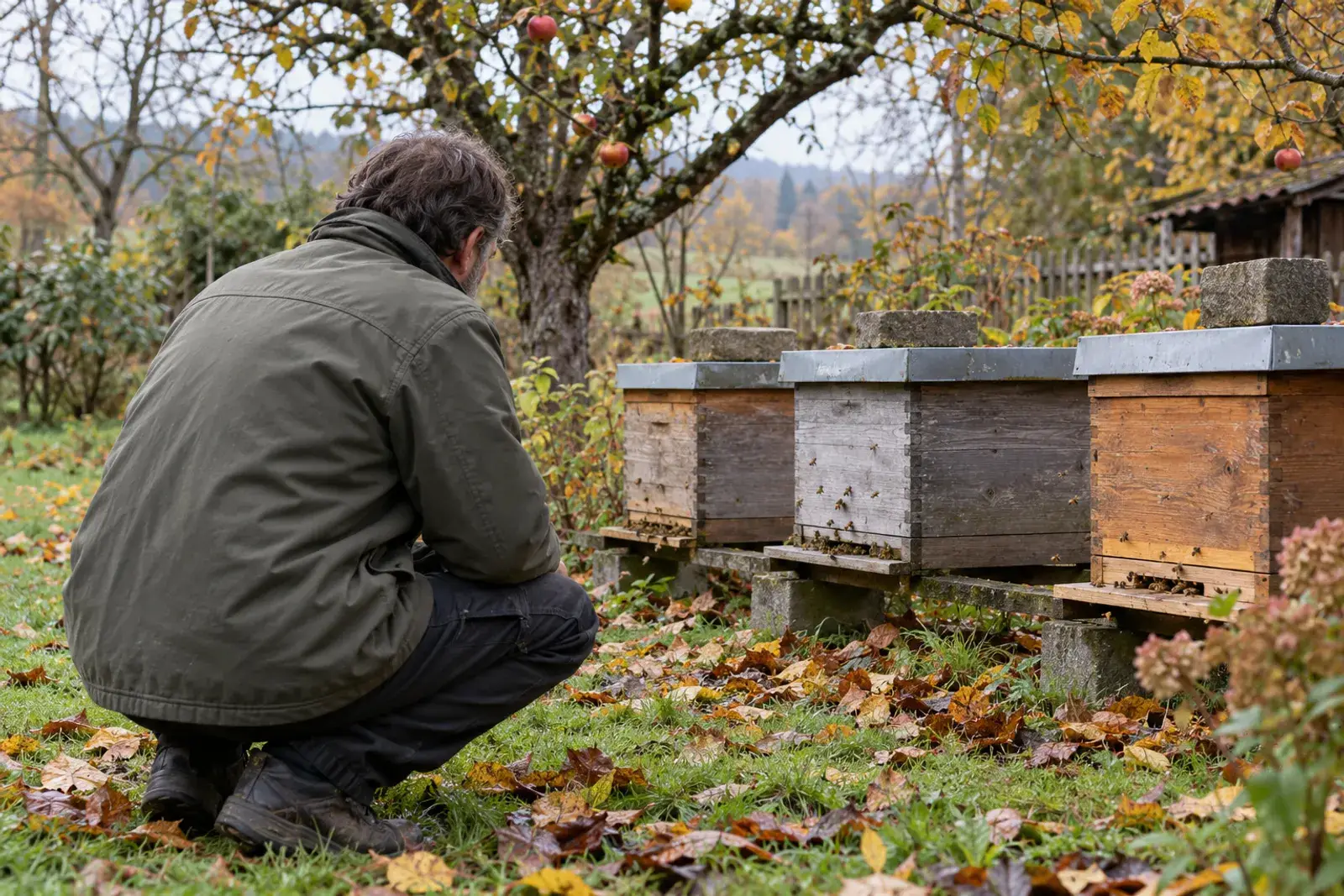
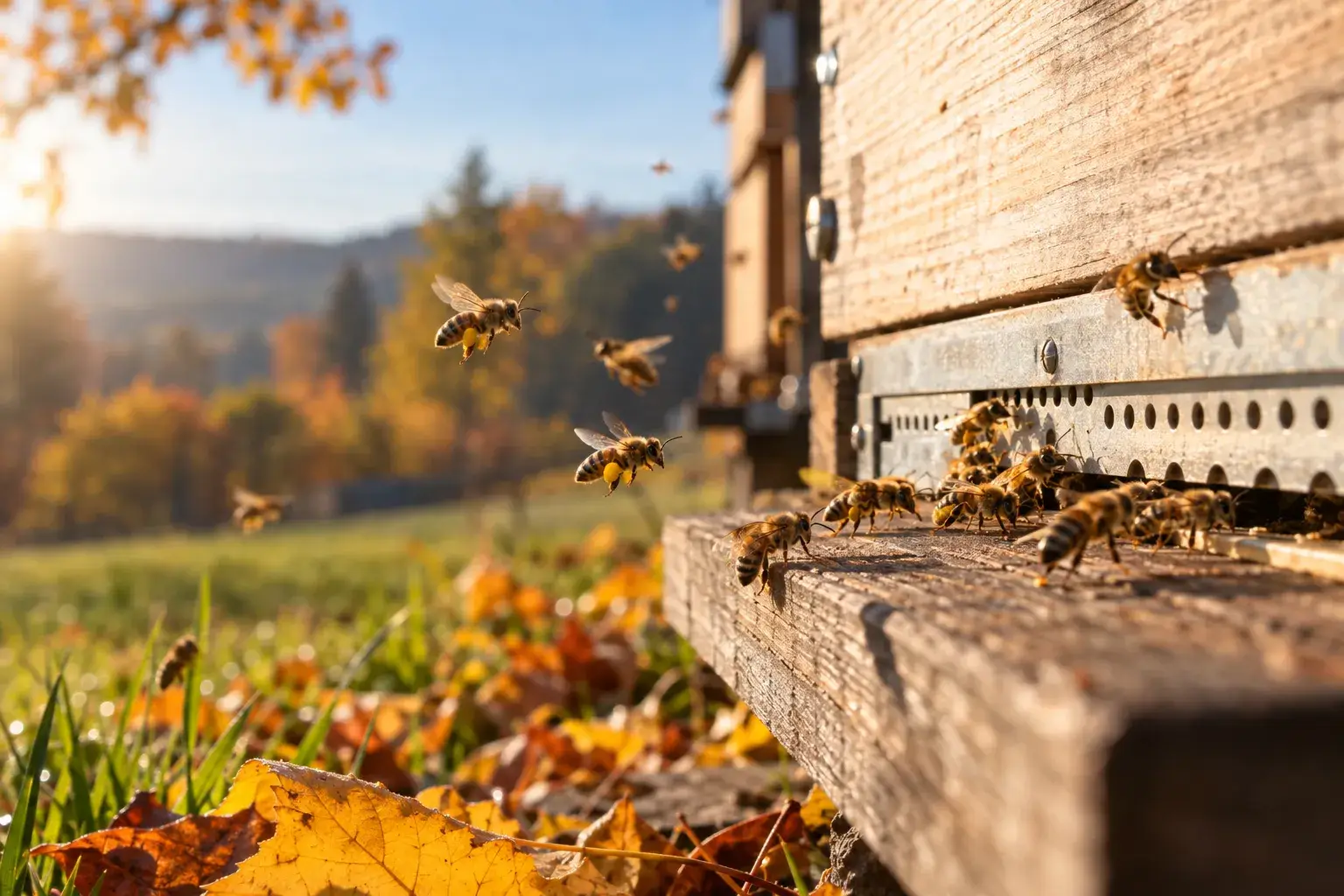
Start with a calm walk around. Does the flight activity match the weather? Are there fights at the entrance, unusually many dead bees, or bees searching for cracks?
Comparing with neighbor colonies helps to recognize differences. However, a small colony usually flies less strongly than a large one. A healthy colony can also remain almost without flight traffic in cool weather. A difference is initially an indication, not a diagnosis.
Experienced beekeepers pay special attention to changes from the usual behavior. A previously active colony that suddenly lags behind in good flying weather deserves more attention than one that has always been smaller.
Check the external condition as well: Is the entrance clear, is the lid secure, is the hive stable and protected against penetrating water? Set up the mouse protection in time without obstructing the passage of bees.
In case of robbery suspicion: Avoid prolonged opening, spilled feed, and freely accessible frames. Check leaky feeders and adjust the entrance to the colony’s defense ability.
3. Assess food: Use the weight
Before you pull a food frame, check the weight. Regular measurements are more meaningful than a one-time lift. What matters is whether there are enough supplies and how the weight has changed since the last feeding.
A scale like Honeylink can be very helpful here. The weight trend helps track changes without opening the hive. A documented comparative weight after the feeding is particularly useful.
In this context, classification is important: A hive scale measures the total weight of the hive, frames, bees, brood, and supplies. Therefore, a weight loss does not automatically correspond to the same amount of consumed food. Moisture, flight activity, or the removal of accessories can also influence measurement values.
If the food quantity was assessed securely beforehand and the weight trend is plausible, a renewed frame inspection can often be omitted. If the hive is unexpectedly light or the supply unclear, check the supplies specifically.
Missing food will be added in time as long as the bees can still take it up and process it. Young colonies and colonies after a total brood removal can brood longer. For them, feeding should create enough supplies without blocking all available cells in the brood area.
4. Check Varroa: Rely on measurement values instead of outward appearance
With Varroa, visual inspection reaches its limits. A strong, calm-appearing colony may already be heavily infested. Visible damage may only occur once winter bees have already been affected.
Therefore, check the current infestation level along with the treatment record. An entered treatment alone does not prove sufficient success.
Record date, measurement method, measurement duration or sample size, and result. In a bottom insert, a distinction must be made between natural and treatment-related mite fall. Infestation controls are also part of the chosen Varroa concept for colonies that appear outwardly unremarkable.
If the infestation is elevated, further actions depend on brood status, weather, and the application guidelines of the used substance. Do not simply wait for the winter treatment in case of problematic infestations.
For a disturbance-free control: Use already available, current measurement values. Where a suitable bottom insert is applied, mite fall can be assessed without pulling frames.
5. Open only for open questions
If the history, food supply, and Varroa status are coherent, there is no reason to dismantle an unremarkable colony solely because of the calendar.
If clarification is needed, open briefly and first assess the bee seating. How many frame lanes are occupied? How closely are the bees packed? Does this correspond to the previous state?
Experienced beekeepers quickly recognize whether the colony matches their expected picture. They take the temperature into account: In cold weather, the bees sit closer; in warm flying weather, many foragers are out.
An unexpected decline is more important than a single number. If a previously strong colony has shrunk significantly, check food, Varroa status, and possibly brood more closely. Merging should not occur before the cause is clarified. Unresolved disease signs must not be transmitted to a healthy colony.
6. Targeted inspection of a frame: Assess queen, brood, and food together
If queen correctness or brood health is unclear, select a significant frame from the brood area. Multiple open questions can often be answered at once.
Is there any indication of a functioning queen?
Eggs or young larvae together with normal worker brood indicate a functioning queen. An additional search for her is usually unnecessary.
If young brood is missing, consider the season and history. A fall brood pause is possible. Calm behavior and pollen entry supplement the impression but do not prove queen correctness on their own.
Do not act on mere suspicion: The absence of eggs on a single frame does not justify introducing a new queen or merging.
Is the existing brood unremarkable?
A diminishing brood nest is normal in autumn. Even individual gaps are not yet evidence of disease.
Pay attention to increased dead or discolored larvae, unusually sunken or perforated cell covers, and deformed young bees. Document conspicuous areas preferably with a photo and date. Suspicious frames should not be swapped between colonies. In case of suspicion of a reportable bee disease, the responsible veterinary authority must be involved.
Are the supplies accessible?
If the food supply was previously unclear, check the quantity and location of the supplies specifically. A small food ring on a brood frame does not prove sufficient winter supplies.
Avoid unnecessary shifting of frames. The bee seating and adjacent supplies should remain contiguous. Once the open questions are answered, the frame returns to its previous place, and the hive is closed.
In conclusion: Translate the checklist into a decision
Assign each colony a clear result:
| Result | Next Step |
|---|---|
| Condition plausible, supply and infestation clarified | Leave the colony in peace; further inspections as needed and according to the control plan |
| Concrete shortfall detected | Note the action and date |
| Findings still unclear | Record open question and clarify it specifically |
Thus, the checklist becomes a practical decision-making aid. It does not require a complete inspection at each visit but shows when enough information is available.
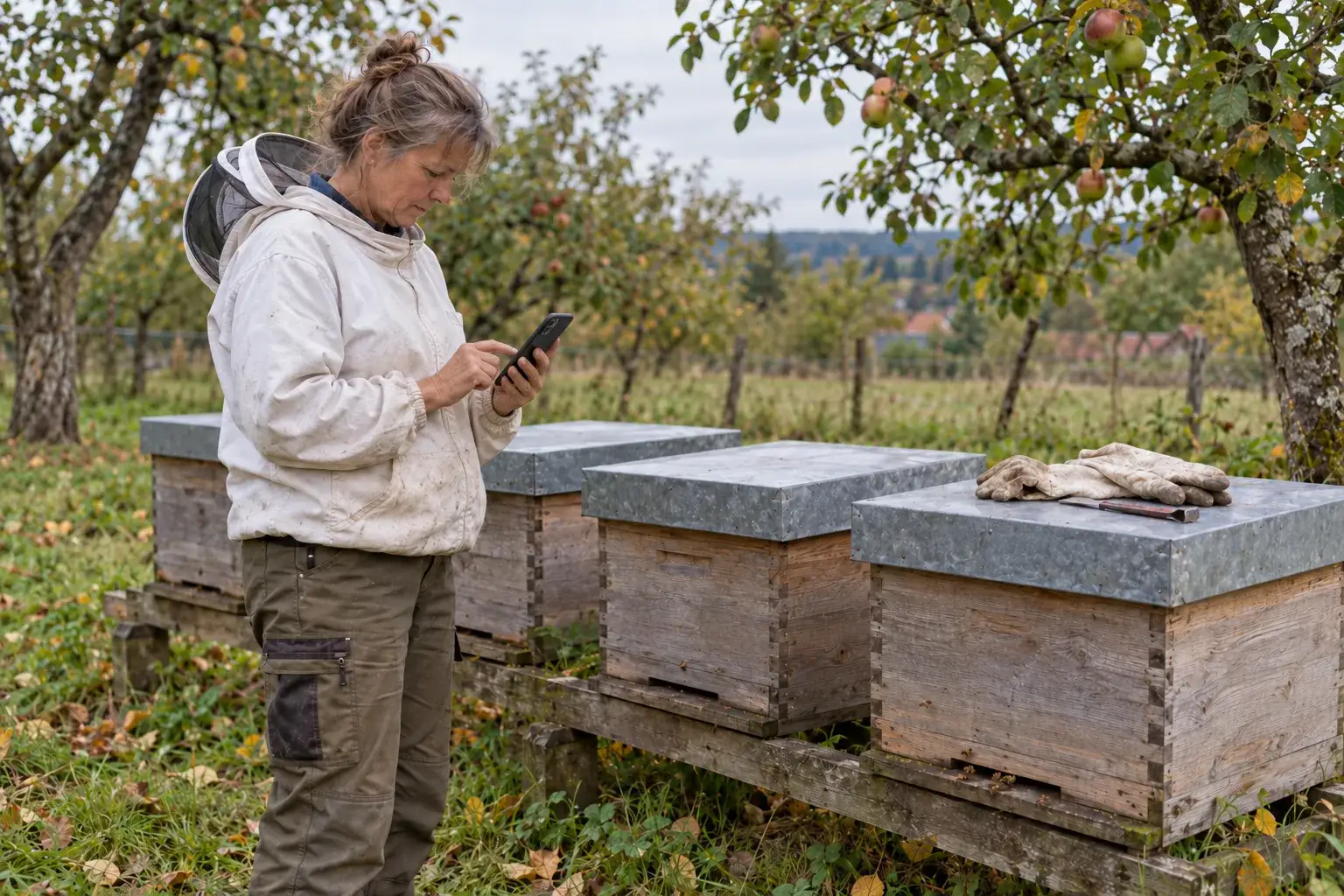
bee-pilot.io can reliably assist with this: Previous inspections, data on colony strength, brood observations, and Varroa values remain assigned to the respective colony and can be compared. Open points and planned actions can be noted. Thus, the history is readily available at the stand.
The goal remains simple: Recognize problems in time, act purposefully, and disturb well-supplied, unremarkable colonies as little as possible.