Herbstfütterung
In September, It’s Not the Date, But the Condition of the Colony That Matters
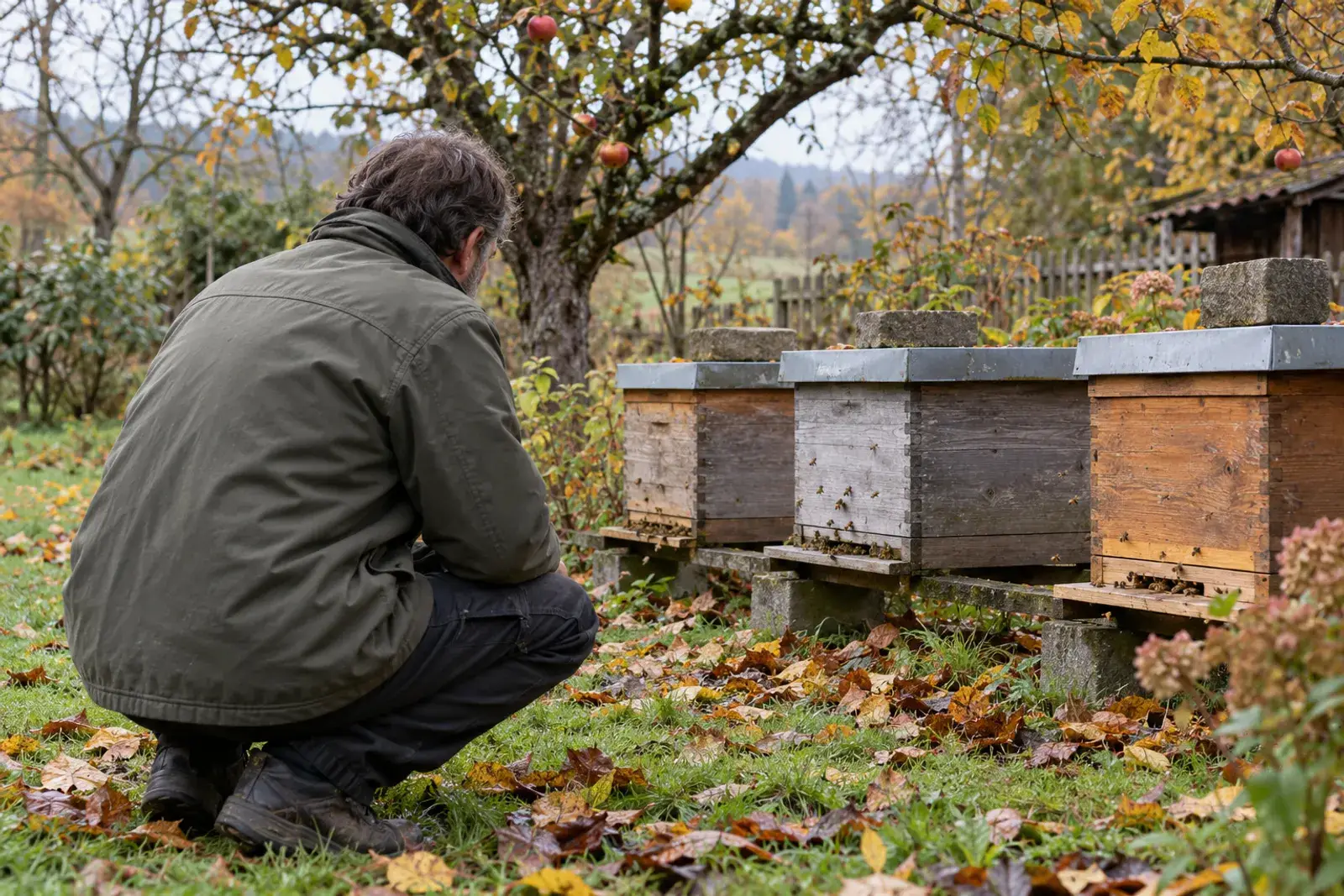
By September, winter feeding should be well underway. However, this doesn’t mean simply pouring in feed until the desired winter weight is reached.
Many colonies still have brood at this time and require adequate space for the remaining brood cells. If you provide the remaining feed quantities without inspecting the colony, you deprive the queen of the space needed for the last winter bees.
Not Every Colony Develops Similarly
Especially young colonies or those after a total brood removal (TBE) can still be intensively brooding in September. Established production colonies, on the other hand, may already significantly reduce their brood nest or move increasingly out of brood.
Colony strength also plays an important role here. Therefore, the actual condition of the colony is crucial, not just the date:
- How strong is the colony?
- How large is the brood nest?
- How much feed is already available?
Two colonies at the same location can therefore require two completely different feed amounts on the same day.
Too Much Feed Can Crowd the Brood Nest
If a still heavily brooding colony receives large amounts of feed at once, newly freed cells can quickly be occupied with feed. The queen then lacks space for further egg laying, unnecessarily crowding the brood nest.
In such colonies, smaller, adjusted feed amounts can be effective. The colony processes the feed without crowding the brood area.
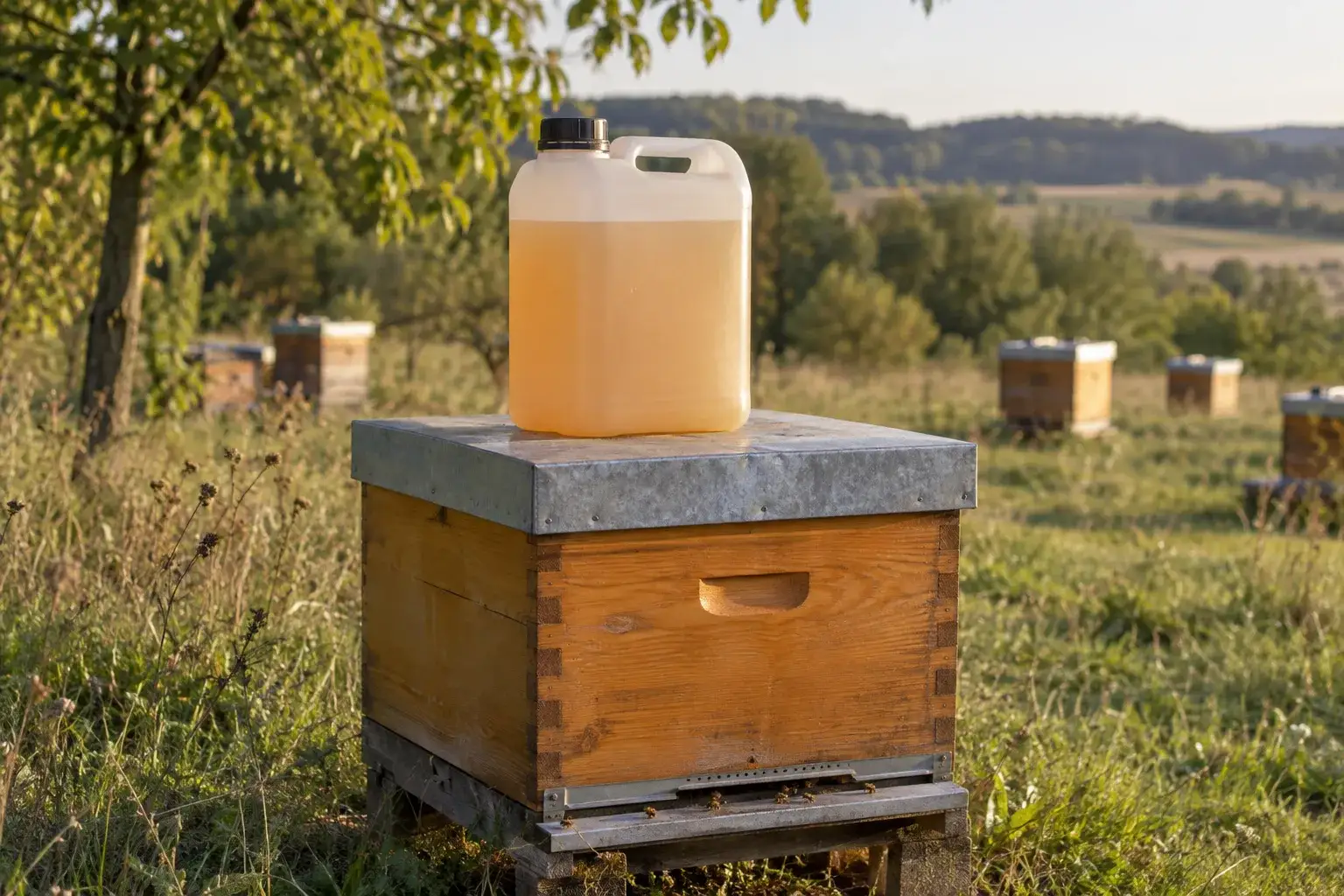
If a strong production colony is already significantly moving out of brood, the newly freed spaces can increasingly be filled with winter feed, allowing for correspondingly larger quantities to be given.
Weather Also Plays a Role in the Decision
In addition to brood and colony strength, the weather development should be monitored in September. A sudden early cold snap can significantly restrict opportunities for further feeding.
Modern weather forecasts often provide a usable trend for the next 7 to 10 days. If a longer cold phase is on the horizon, you can react in time and provide any missing winter feed beforehand.
In persistently mild weather with a continued large brood nest, on the other hand, it is more likely to allocate the remaining feed quantity over several feedings.
However, feeding should not be unnecessarily delayed – weather forecasts become less reliable with increasing distance.
Reading the Colony – And Staying Flexible
Before the next feeding, four points should be considered together:
- Colony Strength – how many bees are actually in the hive?
- Brood Area – is it still heavily brooding or is the colony already moving out of brood?
- Feed Reserves – how much winter feed is already stored?
- Weather Development – will it remain mild or is a cold snap on the way?
From these factors, it becomes clear whether stronger feeding should take place now or if smaller portions are more sensible for a still heavily brooding colony.
Conclusion
Autumn feeding is not a rigid scheme. The goal is the right balance: enough space for the last important winter bees, sufficient winter feed, and at the same time, enough reserves to respond promptly to an early winter onset.
Our Advice from Bee Pilot: Note with each feeding how much each colony received. Only through comparison over several feedings does it become clear which colony still needs feed and which has already crowded the brood nest.
Document Feed Amounts and Brood Pattern Directly at the Apiary