Monatsguide: February
: Quiet Colonies, Important Decisions
Key Message: Respect winter dormancy – but diligently mitigate risks (especially food/moisture) and prepare for the season’s start.
February is usually still winter for beekeepers – but often the month when spring makes itself known. Depending on the region and weather, brood activity may start increasing, early cleansing flights are possible, and with that comes a risk many underestimate: food shortage or the classic food interruption when the cluster can’t reach the stores.
In practice, this means: Leave colonies undisturbed, but perform thorough external checks, mitigate food risks promptly, and make decisions now that might be rushed in March/April.
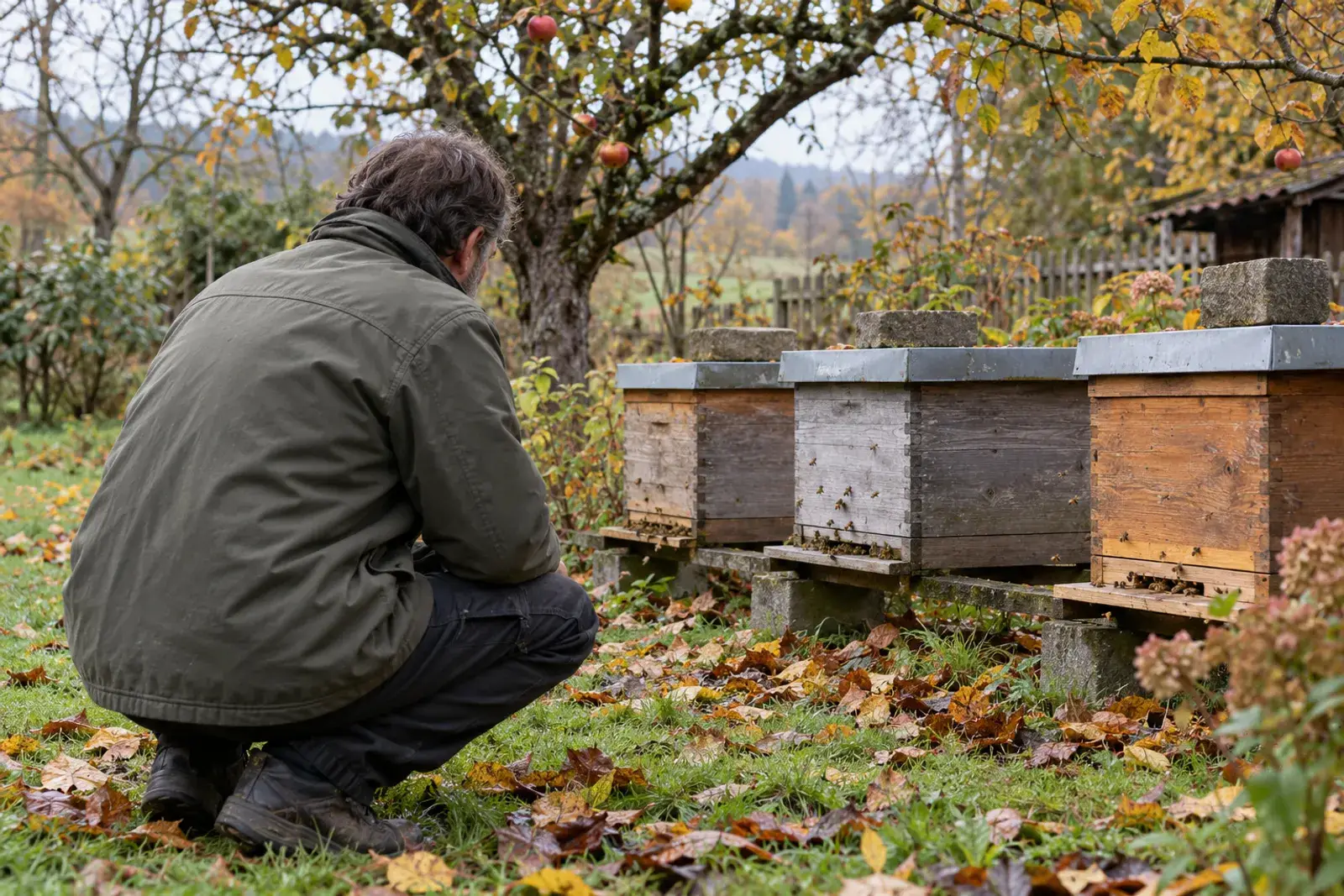
1) Respect Winter Dormancy – but Consistently Check Externally
In February, it still holds: Keep hives closed unless it’s truly appropriate for a brief, meaningful action. The big lever now isn’t “checking more,” but better external assessment – brief, calm, without haste.
A quiet entrance can be entirely normal in February – or a sign something’s wrong. The key is always the context: weather, colony strength, location, and the colony’s history.
2) Checklist at the Apiary (February)
- Keep Entrance Clear: Remove dead bees, snow/ice, grass – anything blocking the entrance (briefly and carefully).
- Check Wind/Storm Protection: Cover/roof secure? Straps okay? Risk of tipping? Damage after storm?
- Detect Animal Damage: Signs of woodpeckers, mouse activity, marten/badger tracks – and react before it escalates.
- Roughly Assess Moisture: Wet covers, leaky roofs, water runs – fix the causes (externally).
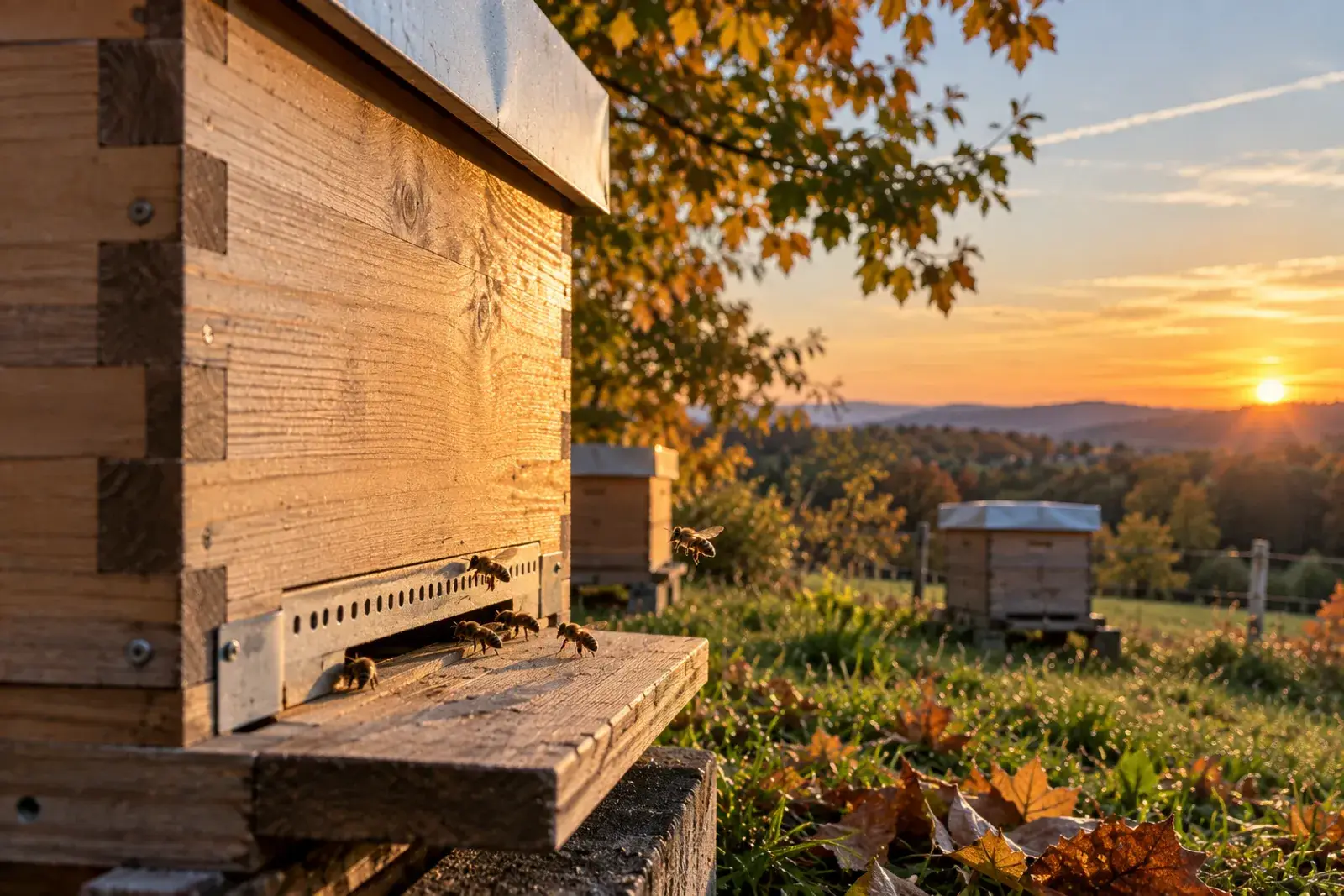
- Observe Cleansing Flights (when warm): Are multiple bees flying? Noticeable crawling on the ground? Very weak flight despite flying weather (a sign, not evidence).
Important: Observations in February are often ambiguous. Better to note peculiarities as “indications” and derive targeted checks for suitable days rather than create unrest now with lengthy interventions.
3) Food: February is Often More Critical than January
When brood begins, consumption increases. At the same time, the cluster needs to move the stores more frequently – and precisely then, typical failures occur: Food is present, but not accessible (food interruption). Hence, February is often the “decisive” winter month.
A rough weight check is useful if there’s a real uncertainty – not as a routine for all colonies.
- Useful for: Uncertainty with autumn feeding, very small/late colonies, recurring food shortages at the apiary, noticeable entrance signals in mild weather.
- How: Carefully lift/tilt from the back – only for rough assessment.
If a colony feels clearly too light: Emergency instead of “control”. Better to secure properly once than to cause repeated disturbance.
- Practical: Quickly place fondant (e.g., Apifonda) on top without lengthy opening, seize a warm moment.
- Important: No liquid feeding in cold (except in rare cases) – this increases risks and rarely solves the underlying problem.
4) Use Time to Explore New Opportunities
Digitally helpful: If you document meticulously, bee-pilot.io can help mark at-risk colonies, compile notes, and prepare specific checklists per colony for March/April (e.g., “check early,” “tight food situation,” “weak – merge?”). This doesn’t replace in-field assessment – but makes it more consistent.
5) Workshop & Material: Everything Must Be Ready to Go Now
February is often the last month you can prepare thoroughly without seasonal stress. Anything missing now, you usually miss just when the colonies pick up speed.
- Frames: repaired/wired, sufficient stock.
- Foundation/Wax Planning: Quantity, batches, storage.
- Hives: intact, bases intact, spare parts available.
- Tools: Hive tool, smoker, spray bottle, bee brush – all within reach.
- Fondant Reserve: for real emergencies at the apiary.
Mini-Standard That Really Helps: Decide now which sizes/parts/batches you’ll consistently use this season. Less mix = fewer problems.
6) Planning: February is the Month for Clear Decisions
Now is the right time for decisions you won’t be able to clarify “on the side” in April – especially with the uncomfortable topic of weak colony strategy. Many lose time (and often colonies) in spring because they hope for too long.
Area
February Question
Result (Note)
Colony Management
Which colonies should be “carried” into spring – and which not?
…
Weak Colonies
Merging planned? Material/timing prepared?
…
Multiplication
Realistic size of splits (time/locations/material)?
…
Queens
Purchase/self-breeding: Order/plan in place?
…
Locations
Which locations are truly suitable for spring development (sun/wind/moisture)?
…
A clear plan saves nerves – and makes you proactive in March/April, not reactive.
7) Further Education & System: Build Structures Now
In February, it’s worth a short, honest review of the winter: Which colonies are strong/weak and why? Where did processes consume time? What information was missing for decisions?
Use the calm for structure instead of information overload: organize data, establish standards, accurately map processes in your system – so that in March you work clearly, not “quickly.”
Conclusion
February remains calm – but often hosts the most significant winter risks. Those who diligently check externally now, recognize food shortages in time, and make binding plans for the season begin spring more robustly and with significantly less stress.
More practical guides for beekeeping?