Calm Colonies, Important Decisions
Rest period for bees – Work time for beekeepers
January marks a period of rest in beekeeping. The bee colonies are snug in the winter cluster, metabolism is reduced, and there is minimal brood, if any. However, this doesn’t mean inactivity for beekeepers: it’s the right time for checking, evaluating, and preparing.
Respecting Winter Rest – Checking Colonies from Outside
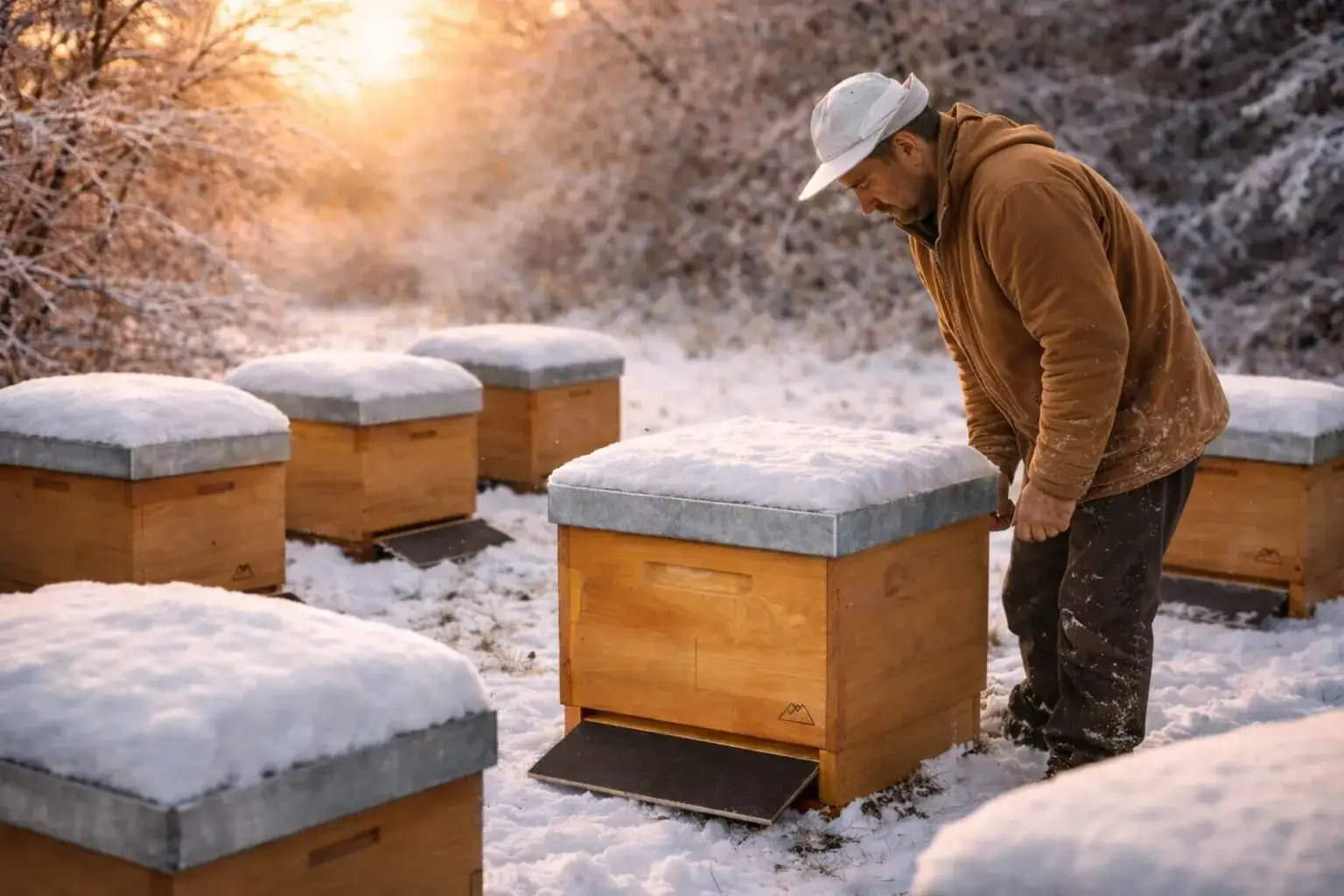
In January, hive boxes remain closed. Any unnecessary disturbance costs energy. Nonetheless, regular external checks are recommended – brief, calm, without opening.
Assessing Food Supply
If adequate feeding was done in late summer or fall, generally no food check is necessary in January. The winter cluster is stable, and any unnecessary disturbance depletes vital energy.
A rough weight assessment by gently lifting or tilting the hive is not standard in January, only meaningful if there were already uncertainties about feeding or existing abnormalities. In all other cases: Leave colonies as undisturbed as possible now.
Practical Rule
If work was done thoroughly in the fall, trust in your preparation is often a better decision in January than additional inspections.
Varroa: Evaluate Data Instead of Treating
January is not the time for Varroa treatment. Instead, the focus should be on analysis: What do the numbers tell you about the treatment success – and what does that mean for seasonal planning?
bee-pilot.io as an Assistant (practical)
If you record data systematically, bee-pilot.io can help compile notes, highlight patterns, or prepare checklists for spring. It doesn’t replace experience – it supports overview and consistency.
Check and Prepare Equipment
January is ideal for tasks that often get neglected during the season. Those who tidy and prepare now will work faster and more calmly in spring.
Mini-Standard (really helps)
Create a clear material standard for the season (frame size, wire, foundation batches, spare parts). Fewer variations = fewer sources of error.
Planning for the New Beekeeping Year
Now is the right moment for strategic decisions. Not about “doing more,” but planning more clearly: What is realistic – and what brings the greatest effect?
Area
Question for January
Result (Note)
Colonies
How many colonies do you want to manage stably in spring?
…
Propagation
Nucleus colonies yes/no – and to what extent?
…
Queens
Own breeding, purchasing, or a mix?
…
Locations
Which sites are secure and feasible?
…
Use Education and New Opportunities
January offers something scarce during the season: Time without operational pressure. This phase is perfect for consciously reflecting on the past beekeeping year – not in terms of self-criticism, but as a basis for better decisions. Where did things go well, where did problems arise, and which of those were due to your own decisions or oversights?
Instead of gathering new information randomly, now is the time to systematize your own operation: Which processes unnecessarily consumed time, where were clear structures lacking, and which mistakes should not be repeated in the coming year? Answering these questions honestly in winter noticeably alleviates the spring workload.
This calm phase is also ideal for targeted education. Not to absorb as much new information as possible but to organize existing knowledge, deepen it, and align it with personal experiences. Professional literature, lectures, or exchange with other beekeepers gain value now because they can be reflected upon without time pressure.
Simultaneously, winter provides the necessary calm to engage with digital tools that often get overlooked during the season. Solutions like bee-pilot.io can now be explored without disturbing the colonies: setting up structures, organizing data, mapping processes, and defining personal standards. Those who use this time won’t work faster in spring but more clearly – avoiding many of the mistakes that occur under time pressure.
Conclusion
January is calm, yet crucial. Those who use this time to honestly reflect on the past year, recognize mistakes and clarify structures lay the foundation for a calmer and more successful season.