
Spring Development
Brood at Risk?
A Pollen Gap Can Now Be Critical
Midweek, there may be a noticeable regional daytime cooling. Such weather phases are particularly tricky in spring because colonies are already developing brood, yet pollen collection can quickly come to a standstill.
Dropping temperatures, wind, or unsettled weather can significantly limit foraging flights, directly impacting colony supplies.
Why a Pollen Gap is Critical Now
Right now, bee colonies rely on a steady supply of protein. Pollen is central to brood rearing.
If little or no fresh pollen enters the colony over several days, a supply gap can quickly develop. This is particularly critical when there are already large brood areas.
A supply gap in brood rearing at this stage is fatal and can significantly delay development.
What Should You Look Out For?
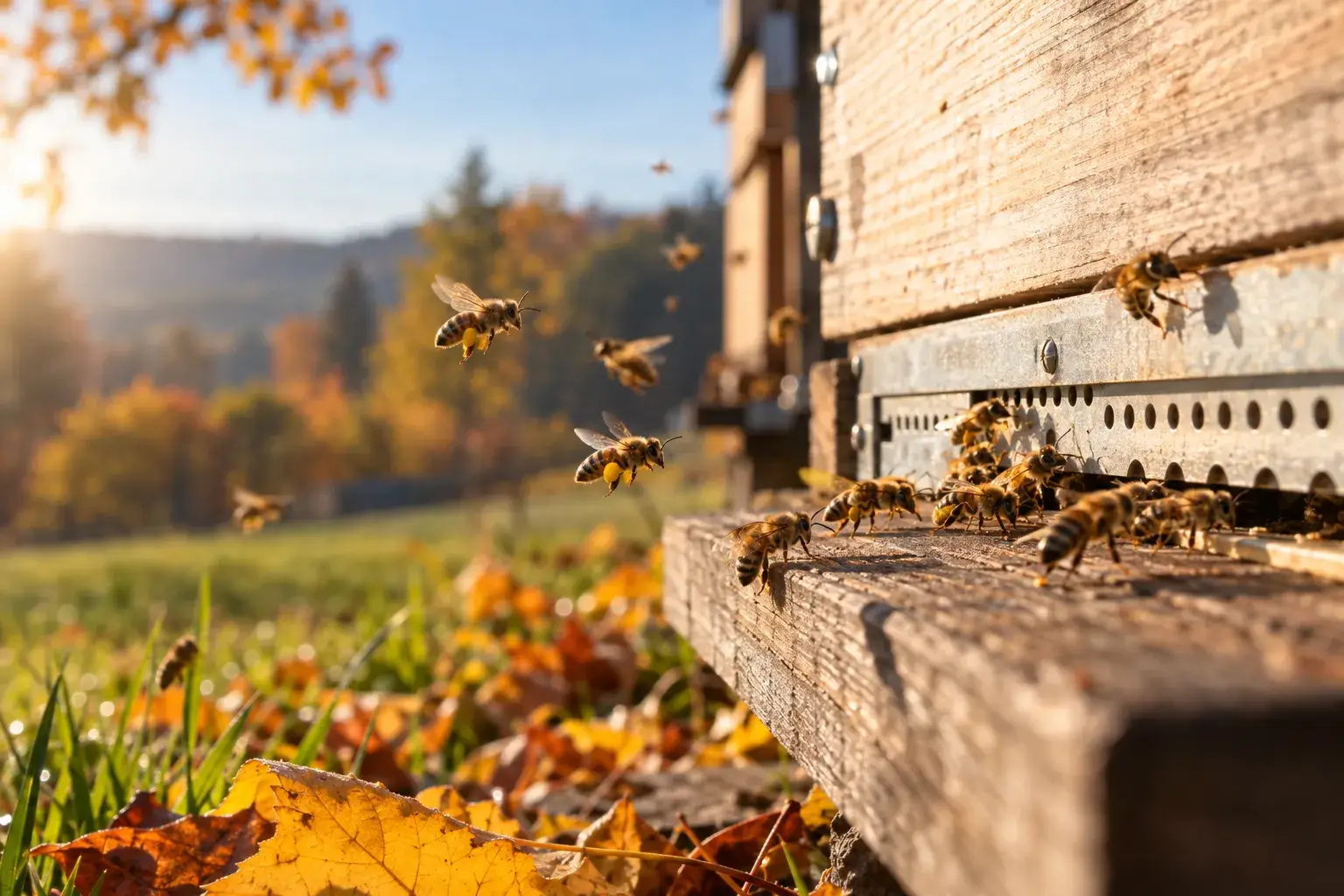
It’s crucial not only to determine if bees are flying but also if there is actually enough pollen within the colony.
- Are there still pollen reserves near the brood nest?
- Is pollen intake currently stable?
- Is the weather preventing foraging flights?
If pollen reserves are lacking and new intake halts, immediate action may be required.
Targeted Assistance Instead of General Feeding
In such cases, as previously mentioned, providing protein feed dough can be beneficial.
Here’s the article: /eiweiss-futterteig-im-fruehjahr/
However, it is important: this is not about blanket feeding all colonies, but providing targeted support where the pollen supply becomes scarce.
Conclusion
Spring is a sensitive transitional phase. Colonies are growing, demand is increasing, yet the weather often remains unpredictable.
Those who pay close attention to brood size, pollen reserves, and development can react early and prevent spring development from being hindered by protein deficiency.