Tracht Gap
Effectively Utilizing the Tracht Gap
How to Wisely Use the Time Between Spring Honey Flow and Summer Flow in the Beekeeping Year
The gap between the spring and summer honey flow is often perceived as a quiet interim phase. In reality, it is one of the most crucial management times in the beekeeping year. The spring flow is largely complete, the summer flow has not yet securely begun, and the colonies are often at a very high level of development.
This is where the challenge lies: The colonies have many bees, lots of brood, and a high consumption rate. Simultaneously, there might be less nectar coming in from outside. The colony is under tension. It needs food, space, activity, and clear guidance from the beekeeper.
Allowing this phase to just run on its own risks swarm formation, food shortages, robbing, or a poor preparation for the summer flow. However, those who consciously utilize it can stabilize their colonies, create splits, evaluate queens, and lay the groundwork for healthy winter bees.
The Tracht Gap is Not a Break
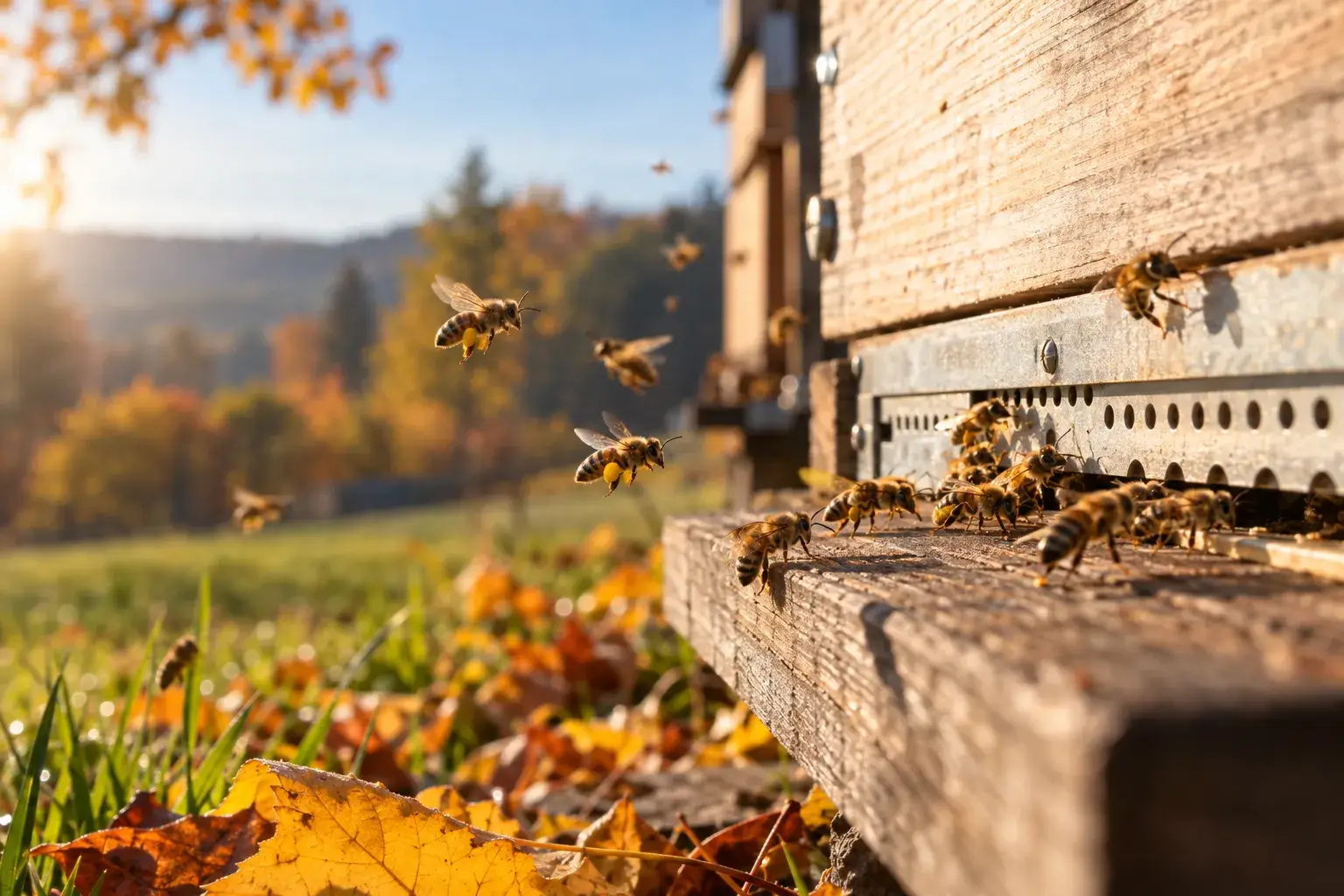
A tracht gap does not mean that nothing is happening in the bee colony. On the contrary: the development continues internally. The queen lays eggs, the brood is cared for, young bees hatch, forager bees search for nectar, and the food consumption remains high.
From an outside perspective, it sometimes appears quieter because less nectar is being gathered. Internally, however, it is a highly active phase. Therefore, the beekeeper must remain attentive.
The tracht gap is therefore not a waiting time but a decision time.
Check Food Stores
The most important point during the tracht gap is the food supply. Strong colonies can consume an astonishing amount of food in just a few days, especially when there is a lot of brood and the weather doesn’t allow for good nectar intake.
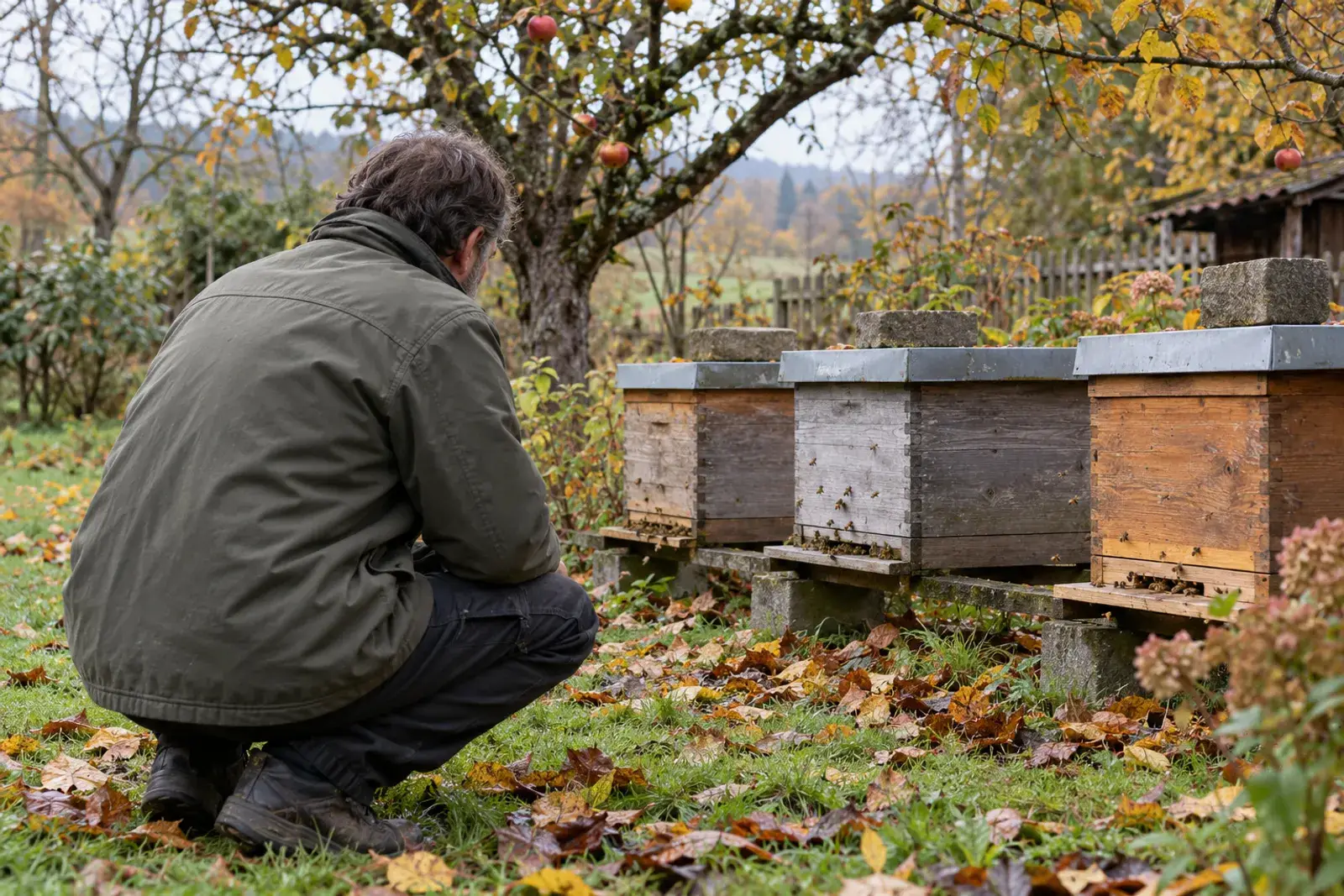
A colony can appear strong externally but still be running short on supplies. Therefore, one should not only look at the number of bees but also check if there is enough food left in the brood chamber. Food rings above the brood and food combs at the edges provide security.
However, it is important to note: as long as the honey supers (even empty ones) remain on the hive for harvest, feeding should not occur. Otherwise, feeding could end up in the honey super. If a colony is really short, it must be clearly decided: either remove honey supers and secure the colony, or use suitable food combs you have on hand.
The colony’s supply always comes first. No honey yield is worth letting a colony starve.
Properly Conclude the Spring Flow
The tracht gap is a good time to realistically conclude the spring flow. Once the honey is ripe, it shouldn’t remain on the colonies longer than necessary.
This has several advantages. The spring honey remains clearly separated from later flows, the beekeeper gains a better overview of the colony’s condition, and the colony can then be more specifically prepared for the next phase.
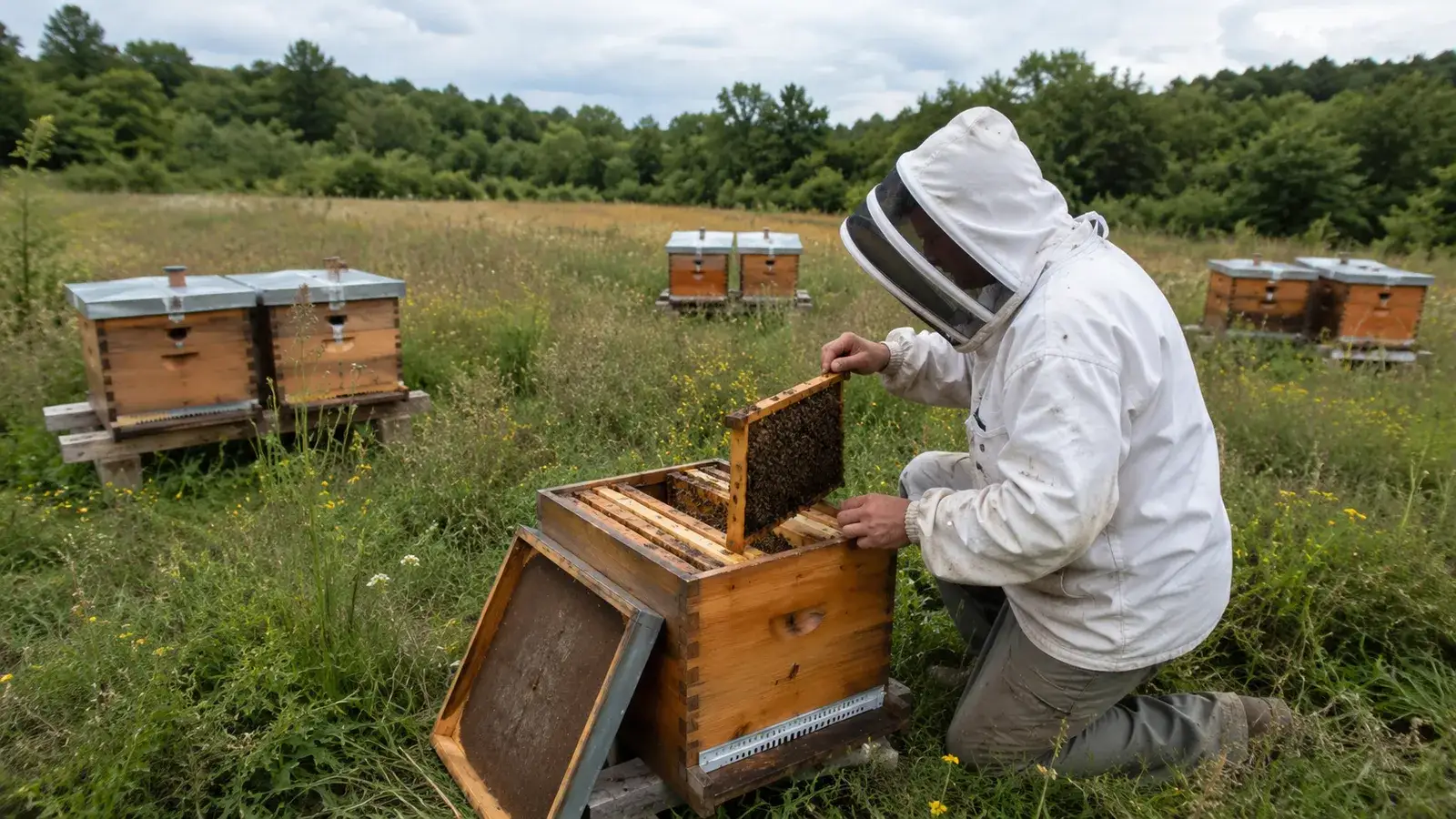
After the harvest, it’s often clear how strong the colony really is, how much food is in the brood chamber, and whether the brood nest is sensibly organized.
Properly Assess Swarm Mood
The tracht gap often coincides with a time when many colonies are still very strong. There are many young bees, lots of brood, and sometimes less work due to the lack of nectar intake. This can encourage swarm mood or prolong an existing swarm mood.
Now, it is not enough to just break queen cells. This can help short-term but does not always solve the root problem. The crucial question is: Why is the colony in swarm mood?
Understanding the cause better allows for more targeted responses. Sometimes more space is sufficient. Sometimes a brood comb split helps. Sometimes a queen split is sensible. And sometimes it’s better to consistently restructure a colony before it swarms.
Use Queen Splitting Effectively
The tracht gap is an excellent time for creating splits. After the spring flow, there are often enough bees and brood available without losing performance in the spring flow. Creating splits can also reduce swarm pressure.
However, it’s important not to create splits randomly. One should preferably work from colonies that convince overall. This means not only from the largest colonies but from the best colonies.
A split is not only a propagation unit. It is also a decision for the next season. Therefore, it should be carefully considered from which colony material is taken.
Assessing Queens
The time after the spring flow often clearly shows which queens and colonies really impress. Before the spring flow, a colony can look strong. After the spring flow, one sees what it has become.
- Has the colony effectively converted its strength into foraging performance?
- Has it remained calm?
- Did it develop excessive swarm mood?
- Was the brood nest closed and vital?
- Did the colony manage well?
- Was development aligned with the flow?
Now, particularly, one can see the difference between a colony that only produces a lot of brood and one that genuinely works well.
For breeding, one shouldn’t automatically choose the largest colony. The overall picture is decisive. A good breeding colony is not only strong but also reliable, healthy, calm, productive, and easy to manage.
Organize the Brood Chamber
The tracht gap is suitable to take a closer look at the brood chamber. Old, dark, or poorly constructed combs can be marked, hung on the edge, or removed within the framework of other work.
However, one should be cautious. The brood chamber shouldn’t be needlessly torn apart. Especially during a tracht gap, the colony needs stability. Too much disturbance can be more harmful than beneficial.
A sensible setup is a compact, well-populated brood chamber with clear organization. Unused spaces can make climate control more difficult. On the other hand, the colony shouldn’t be restricted if it is still growing strong or if a summer flow is expected.
It’s not about rigid narrowing or blind expanding but about a suitable allocation of space based on colony status, weather, and expected flow.
Properly Assess Wax Building and Construction Drive
During the tracht gap, bees don’t automatically build well. Construction drive mainly arises when enough young bees are present, and a food stream exists. If nectar is lacking or the beekeeper doesn’t feed, new combs are often only hesitantly or not at all built.
Therefore, new combs shouldn’t just be given because the beekeeper wants to renew them. It must be checked whether the colony is even capable and willing to build.
With splits, this can be different. If they are well supplied and growing, new combs can be given intentionally. Then, the building serves both the development of the young colony and comb renewal.
Keep an Early Eye on Varroa
Even if the main treatment against Varroa often takes place later, important observation should begin during the tracht gap. Now is not the time to blindly stumble into summer.
It’s wise to monitor the mite load and observe the state of the colonies. Noteworthy colonies should be taken seriously. These include those with weaker development, restless brood patterns, unusual bee loss, or notably high natural mite drop.
The connection between creating splits and Varroa management is particularly interesting. Extracting brood also removes mites from the production colony. Splits create broodless or brood-poor time windows depending on the method, which can be used later for targeted treatments.
Important is: Varroa shouldn’t only be considered once damage is visible. At that point, it’s often too late. It’s crucial to recognize in time which colonies are burdened and how to proceed sensibly after the honey harvest.
Preparing for Summer Flow
If a good summer flow is still expected in the region, then the production colonies must remain productive. They shouldn’t be overly depleted.
A colony that should utilize linden, blackberry, clover, chestnut, forest flow, or another summer flow needs enough forager bees, brood supply, and space. If too much brood or bee mass is removed, the colony might lose performance during the summer flow.
Both at the same time is only possible to a limited extent. Of course, one can remove some brood from a strong colony and still utilize the summer flow. However, the stronger the intervention, the greater the impact on subsequent foraging performance.
Avoid Robbing
During tracht gaps, the risk of robbing increases. If there’s little to collect outside, strong colonies actively search for food sources. Open combs, honey residues, extracted honey supers, or weak splits can quickly become problems.
Robbing often doesn’t arise suddenly but is triggered by small negligence. Clean work is particularly important during the tracht gap.
Improve Bee Forage Long-term
Short-term, one can only bridge a tracht gap. Long-term, it can be mitigated if one has influence over the surroundings.
Flowering areas, hedges, wild herbs, perennials, herb plants, late-blooming shrubs, and a diverse landscape help distribute resources throughout the year. Plants are particularly valuable if they don’t all bloom simultaneously but provide food successively.
It’s not just about honey. A good flower source also provides pollen, and pollen is crucial for brood care, young bee development, and the quality of future winter bees.
The Tracht Gap as a Selection Phase
An especially important point is often underestimated: the tracht gap reveals which colonies are stable.
Some colonies handle changing conditions well. They remain calm, keep their brood sensibly, don’t excessively go into swarm mood, and don’t recklessly deplete their reserves.
Other colonies only seem strong with good nectar flow. As soon as the nectar stream stops, they become restless, prone to swarming, poorly manageable, or quickly experience food shortages.
Such observations are invaluable for later breeding decisions. A good colony displays its quality not only under ideal conditions but also during transitional phases.
Practical Checklist for the Tracht Gap
- Check food stores in the brood chamber.
- Timely harvest ripe spring flow.
- Continue to control swarm mood.
- Recognize causes of swarm tendency.
- Form splits intentionally from good colonies.
- Evaluate queens based on overall performance.
- Organize the brood chamber, avoiding unnecessary disturbance.
- Mark or intentionally remove old combs.
- Realistically assess construction drive.
- Monitor Varroa load.
- Avoid robbing.
- Prepare for summer flow in time.
- Critically evaluate weak colonies.
- Reliably supply young colonies.
- Record observations for future breeding decisions.
Conclusion
The tracht gap is not a lost time. It is a crucial phase where the beekeeper reorders their colonies and prepares for the upcoming weeks.
Now, decisions are made on whether a colony will still sensibly be led into the summer flow, whether it will be used for splitting, whether a queen convinces, or whether timely corrections need to be made.
Those who wisely utilize the tracht gap work not against the bee colony but with its natural development. Pressure is relieved from strong colonies, the supply is secured, the next flow is prepared, and at the same time, the foundation for healthy, productive colonies in the further course of the year is built.
With bee-pilot.io, document your colonies more easily
and make better decisions at the yard.