Digital Beekeeping
Document Hive Inspections Completely with a Phone Call
Automatically Documented via Call
Digitalization in beekeeping has long grappled with a fundamental issue:
Many systems work well technically, yet do not always integrate optimally with the practical work directly at the hive.
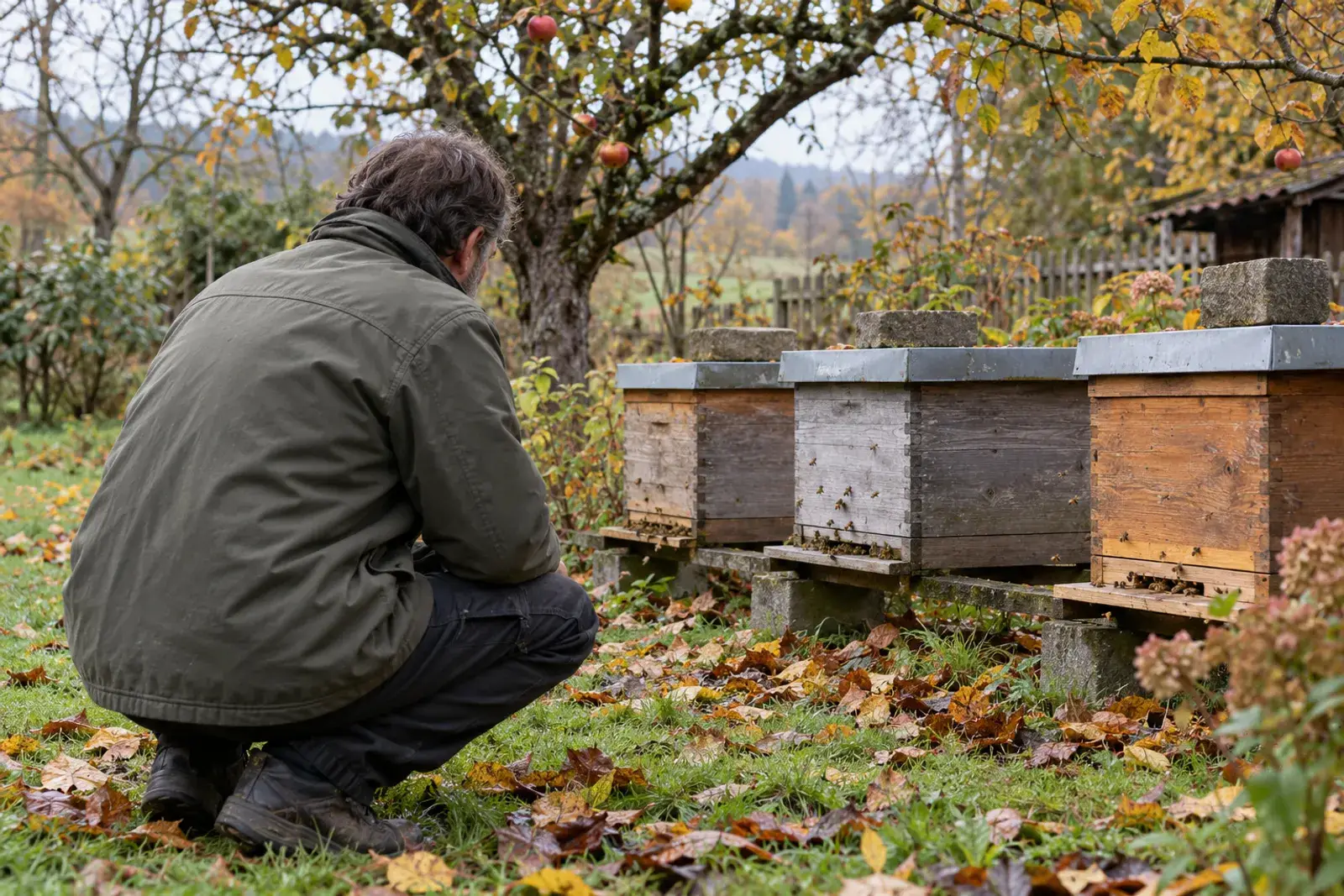
The beekeeper works with both hands, pulls frames, assesses brood patterns, monitors mood, feed, forage, queen cells, the queen, Varroa mites, and many small details often visible only at that exact moment.
And exactly at this moment, documentation should also occur.
In practice, this often leads to observations being forgotten, notes being added later, important details being lost, or documentation being entirely absent, even when the inspection was professionally conducted.
This is where Bee-Pilot Call steps in.
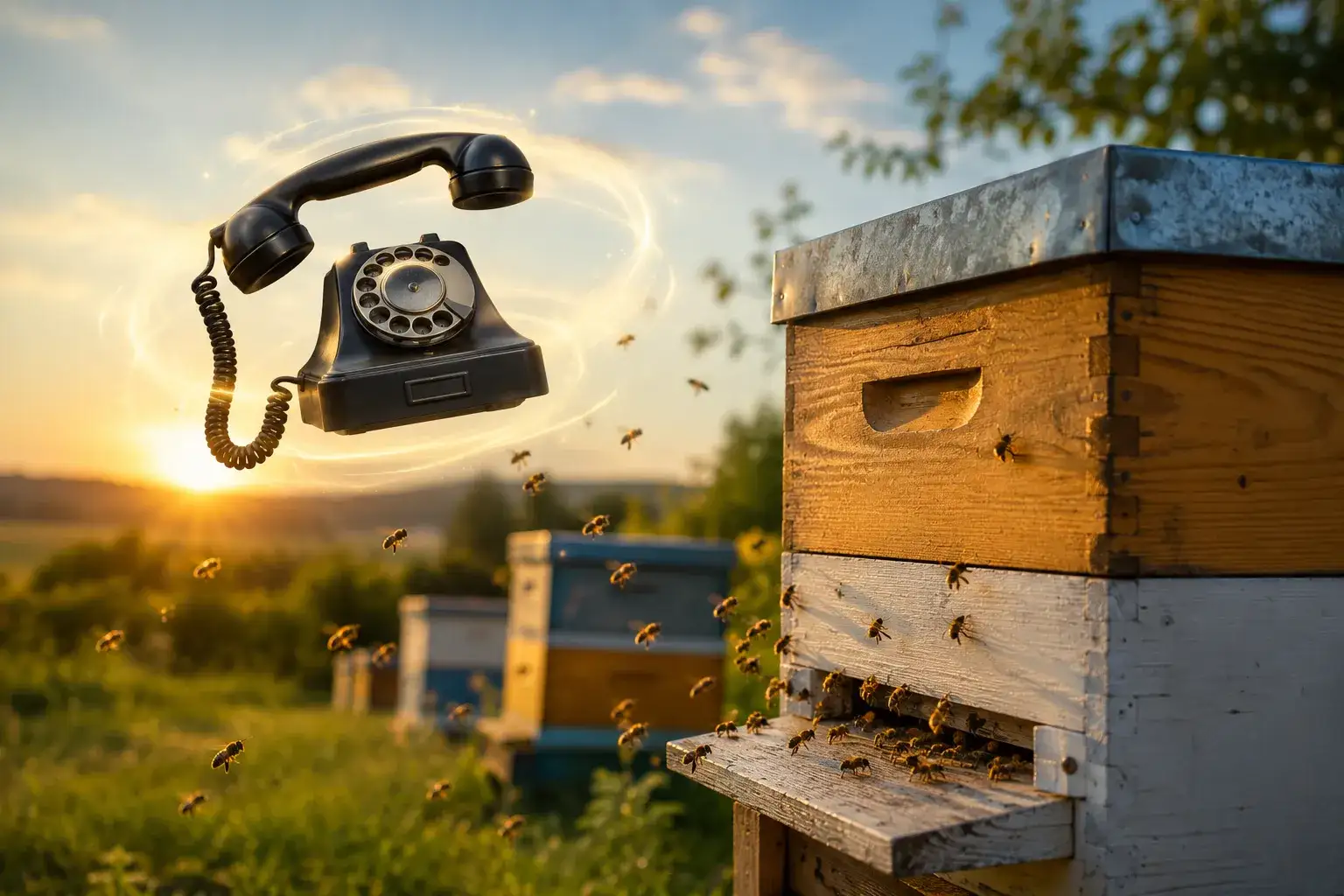
The idea behind it is deliberately simple: During the hive inspection, the beekeeper is called by Bee-Pilot and speaks normally about what they are observing.
Thus, the inspection and documentation occur simultaneously.
The beekeeper does not have to adapt to the technology. The technology adapts to the beekeeper’s natural workflow.
The Real Innovation is Not Just AI, But Natural Operation
Modern beekeeping is becoming increasingly complex.
Today, many beekeepers document more than just whether a colony is strong or weak. It’s also about Varroa levels, queen origins, colony development, breeding evaluations, forage cycles, feeding, treatments, pending tasks, honey yields, locations, and inspection processes.
A modern beekeeping app consequently requires many functions and menus.
This is not a negative aspect.
The complexity arises not from the app itself but from the demands of modern beekeeping.
The real challenge is not having as few functions as possible. The challenge is making these functions as easy to use as possible out at the hive.
And this is where Bee-Pilot Call changes the approach.
Instead of opening menus, searching for fields, typing values, or transferring notes later, the beekeeper simply talks to Bee-Pilot:
- “Saw the queen.”
- “Colony calm.”
- “Two queen cells at the bottom edge.”
- “Honey super filling up slowly.”
- “Mite drop: 5 in 3 days.”
- “Recheck in seven days.”
Bee-Pilot processes this information in the background and stores it appropriately in the app.
By doing so, the extensive functions remain available, but the operation becomes significantly more natural.
Bee-Pilot Guides the Inspection Step by Step
Bee-Pilot starts, for example, with Colony 1 and guides the beekeeper through the inspection. When the beekeeper finishes with this colony, they simply say:
“Move to the next colony.”
Then Bee-Pilot moves on to the next colony.
This keeps the process clear and controlled. The beekeeper decides when a colony is complete and when to switch.
Thus, Bee-Pilot does not document just anything uncontrollably but listens, categorizes verbal observations, and can ask specifically when needed.
It’s not about asking all possible values every time. That would be too cumbersome in practice.
Instead, Bee-Pilot primarily asks when crucial details are missing or when specific points are particularly relevant to the season. In spring, different questions may be useful than after the honey harvest or during Varroa checks.
This doesn’t create a rigid checklist but rather a guided, flexible documentation that fits the actual work at the hive.
Hands Stay on Hive Work
Those who have documented with a smartphone during inspections know the typical problems: gloves, propolis, dirty displays, sunlight on the screen, interruptions, and constantly switching between the colony and the phone.
With Bee-Pilot Call, this procedure changes.
Observations can be spoken directly during the work without constantly interrupting the actual inspection.
The beekeeper remains focused on the bees, the brood, the queen, and the colony development.
Especially here, the usage can be very simple.
Those who wish can wear a headset during the inspection. Then you hear Bee-Pilot directly in your ear and can respond without taking the phone in hand.
Alternatively, the smartphone’s speaker function can be used if working alone at the stand and the phone is safely placed.
A small Bluetooth speaker with phone function can also be practical. It can lie beside the stand or near the hives, so the beekeeper understands Bee-Pilot well and still has both hands free.
Thus, the app becomes less of a burden and more of a calm companion during the inspection.
The beekeeper simply speaks what they see anyway:
- “Colony 3 is more restless today.”
- “Brood pattern closed.”
- “Feed still sufficient.”
- “No queen seen, but fresh eggs present.”
- “Please create task: swarm control in one week.”
Bee-Pilot can respond, for example:
“Understood. I have noted: Queen not seen, but fresh eggs present. Shall I save swarm control for Colony 3 in seven days?”
Or:
“Last time, the mite drop in this colony was already elevated. Would you like to update today’s count?”
Thus, documentation becomes not only easier but also more complete.
Naturally, Everything Can Also Be Manually Entered in the App
All values can, of course, still be entered by hand in the app. Those who prefer working directly on a smartphone or tablet can document the inspection manually as usual.
The call is an additional option, not the only way.
For beekeepers who like to work in a structured manner, manual entry remains very important. Not every situation is the same. Some values are intentionally selected, added, or checked by hand.
Therefore, Bee-Pilot offers both methods: voice input via call and classic manual entry.
Particularly useful is the “All OK” function.
In a healthy, unremarkable colony, many standard values are often the same. The colony is calm, brood is present, feed is adequate, there are no abnormalities, and no urgent measures are necessary.
Instead of clicking each point individually, the beekeeper can set several typical values at once with “All OK.”
Particularly Interesting for Beekeepers Uninterested in Complicated Apps
This approach can be particularly intriguing for beekeepers who have thus far worked little with smartphone apps.
Many experienced beekeepers possess immense practical knowledge but do not wish to navigate small touchscreen menus or fill out long entry forms during inspections.
Speech here significantly lowers the technical barrier.
Because you do not need to learn how to speak.
Thus, the beekeeper’s experiential knowledge is preserved without having to completely change their work style.
Good Evaluation Requires Good Input
The great advantage of a digital hive record truly emerges when data is regularly and consistently captured.
An app can only analyze as well as the data entered.
If inspections are only irregularly documented, connections are missing. Then perhaps individual observations are visible, but not a clear development over weeks or months.
Conversely, consistent entry results in a very accurate picture of each individual colony.
Then Bee-Pilot can better recognize how a colony develops, whether it is becoming stronger or weaker, if certain anomalies repeatedly occur, how Varroa levels change, how queens perform in comparison, and which colonies are particularly calm, vital, or productive.
Problematic developments thus become apparent earlier.
That’s precisely why easy entry is so important.
Whether via call, by hand, or through “All OK”: the crucial factor is that documentation is quick enough to be practically implemented.
Because from accurate and consistent entry, much better evaluations later emerge.
Bee-Pilot can compare developments more accurately, recognize connections better, and provide the beekeeper with a much more precise basis for decisions.
Thus, documentation becomes not just a collection of notes but a real tool for better colony management, better breeding decisions, and more oversight at the apiary.
Documentation Transforms from Archive to Genuine Support
The system becomes particularly intriguing because Bee-Pilot not only stores but also supports.
During inspections, Bee-Pilot can incorporate information from previous documentation:
- When was the last treatment?
- What was the last colony evaluation?
- When was the honey super added?
- What was the last mite drop count?
- Which tasks remain open?
- Has this colony had swarm tendencies before?
Thus, the documentation becomes more than an archive.
It becomes an active part of colony management.
Especially with multiple colonies, this can help identify developments more quickly. The beekeeper doesn’t have to remember everything but can deliberately reference stored information during work.
Conclusion:
Digitalization shouldn’t complicate beekeeping
Many digital solutions don’t fail because they’re technically poor. They fail because they demand too much additional operation in everyday life.
Beekeepers want to keep bees. They want to assess colonies, make decisions, and work with the bees.
An app can assist but should not stand in the way.
That is precisely why the combination of a call, natural language, manual input, quick “All OK” function, AI, and automatic storage is so intriguing.
Bee-Pilot Call doesn’t make beekeeping artificially simpler.
But it can finally shape documentation to better fit the real work at the hive.
The beekeeper speaks, types, or confirms with few inputs. Bee-Pilot listens, asks about important points, stores the information, and creates a usable basis for future evaluation.
Thus, a new type of hive inspection emerges: practical, natural, flexible, and directly documented during the work.
Test bee-pilot.io now