
Spring Monthly Considerations
Dynamics Begin, Work Calmly, Mitigate Risks.
March marks the transition into the active phase: Brood nests grow, food consumption increases, and the first nectar sources appear. Meanwhile, cold snaps following warm periods can endanger the brood. Your goal: Create stability with as few interventions as possible, but remain consistent.
External Check & Weather Monitoring
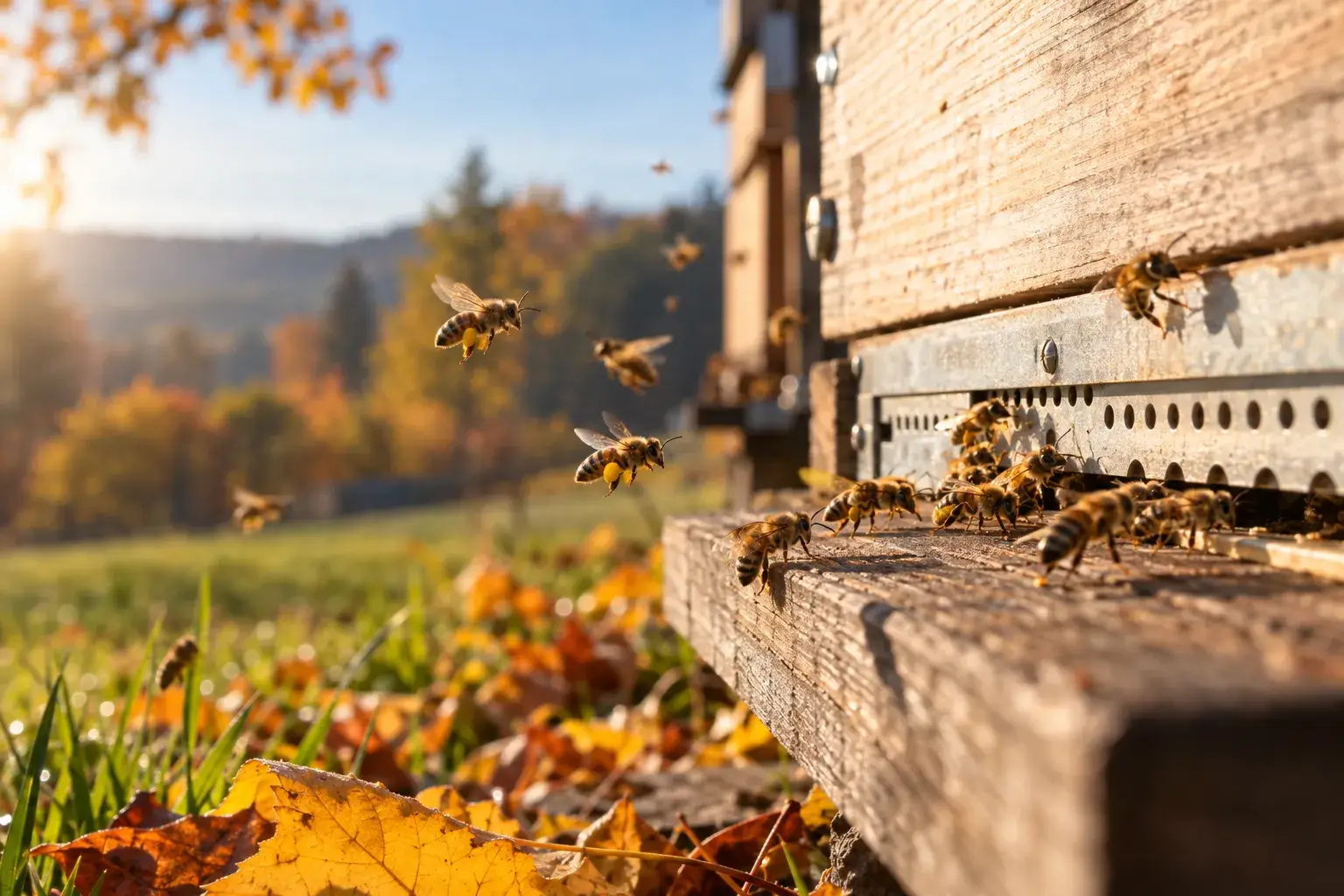
Watch entrance activity during flight weather: Pollen carrying is a good sign, but noticeably weak flight, excessive dead bees, or unusual entrance behavior means the colony needs a brief inspection in a suitable weather window.
Recognizing robbing is advantageous. More on this here: /flugbetrieb-im-fruehjahr-kann-taeuschen/
Now, the weather report is crucial: After extended warm periods, many colonies build up brood. A subsequent cold spell can endanger the brood because overwintered bees are aging and less numerous while needing to warm more brood.
In such cases: Keep brood compact and reduce heat loss, such as possibly narrowing the divider, closing or making the bottom draft-free (depending on your system), narrowing the entrance, and avoiding unnecessary interventions.
Securing Food Supply
With growing brood, consumption rises quickly. If a hive feels significantly light when tilted, or there were uncertainties in the fall, fondant is often the most secure backup. Transferring food frames from healthy colonies is also an option.
Optionally and situationally: If the energy supply is sufficient, but pollen availability is limited or inconsistent due to weather, protein fondant may be considered to support brood care—not universally, but selectively.
For a clear overview, find more here: /eiweiss-futterteig-im-fruehjahr/
Inspection: Brief and Targeted
Choose mild, calm weather. The goal is not to see everything but to clarify the basics:
- Is the colony stable and sitting compactly?
- Is there enough food to last until the next flight period?
- Is there brood roughly present or sealed without detailed diagnostics?
- Is moisture or mold a problem with the stand or hive?
- Clean or replace the bottom if that’s your practice.
No lengthy search for the queen: In March, warmth management and efficiency matter most.
Managing Weak Colonies
A colony that struggles in March needs a plan: Either support it with food, tighter management, and draft-free setup, or plan to merge it when the weather and conditions are appropriate.
“Trailing along without a plan” costs the most time in spring and increases the risk of robbing and secondary damage. Hope costs time and weakens other colonies.
Workshop Check
In March, ensure the workshop is ready for April without improvisation. Frames must be ready and sorted in sufficient numbers, including reserves; broken ones should now be repaired or confidently discarded.
Foundation sheets should be clean and protected, as uniform as possible to avoid confusion and unnecessary variations later. Focus on the honey supers now: Count the boxes, prepare the honey super frames, and store everything dry, clean, and accessible; store extracted honey frames separately and securely, if available.
Additionally, a small backup food reserve is sensible, not routinely, but as a safety net in case of a cold snap or very light colonies. A clear standard, same size, same process, same order prevents April panic, as you don’t need to re-decide materials and procedures each time.
Conclusion
March means balance: Building phase with weather risks. Those who take weather changes from warm phases with lots of brood to cold seriously, keep colonies compact, prevent food gaps, and perform interventions briefly and standardly lay the foundation for a stable start to the season.
Try bee-pilot.io Now