
Optimizing Honey Yield
Getting More Honey with Simple Methods
How to Maximize the Existing Hive’s Potential
Of course, the major yield factors of a bee colony are determined much earlier. Colony strength, queen quality, health status, forage availability, and overall management practices remain the fundamental bases for high honey yields. However, this article consciously avoids addressing these foundational elements.
Instead, this article focuses on a different, very practical question:
What can I improve about the existing colony so it can better turn its potential into honey?
In practical beekeeping, factors like morning light, protection from harsh afternoon heat, nearby water, dry setup, wind protection, and favorable hive entrance orientation are repeatedly cited as effective levers.
The critical idea is simple: A colony does not only gather nectar. It must simultaneously keep the brood warm, cool during heat, fetch water, balance humidity, and respond to wind or strong sunlight. Any unnecessary effort in these areas detracts from foraging and honey ripening.
The goal here is not to suddenly turn an average colony into a top-performing one. It’s about removing unnecessary burdens from the existing colony.
In Summary
- Morning sun is beneficial; harsh afternoon heat should be mitigated.
- Orienting the hive entrance towards the morning sun can improve the day’s start.
- Nearby water eases brood care and cooling demands.
- Dry, elevated setup and wind protection reduce avoidable stress.
- A well-insulated cover and reduced heat radiation on the honey supers stabilize the hive climate.
First Think: Where Does the Colony Lose Daily Performance?
Many measures seem small by themselves. But often, it is these small details that accumulate in daily practice. A colony might be slightly too hot, have a roof fully exposed to the sun, need to fetch water from afar, be too low over damp ground, or have constant wind at the entrance.
No single burden may seem dramatic, but collectively these factors consume energy. That’s why it’s worth assessing the location not just with a “good enough” attitude, but by asking where the colony fights unavoidable conditions daily.
Morning Sun Yes, Soften Harsh Afternoon Heat
A good location for the existing colony is usually bright in the morning and relieved in the hot second half of the day. Morning sun helps the colony start its day earlier. At the same time, it’s beneficial if the hive isn’t sitting in the hardest sunlight for hours later.
Full shade is often not a good solution. It’s not about minimizing sun exposure but ensuring a favorable sun trajectory. Especially in summer, this aspect is more important than often realized. If the hive heats up significantly after midday, the colony must expend more energy cooling, fanning, and fetching water.
To get more from the existing hive, don’t just ask if the location is sunny but when and how strongly the daily burden increases.
Sensibly Orient the Hive Entrance Towards the Morning Sun
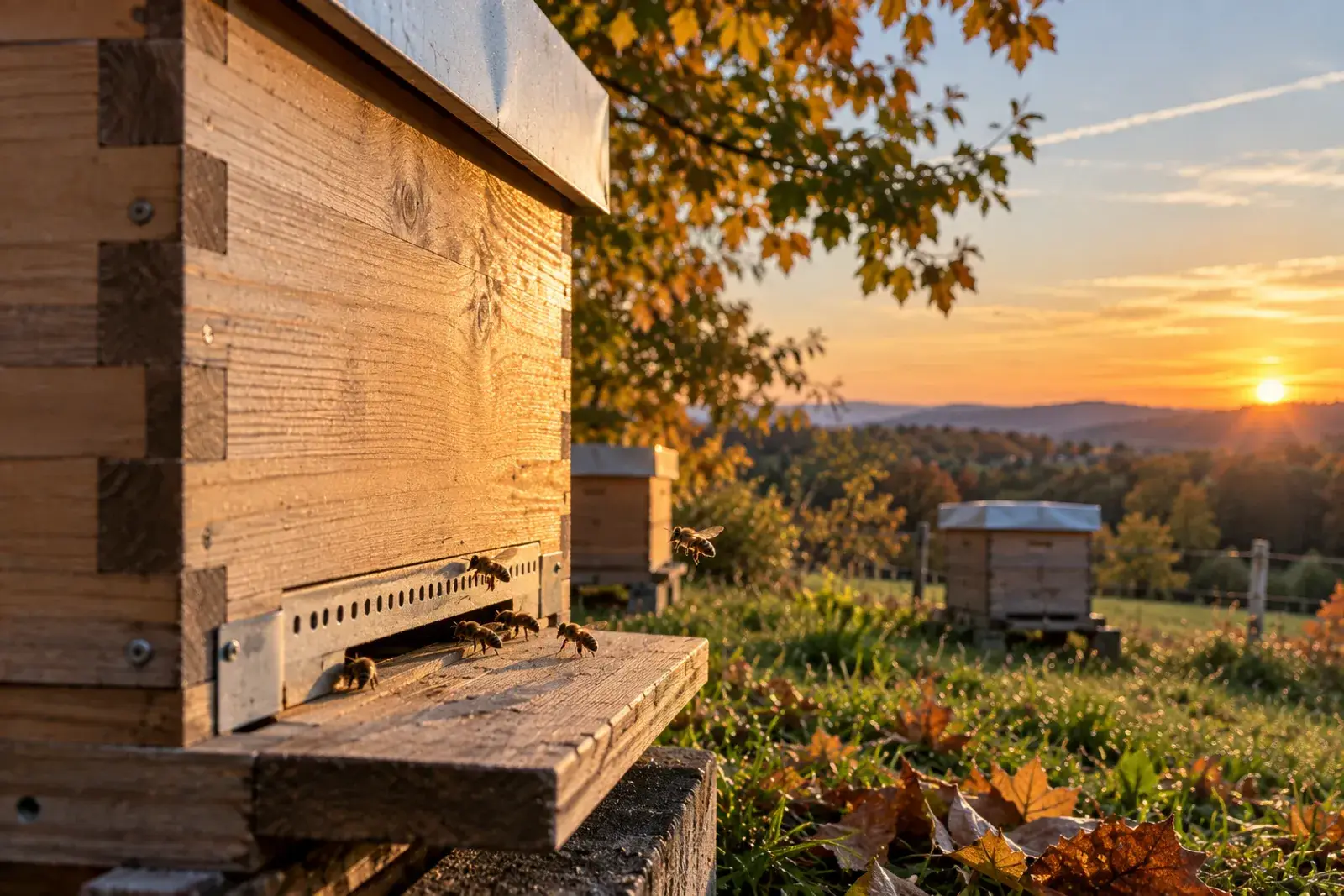
The orientation of the hive entrance is another simple and often underestimated measure. Favorable orientation is usually east to southeast or such that the morning sun reaches the front of the hive earlier. This won’t have a miraculous effect but can help the colony start the day more advantageously.
Especially on cooler mornings or during brief nectar flows, this small advantage can be valuable.
Provide Water Nearby
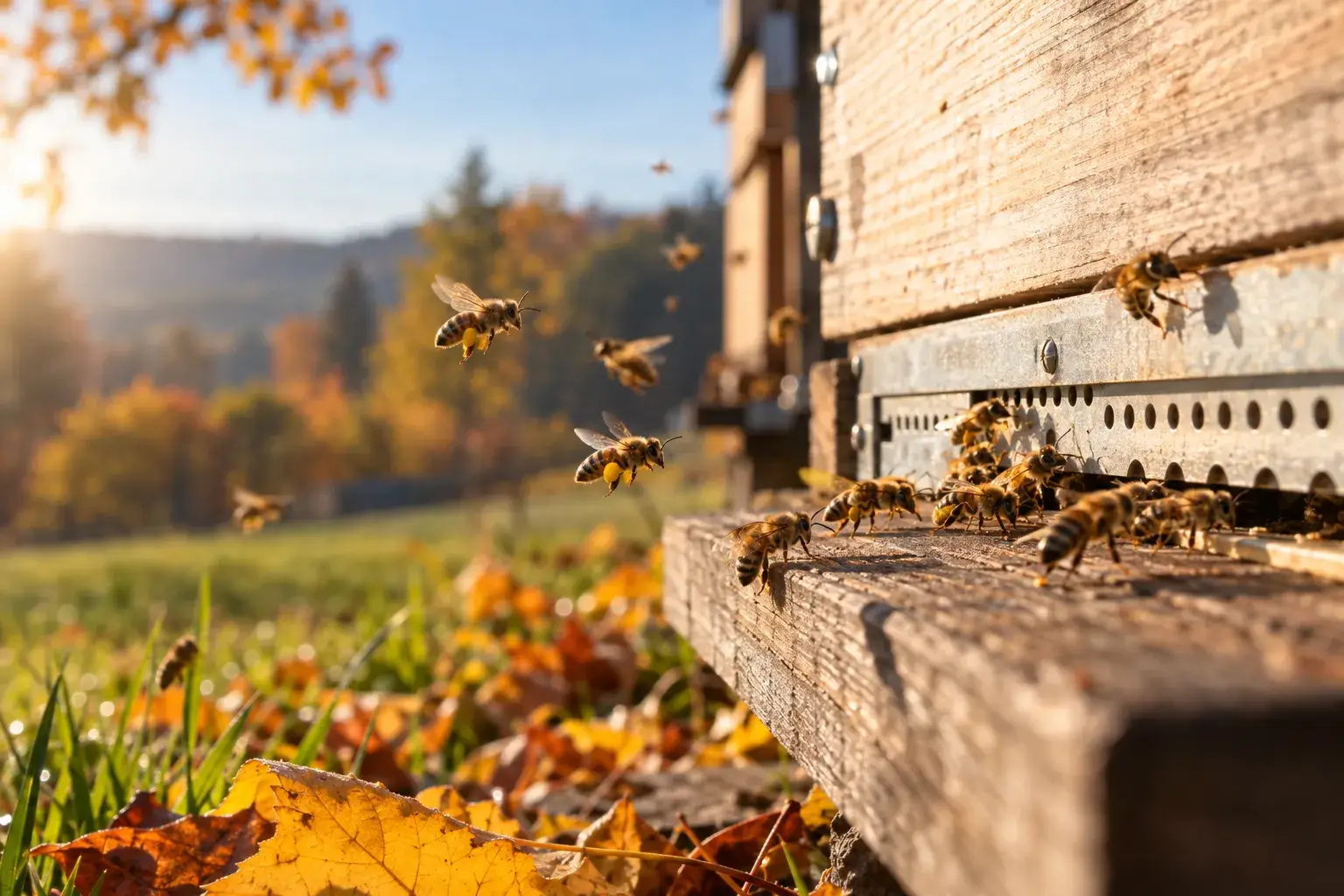
Water is one of the simplest yet most effective supports at the apiary. Bees need it not only for their own consumption but also for brood care and cooling. If water isn’t nearby, the colony has to allocate extra resources to fetch it.
A shallow trough with safe landing areas is usually far better than any deep dish. Stones, cork, wooden pieces, or coarse materials help bees access the water safely. The goal is not merely providing water somewhere but easily accessible and safe water.
Set Up Hives Dry and Elevated
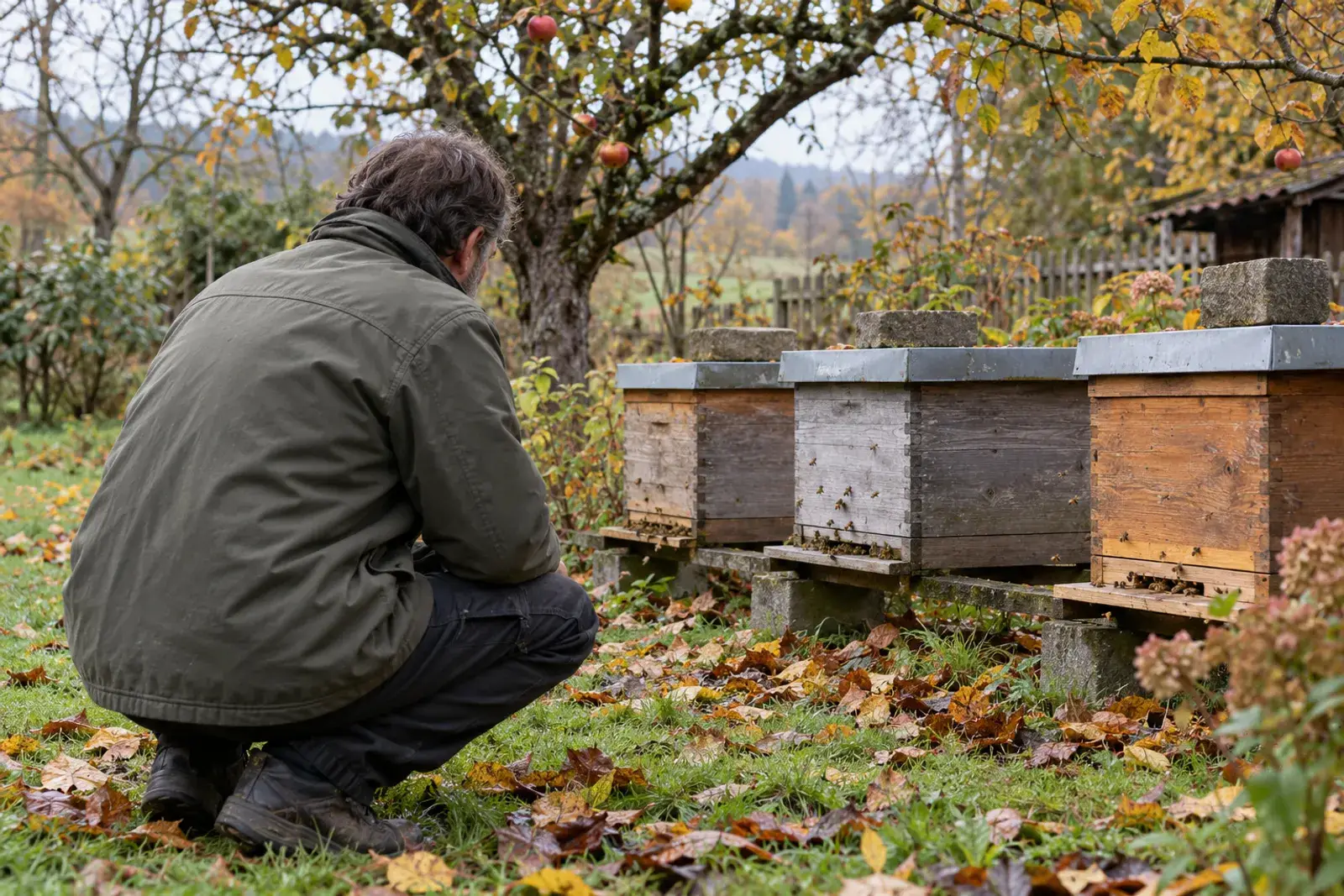
Another very practical point is moisture from below. Hives should not sit directly on the ground but elevated on stands, stones, or similar supports. A slight forward tilt is also beneficial to allow moisture to drain better.
Especially in damp meadows, depressions, or places with slow drying, this point is particularly worthwhile. To get the best from the existing colony, first ensure the box stands dry, elevated, and clean.
Wind Protection Yes, But Not a Dark, Damp Corner
Equally important is protection from direct wind. A good location isn’t completely exposed to winds but also not a stuffy, dark corner. The goal is a quiet place where the entrance doesn’t constantly face harsh winds, and the hive remains bright and dry.
Hedges, fences, shrubs, or strategic placement can make a significant difference here.
Excellent Insulation in the Cover
Regarding how to get more from the existing colony, a well-insulated cover is one of the most effective simple levers. The cover is a particularly sensitive zone during the day. Upwards, warmth can be lost, while in summer, strong sunlight precisely affects this area.
A well-insulated cover helps buffer extreme highs and lows, maintaining a steadier climate inside the hive. The proper mindset is crucial: It’s not about making the hive as warm as possible. It’s about reducing thermal turbulence.
Especially in conjunction with strong solar exposure, this is a point not to underestimate.
Also Relieve the Honey Supers from Side Heat Radiation
Not only the brood chamber but also the honey supers can heat up significantly on the sides. Especially dark brood boxes or hives in heavily exposed locations absorb a lot of heat. Therefore, it’s worth considering not only the cover but also the lateral heat burden.
The objective is to prevent excessive heating of the hive unnecessarily. Practically, this could mean: light surfaces, some respite in the hot half of the day, distance from walls or grounds that radiate heat, and even lateral shielding at problematic sites.
Protect from Heat Radiation with Simple Means
Many think only of air temperature when it’s hot. However, for the hive, it is crucial how much the cover and side areas are charged by the sun. Thus, it’s not sufficient to only look at the thermometer. One must also see if the box stands fully exposed from midday onwards.
If the site receives too much direct sun in summer, there is no need to relocate the colony immediately. It’s often easier to provide targeted relief from the hot part of the day. A good approach is to provide shading that blocks radiation but allows air movement.
The goal isn’t constant deep shade, but light, airy protection during hot hours.
What Works Practically Well for Shading
The simplest solutions often work above the hives and don’t rest directly on them. These include, for example, a high-strung shade sail, a bright shading net, a light tarp spaced above the covers, or a simple roof on posts. For such structures, always care about storm security!
Such solutions shield the hive from direct radiation without enclosing the box itself. As a long-term solution, a simple roof or a clean, airy shading structure is often better than any improvised tarp.
Natural shading can also work very well. If a site gets morning sun and later gets relief through sparse trees, a building edge, or a similar structure, that’s often the most elegant solution. The crucial aspect remains that the area is still dry and airy.
Keep the Area in Front of the Entrance Clear and Dry
Even simple things can be beneficial. Tall, damp vegetation directly in front of the hive entrance is disadvantageous. It retains moisture, disrupts the flight zone, and often deteriorates the drying of the immediate surroundings.
A clear, dry area in front of the hive is not a minor concern but a practical improvement of the colony’s workspace.
Location Change: Theoretically Often Good, Practically Involved
Sometimes a colony isn’t optimally placed. Moving it to a better spot seems logical, but in practice, it’s often more challenging than it sounds. If a colony is simply moved to a new location within its current flight range, many foraging bees still orient to the old location.
For this reason, the rule of thumb in beekeeping is: either adjust only very slightly or move much further away. To genuinely change the location fundamentally, a detour is often the only clean solution: Initially, the colony is moved to a location beyond its current flight radius and stays there for about three to four weeks. Only then is it placed at the desired new spot.
It’s feasible in practice, but rather labor-intensive. That’s why, while a location change is theoretically often a good solution, it is not always the most sensible in practice.
If the existing location can be significantly improved through better shading, good cover insulation, nearby water, dry setup, and wind protection, it’s the easier and more realistic path for many beekeepers.
Small Reliefs Add Up
No single measure will guarantee a spectacular yield increase alone. That would be unrealistic. But that’s not the aim. An existing colony often doesn’t reach its best possible outcome simply because several small brakes are in effect simultaneously: too much heat radiation from above, heated sides, water too far away, wind at the entrance, moisture from below, or an unfavorable sun path.
Each single brake may not be huge. However, in sum, they can significantly affect performance.
Conclusion
The significant yield factors remain undoubtedly the significant yield factors. But even with the existing “average” colony, improvements can be made by relieving it of unnecessary burdens. A favorable sun trajectory, the hive entrance towards the morning sun, nearby water, dry and elevated setup, wind protection without dark corners, a well-insulated cover, lateral relief of the honey supers, and protection from harsh heat radiation are precisely those measures.
They won’t turn a mediocre colony into a miracle colony, but they can help the existing colony better convert its potential into honey production.
Try bee-pilot.io now