Swarm Season
Colony Swarmed – No More Honey? .. Not Necessarily
How Reuniting Can Save the Honey Flow
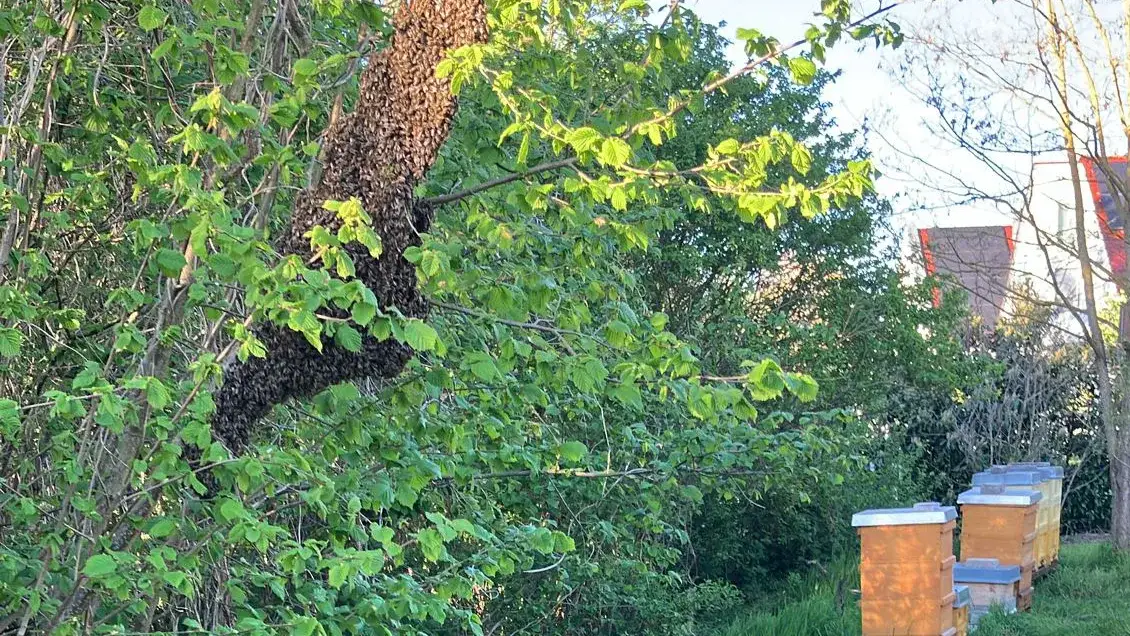
When a strong production colony swarms during the honey flow, the initial thought is often: That’s it for honey. A large portion of the bee population is gone, the parent colony is in disarray, and the ongoing honey flow continues while the colony reorganizes itself.
However, it doesn’t have to be so final. If the swarm has been captured and is confirmed to belong to your own colony, it can be merged back with the parent colony.
This is not about multiplication but a focused goal: The lost foraging strength should be returned to the production colony as soon as possible to make use of the current or upcoming honey flow.
The key is: The swarm isn’t just aimlessly poured back in. One must decide beforehand what the objective is and which queen should remain. This decision dictates the appropriate method.
The Most Important Question: What Do I Want to Achieve?
Before acting, take a moment to pause. After a swarming event, there are many options, but not every action suits the same goal.
If the goal is to multiply, the swarm can be settled separately. This results in two units from one colony. This can be sensible but costs production performance during the current flow. The swarm builds anew, the parent colony is weakened, and both units need time.
However, if the plan is to utilize the honey flow, the decision differs. Then a reunification is often more sensible. The goal is to consolidate the swarm and parent colony back into a strong production unit.
The bee population returns, the honey supers are better filled, and the colony can better collect, move, dry, and cap nectar.
Reunification is especially interesting when there’s a good honey flow, when a significant nectar flow is imminent, when the swarm is certain to be from your own colony, and when you don’t want to establish an additional colony.
It’s less sensible if the flow has already passed, if multiplication is the goal, if the parent colony is sick or problematic, or if there’s uncertainty about the swarm’s origin.
The Queen Question is Key
With a prime swarm, the old queen is usually in the swarm. The parent colony has brood, bees, and swarm cells left, from which young queens can emerge.
This brings us to the main decision:
- Should the old queen from the swarm return to the colony?
- Or should the parent colony continue with a young queen?
For the current honey flow, there’s a strong case for retaining the old queen initially. She is already mated, the colony is immediately queen-right again, and the unit can resume organized work quickly. This is a significant advantage for honey flow utilization.
The downside: This queen has just swarmed. So, the colony was in swarm mode. If you only return the bees and overlook the swarm cells in the parent colony, the colony can swarm again. Therefore, this method requires very precise work.
If the old queen is already very old, laying poorly, or the colony strongly tends toward swarming, it might be wise not to retain the old queen. In this case, you only return the bee population, allowing the parent colony to continue with a young queen.
This method is often more appealing long-term but costs time short-term as the young queen must first emerge, mate, and start laying. For pure honey flow utilization, it is the slower option.
Method 1: Return Swarm with Old Queen
This method is suitable when the ongoing honey flow is the priority and the old queen is to be utilized further.
It is advisable if the swarm is definitely from your own colony, the old queen is present in the swarm, the parent colony is basically healthy, and the ongoing honey flow should continue to be utilized.
This is particularly fitting if you want to quickly reestablish a strong production colony. The goal is: return the old queen, return the bee population, remove swarm cells, add a honey super, continue utilizing the honey flow.
Step 1: Secure the Swarm
The captured swarm is first placed calmly, in shade, and well-ventilated. It should not be in the sun or overheated. An ideal option is a swarm box or an empty hive with good ventilation.
The important thing is: The swarm should be undeniably attributable to the swarmed colony. With a foreign swarm of unknown origin, it should not simply be merged with an existing production colony.
Step 2: Inspect the Parent Colony
Now, open the swarmed parent colony. This is not about a lengthy inspection, just a targeted check.
Swarm cells are especially important. If the old queen is to return to the colony, no swarm cells ready to hatch should remain in the parent colony. Otherwise, there’s a chance a secondary swarm will depart soon after.
Therefore, the combs are carefully inspected. Swarm cells are removed. This must be done thoroughly, particularly at comb edges, lower edges, and hidden spots.
Step 3: Check Honey Super
Before reuniting, the space must be right. There’s a reason the colony swarmed. Often, overcrowding, full honey supers, strong building drive, and swarm mood play together.
If the honey super is already well-occupied or partially filled, it should be expanded directly. The returned swarm brings many bees back. These bees immediately need work and space.
The main thought is: The bee population should not return to a cramped situation.
Step 4: Place Newspaper
A layer of newspaper or thin paper is placed over the brood chamber of the parent colony. The paper can be lightly moistened and slit with a few small cuts.
On this, an empty super is placed. The captured swarm is introduced into this super.
The setup might look like this:
Brood chamber parent colony - newspaper - empty super with swarm - queen excluder - honey supers
After merging, the additional empty super is removed again, and the colony is normally tightened or ordered.
Step 5: Introduce the Swarm
The swarm is placed in the empty super above the parent colony. The paper allows both units not to clash immediately. The bees gradually chew through and take on a common colony scent.
This is calmer and safer than simply tipping the swarm directly into the parent colony.
Step 6: Check After Two to Three Days
After a few days, carefully check if the merging has worked. Paper remnants can be removed. The additional super is taken out if it’s no longer needed.
When doing this, the bees should be brushed or shaken into the brood chamber. After that, place the queen excluder directly on the brood chamber, and set the honey supers suitably on top.
Step 7: Don’t Disturb Too Long
After merging, the colony should be given some peace. Now, it’s crucial that they resume work. A detailed check the next day often causes more disruption than benefit.
In the following days, the most important things are: Is the honey super occupied? Is there enough space? Is the colony calm? Are there signs of swarming again?
Advantage of this method: The old queen is mated, the bee population is back, and the colony can quickly resume working as a collection unit.
Disadvantage of this method: The old swarming tendency hasn’t automatically disappeared. If swarm cells were overlooked or crowding occurs again, the colony might go into swarm mode once more.
Method 2: Return Bee Population, Remove Old Queen
This method is suitable if you want to save the foraging strength but do not wish to continue with the old queen.
It’s advisable if the old queen is already aging, if the colony strongly tends toward swarming, if a young queen from the parent colony is preferred, or if better development is expected long-term.
For the current honey flow, this method is somewhat weaker than Method 1 since the young queen must first start laying. Nevertheless, it returns the bee population and can help continue using the honey supers.
The goal here is: Retrieve the swarm’s worker bees but not retain the old queen.
Step 1: Secure the Swarm
Here too, the captured swarm is first placed calmly and in the shade. It should not overheat or be left standing unnecessarily long.
Step 2: Find the Old Queen in the Swarm
Now, the queen in the swarm must be found. This is sometimes easy, sometimes tedious.
It can help to let the swarm pass over a queen excluder into an empty super in portions. The workers pass through, the queen remains at the excluder or becomes more visible. She can then be removed or caged.
Only when the old queen is safely removed should this method be continued.
Step 3: Inspect Parent Colony for Swarm Cells
In the parent colony, the swarm cells are checked. Not all cells are removed now. Instead, a good, suitable queen cell is selected from which the new queen will emerge.
All other swarm cells are removed to prevent secondary swarms.
This step must be done very carefully. Leaving multiple swarm cells increases the risk of the colony swarming again. Leaving no suitable cell can lead to queenlessness.
Step 4: Check Honey Supers and Space
Again, the space must be suitable in this method. The returned bees shouldn’t create crowding again but should be directed into the honey super.
If the honey super is well-occupied, it is expanded. Especially after the swarm is returned, pressure in the colony can rise again. Therefore, it should not be done narrowly.
Step 5: Place Queenless Swarm Over Newspaper
Now, the queenless swarm is united with the parent colony.
The setup is similar to Method 1:
Brood chamber parent colony with selected queen cell - newspaper - empty super with queenless swarm - queen excluder - honey supers
The bees gradually chew through the newspaper and unite with the parent colony. With no old queen in the swarm, there’s less competition with the young queen in the parent colony.
Step 6: Remove Super After a Few Days
After two to three days, check carefully. Remove the newspaper remnants, dissolve the additional super, and incorporate the bees into the brood chamber or colony.
The honey supers remain suitably on top.
Step 7: Patience with the Young Queen
Don’t get nervous too soon. If the parent colony is to continue with a young queen, it takes time to see fresh eggs again.
The queen must emerge, harden, fly for mating, and then start laying. During this time, the colony is strengthened by the bee population but temporarily has no laying queen.
Advantage of this method: The old swarm queen is not continued, and the colony gets a chance for a young queen. Simultaneously, the bee population of the swarm is not lost but is reintegrated into the production colony.
Disadvantage of this method: For the current flow, a brood pause and a yet-unmated queen are not ideal. The colony can continue foraging, but internal order takes longer to reestablish than with a mated old queen.
Which Method is Right?
If the main goal is to take advantage of the current honey flow, Method 1 is usually the stronger solution. The old queen remains, the colony is quickly queen-right again, and the returned bee population can swiftly operate as a collection unit.
If the old queen is no longer desired, very old, or the colony strongly tends toward swarming, Method 2 might be more sensible. Though slower initially, it offers the chance for a young queen and better future development.
Simply put:
- For quick honey flow utilization: keep the old queen and return the swarm.
- For queen replacement: remove the old queen and return only the bee population.
In both cases, without swarm cell control and adequate honey supers, the action is not complete.
What Not to Do
Don’t just throw the swarm back into the hive without inspecting the parent colony. This doesn’t reliably solve the swarm problem.
Don’t remove all swarm cells unless you are sure a good queen is present. Otherwise, the colony might end up queenless.
And don’t forget that a returned swarm needs room again. Returning the bee population without providing a honey super quickly creates pressure in the colony.
Conclusion
A swarmed colony doesn’t automatically mean the honey harvest is lost. If the swarm is captured and certainly belongs to your own colony, reuniting can help utilize the honey flow.
The queen question determines the method. If speed is crucial and the ongoing flow is the focus, the old queen usually remains involved. If a young queen is to be reared, remove the old queen and return only the bee population.
In both situations, the goal is the same: to form a strong unit from the swarm and the parent colony. Not for multiplication, but to avoid wasting available nectar flow.
Try bee-pilot.io now