Spring Beekeeping Knowledge
Caution at the Entrance: Spring Flight Activity Can Be Deceptive
Even a dead colony can temporarily seem “alive” — intense robbing is often the cause of flight activity.
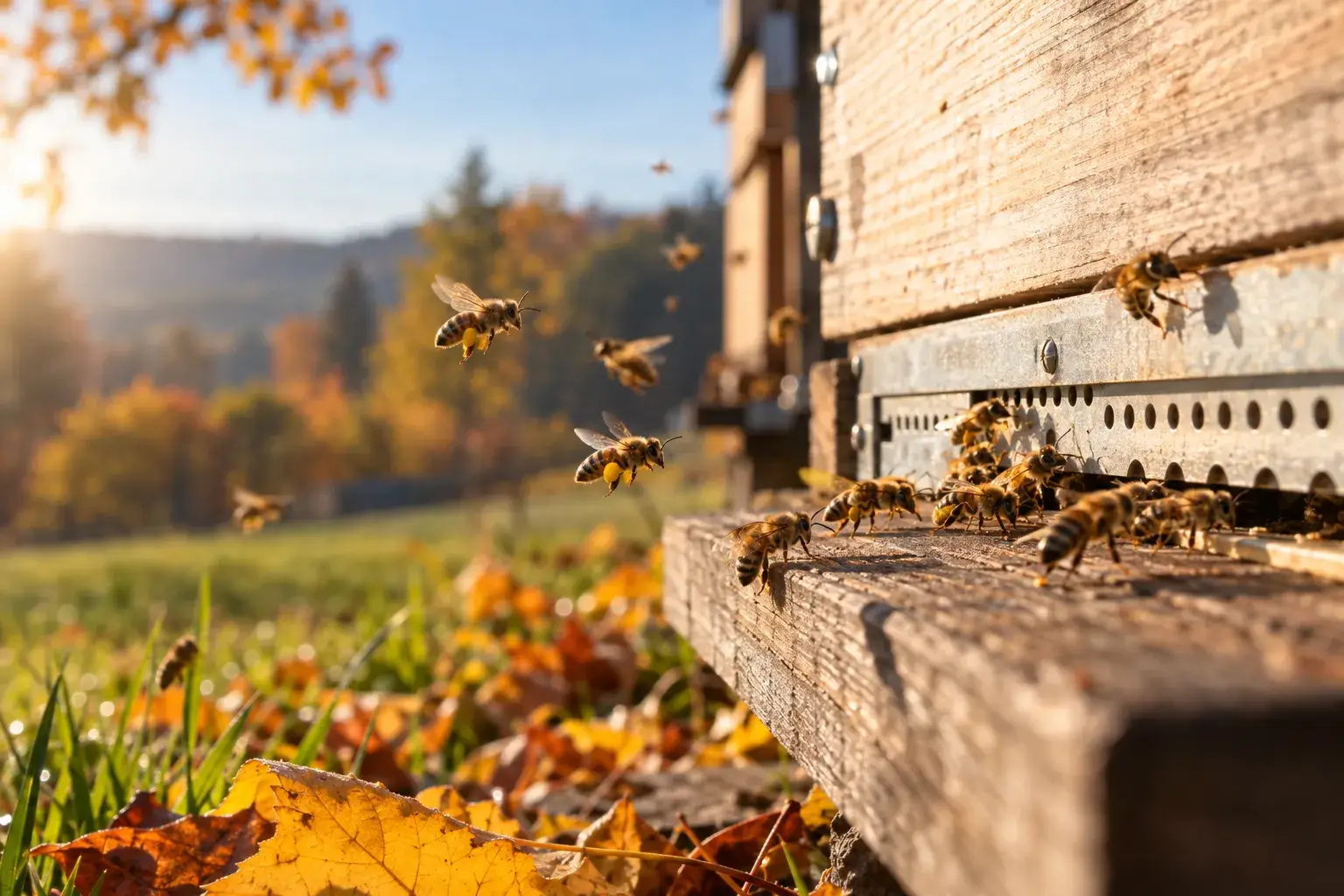
In early spring, looks can be deceiving at the hive entrance. On the first warm, sunny days, cleansing flights begin, and there is suddenly a lot of buzzing activity in many places. It’s easy to believe the colony survived the winter. However, in practice, it is often seen that even a dead or collapsed colony can appear “lively” at this time. The reason is usually not life within the hive, but rather intense robbing by neighboring colonies.
In spring, dead or severely weakened colonies are particularly attractive to robbers. Often, there is still food left, which is systematically taken away by foreign bees. This process can last for hours or days, creating noticeable flight activity at the wrong hive. For the untrained observer, it’s hard to tell if it’s a living colony or already emptied out — if judged solely by flight activity.
Typical Signs of Robbing
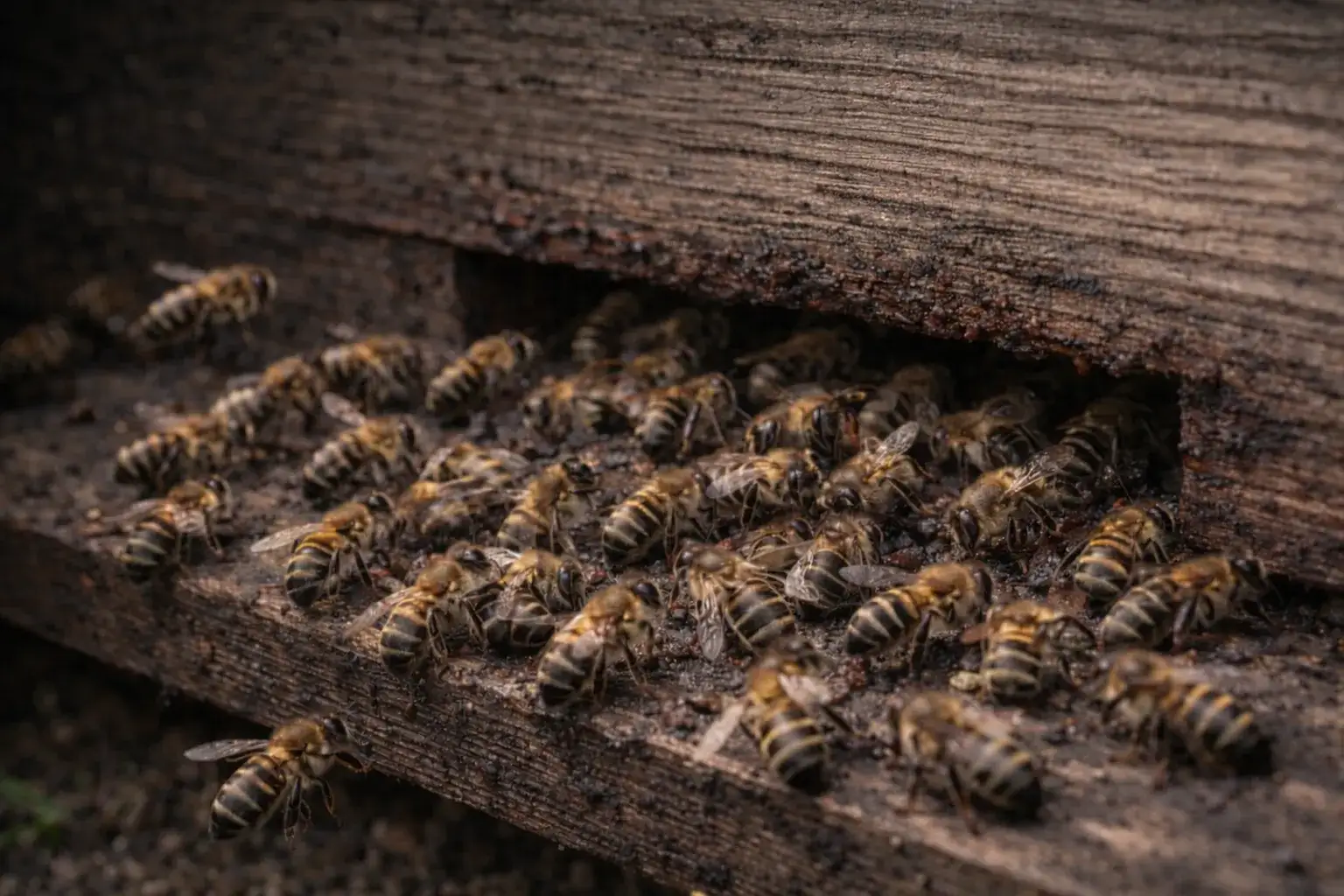
A reliable warning sign is smeared or sticky entrances. During robbing, honey cells are torn open, honey is taken, and wax residue is left behind. The entrance, the landing board, and often the area in front appear sticky, unkempt, and much dirtier than healthy colonies. Wax crumbs or cell cap remnants are often found in the debris or on the bottom board.
The flight pattern also provides clues. Healthy colonies show calm, steady, and purposeful flight in spring. In contrast, robbing appears hectic and uncoordinated. Bees land repeatedly, take off abruptly, attempt to enter from the sides or top, and sometimes create a dense crowd at the entrance.
Another key indicator is the hive weight. If a hive feels unusually light when lifted, despite active flight, it strongly suggests an already deceased or completely robbed-out colony. Conversely, a still-heavy hive with a smeared entrance may indicate that remaining food reserves are currently being plundered.
Common Causes of Winter Losses
The causes of dead colonies today are mainly due to Varroa and virus-related damage. Infestation with the Varroa mite and the viruses it transmits often lead to colonies collapsing in late autumn or very early in winter. Typical signs are a greatly reduced lifespan of winter bees, rapidly decreasing colony strength, and an apparently sudden disappearance of bees.
Other causes can include the loss of the queen or unnoticed queenlessness in winter or spring, as well as an overall too small winter bee population due to problematic summer or autumn conditions. Additional stress factors such as unfavorable weather patterns or chronic disease burdens also play a role.
What to Do Now
If robbing is detected in spring, swift action should be taken. The goal is to calm the situation at the apiary and prevent the robbing behavior from spreading to other colonies. Immediately sealing the entrance is very important. The existing robber bees can be released through the open top. Likewise, it is crucial to avoid open feeding or sticky work at the apiary.
In suspected cases of robbing, the entrance can be severely narrowed, and in suitable weather, it should be quickly determined whether the colony is actually still alive. Often a brief check is sufficient to determine whether there is a bee cluster or not. If it is confirmed that a colony has died out, the hive should not remain at the stand for a long time. Dead open colonies act like a magnet for robbers and increase the risk of disease spreading within the apiary.
Prompt removal, proper processing of the frames, and thorough cleaning of the hive parts are therefore key measures for apiary hygiene.
Conclusion
Spring flight activity is not a reliable indicator of a living colony. Only the combination of flight behavior, condition of the entrance, hive weight, and – if necessary – a quick check allows for an accurate assessment and prevents serious misjudgments.
Want more practical beekeeping knowledge?