Swarm Season
Swarm Risk Increases After Cold Spells
Why Strong Colonies Need Special Attention Now
This article is not meant to cause panic. Strong colonies are a positive sign. However, after a cold spell, it’s worthwhile to pay close attention to swarm tendencies before the next warm flying day.
After a cold phase, flight activity at the apiary often decreases. Foraging declines, and from the outside, it may seem as though the colonies have paused their development.
Inside, however, the opposite could be true: Strong colonies continue to develop, young bees emerge, the bee population grows, and space in the brood chamber becomes tighter.
This is why the period immediately following a cool weather phase can become critical. When sunny, warm weather returns, a strong colony can quickly enter swarm mode.
It’s not the cold alone that triggers swarming impulse, but the combination of the colony’s strength, the tightening brood chamber, many young bees, and the sudden change in weather.
Why Swarm Risk May Increase After Cold Days
During cool or variable weather, many foraging bees stay in the hive longer. Meanwhile, young bees continue to emerge. The colony becomes fuller, even if there is less visible activity from the outside.
If there is still plenty of brood and the brood chamber is crowded, internal pressure builds up quickly.
Additionally, if nectar collection was good before the cold phase, brood nest areas may become honeybound, or the brood chamber becomes tighter. The queen finds fewer empty cells for laying, and young nurse bees have a lot of energy, leading the colony into a potential swarm dynamic.
From the outside, this development is often hard to detect. Cool weather means less flight activity is seen, even though brood continues to emerge, the bee population rises, and space in the brood chamber becomes scarce.
As soon as a warm, sunny day arrives, this internal development suddenly becomes visible.
Focus: Queens Older Than One Year
Queens that are older than one year require special attention. This doesn’t mean such colonies will automatically swarm, but the probability is higher.
Older queens often do not exert as strong control over the colony as young queens do. In very large, strong colonies, the queen’s signal may not distribute well throughout the hive.
This can lead to easier swarm mentality, especially if space constraints, many young bees, and good weather coincide.
Therefore, it’s worthwhile to take a closer look at queens that are two years old or more after a cold spell. This isn’t about fear but about good beekeeping practice.
When Swarms Are Most Likely to Launch
Swarms typically do not launch during cold, rainy weather, strong wind, or persistent low temperatures. Colonies usually wait for suitable weather windows.
Typical conditions are mild to warm temperatures, sunny or at least fair weather, low wind, dry conditions, and stable weather improvement after several poor days.
Swarms frequently launch late in the morning, around midday, or in the early afternoon. That’s when flying conditions are optimal, the temperature is right, and the colony can leave with a significant portion of the bee population.
The first fine day after a spell of bad weather is often most critical. If a colony is already prepared internally, this first good flying day may be the moment the swarm actually departs.
Inspecting a Day Earlier Can Be Crucial
If it’s foreseeable that a sunny, warm day will follow cool days, the day before is often a wise time for targeted swarm inspection.
It’s not about opening every hive unnecessarily. It’s about calmly focusing on the critical signs.
Dry play cups alone are not cause for alarm. Egg-filled cups or larvae in royal jelly indicate the colony is already moving towards a swarm mindset.
Capped swarm cells are a clear warning sign, as this means the swarm departure could be imminent or may have already occurred.
Not Every Strong Colony Is a Problem
It would be wrong to treat every strong colony immediately as a swarm candidate. Strength is the basis for good development and yield.
What’s crucial is whether the strength remains organized or if it is beginning to bottleneck.
A strong colony with plenty of space, good acceptance of the honey super, open brood, a young queen, and no egg-filled swarm cells can be entirely unproblematic.
A strong colony with an older queen, a cramped brood chamber, many young bees, and egg-filled queen cells, on the other hand, is much more critical.
The skill lies not in massively intervening out of caution, but in timely recognition of which colonies are truly entering swarm mode.
Conclusion
After a cold phase, the swarm risk often rises significantly in strong colonies. The colony may appear inconspicuous from the outside, but internally development may have continued.
Many young bees, limited space, an older queen, and a sudden good weather window can rapidly lead to serious swarm tendencies.
Therefore, the rule is: don’t panic, but stay alert. Particularly strong colonies and those with queens older than one year should be specifically checked for swarm intentions before the next warm, sunny day.
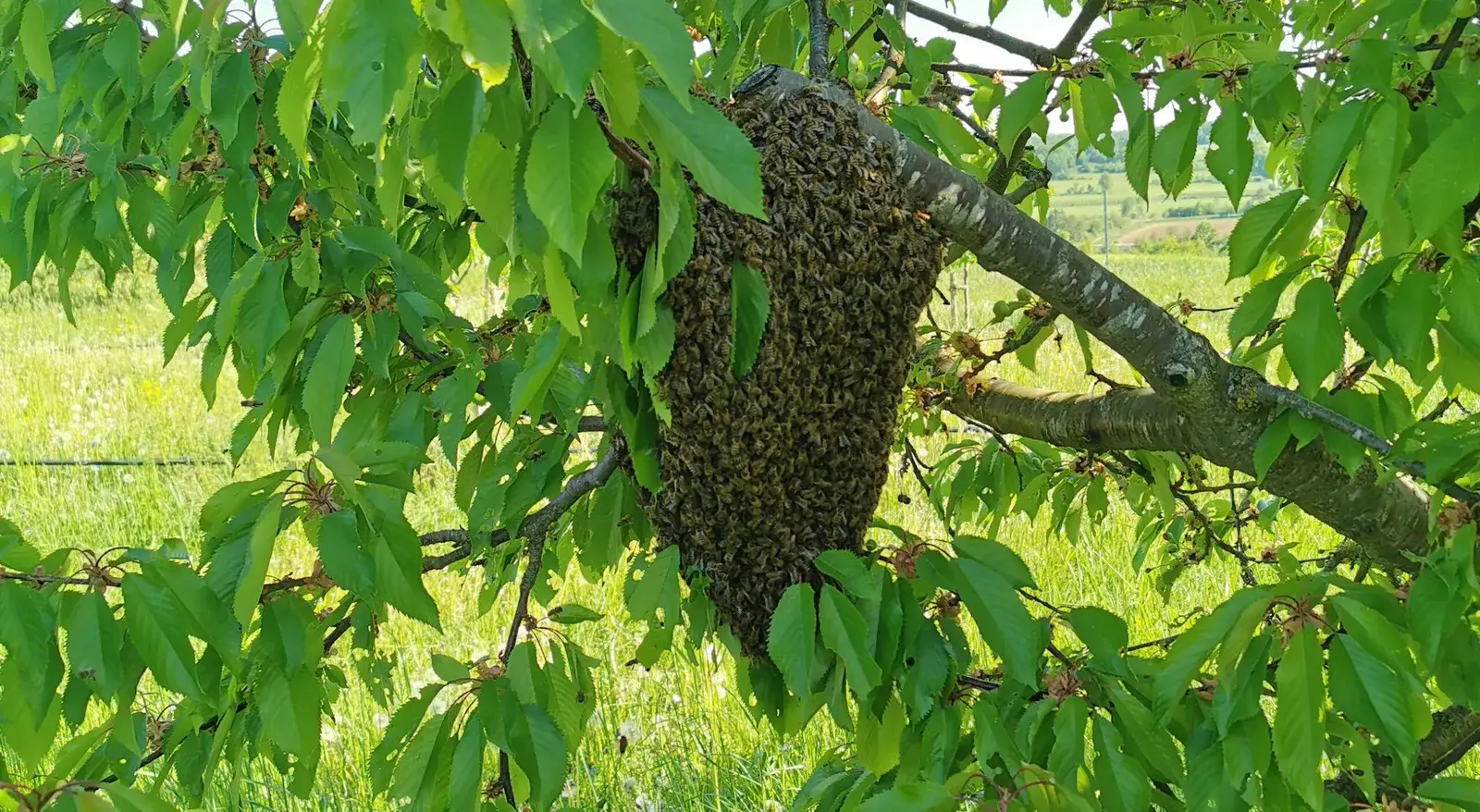
Those who inspect a day before the weather shift often still have the opportunity to act calmly and deliberately. Those who only look at midday on the first fine day may already see the swarm hanging in a tree.
With bee-pilot.io, you can keep an eye on your observations at the apiary and make better decisions for your colonies.