
Structure
The position stays, the colony changes
The history belongs to the colony: when it moves, it takes its record along. The stand position, by contrast, stays with the apiary — position three is position three, whether a production colony sits there, a nucleus, or nothing at all. That keeps the apiary itself in order, and devices such as a scale hang on the position rather than on the colony. When a new colony moves in, the readings run straight into its data.
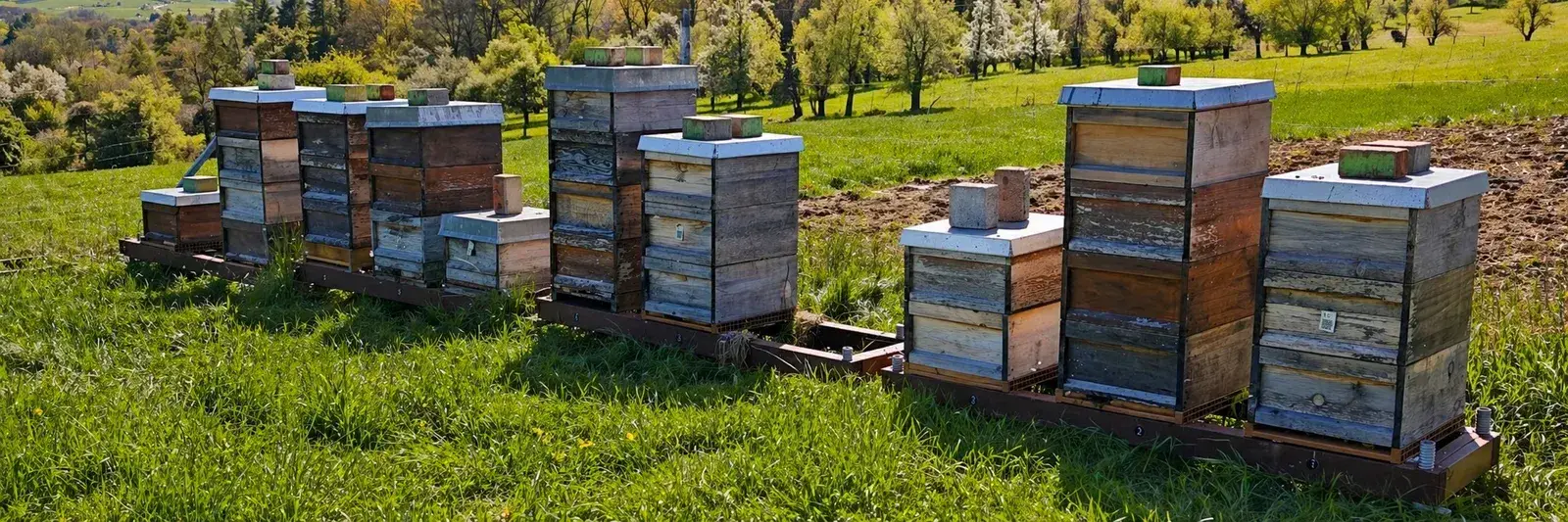
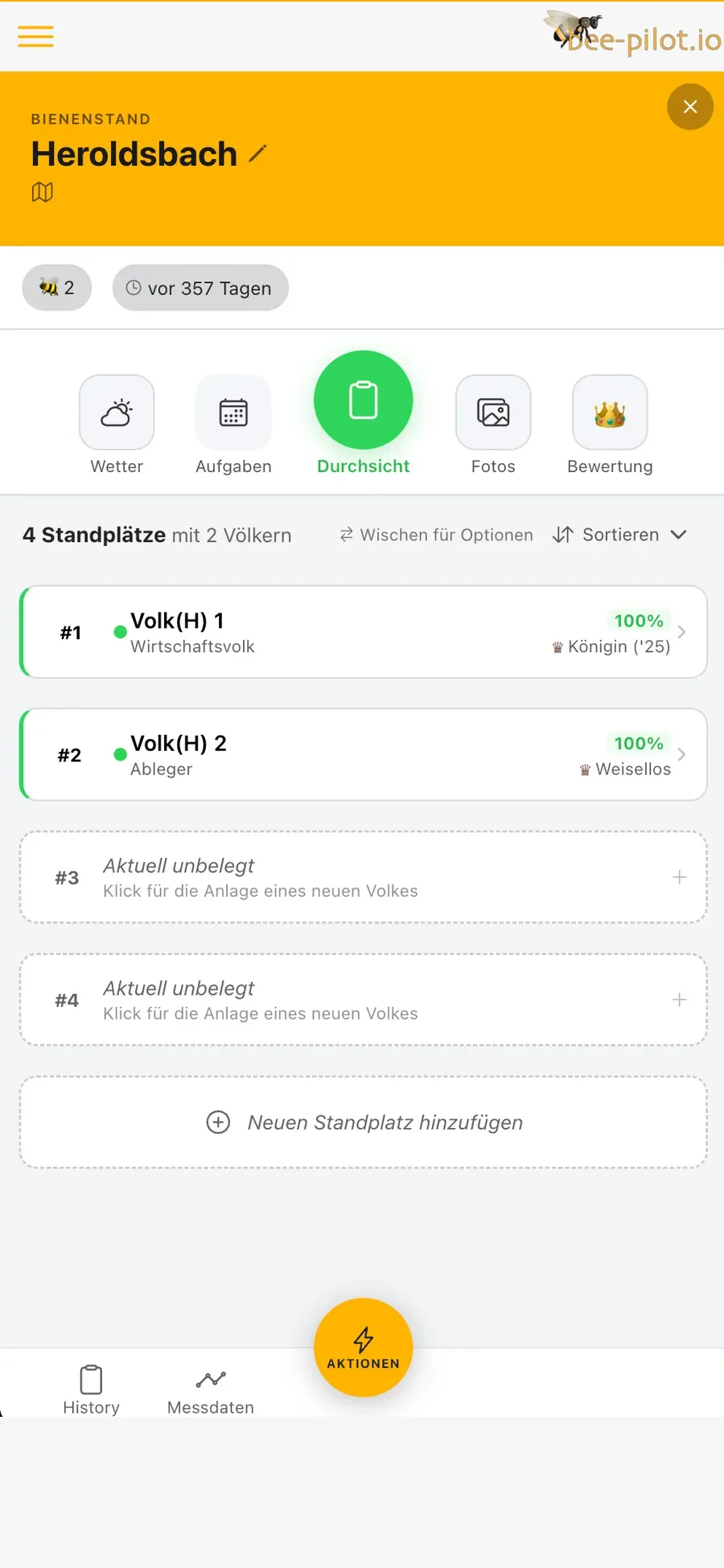
Four levels that match reality
Apiary, stand position, colony, queen. The apiary has numbered positions — occupied or free — and you add more as it grows. It sounds like bureaucracy and is exactly the distinction you make outdoors anyway: the position belongs to the apiary, the colony sits on it.
Locations with what applies there
Each apiary carries its coordinates and therefore its own weather, its own grassland temperature sum and its own varroa thresholds. A forest site and a lowland site are not treated alike.
Migrate without losing the trail
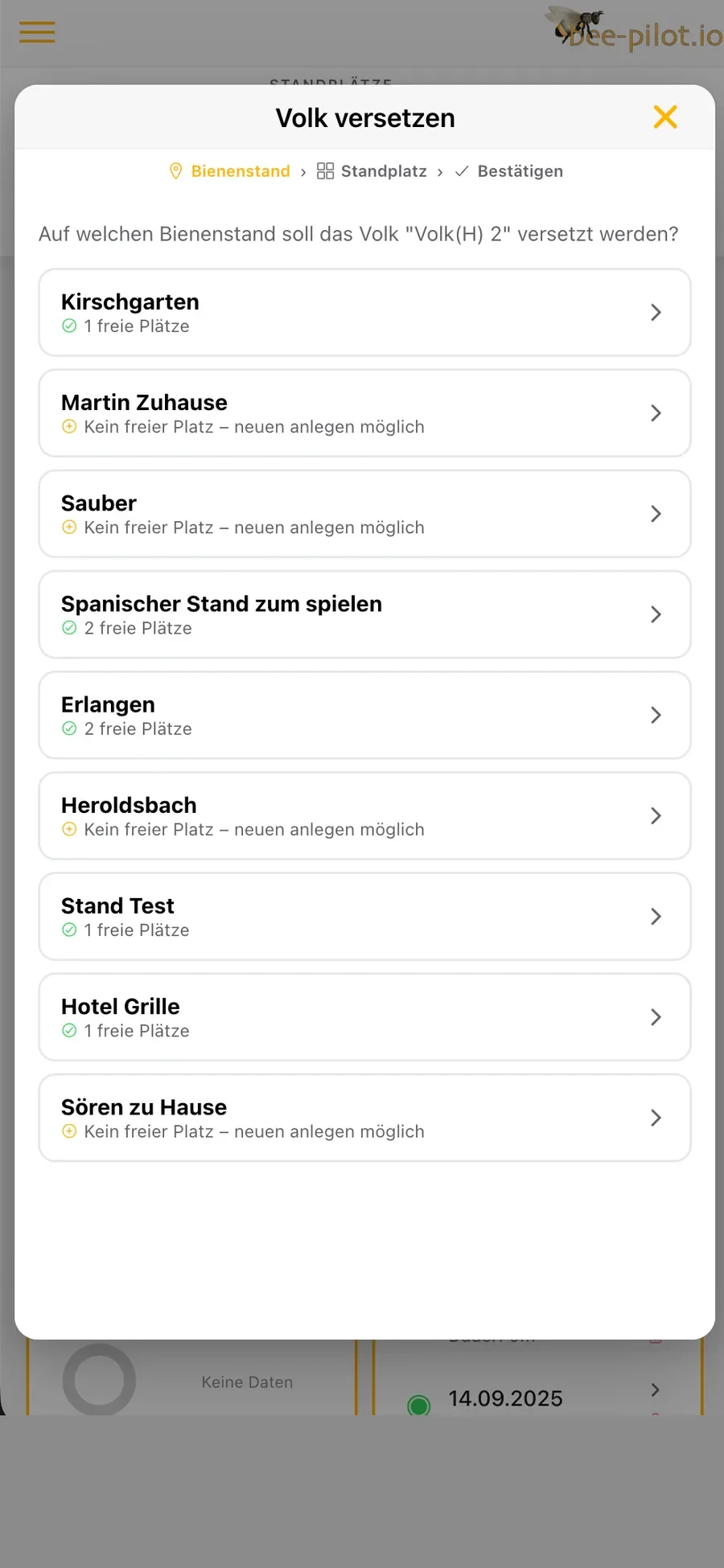
Moving a colony takes two entries: choose the apiary, choose the position. The list shows straight away where something is still free and where you can create a position. After that the history records when it moved where — and the analysis knows which yield came from which location.
Every apiary on one screen
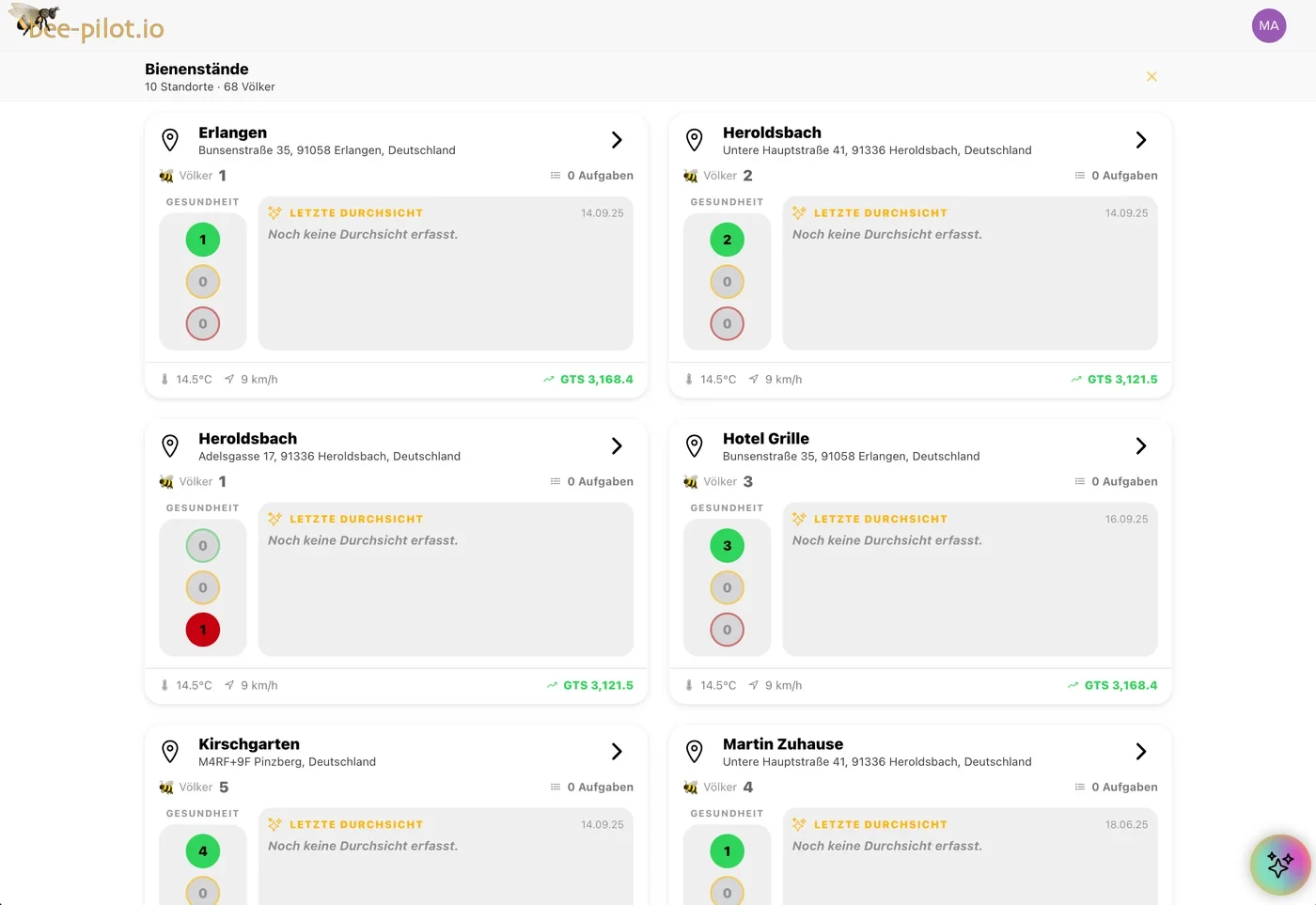
For each apiary you see how many colonies sit there, how their health stands, what is still open, and how temperature, wind and the grassland temperature sum look right now. Anyone running several apiaries decides here where to drive first.